
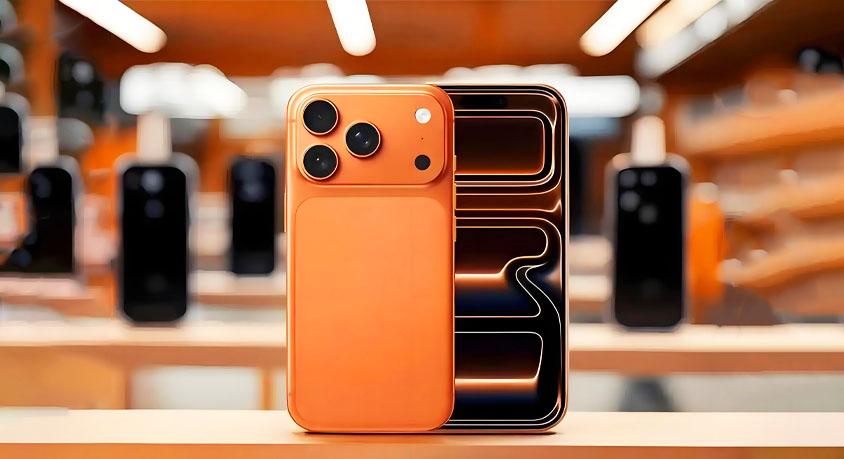
Upon unboxing the iPhone 17 Pro, a profound sense of familiarity washes over you. The chassis, with its now-iconic flat edges and Ceramic Shield front, is virtually indistinguishable from its two immediate predecessors. The camera array, a familiar geometric island, has been rearranged slightly but refuses to announce a revolution. To the casual observer, and even to the enthusiastic early adopter, this is the epitome of the "iterative update." It feels boring. And yet, this very boredom is not an accident or a failure of imagination; it is a deliberate strategic pivot. We have reached a plateau in industrial design where radical annual exterior change is neither necessary nor beneficial. The true narrative of the iPhone 17 Pro is not written on its titanium surface, but within its silicon soul and its thermal architecture. The question it poses is this: in a mature product category, where does meaningful innovation retreat to when the exterior stabilizes?
The answer lies in sustained performance, an engineering challenge far more complex than sketching a new contour. The new A19 Pro chip, built on an enhanced second-generation 3nm process, shows modest gains in traditional CPU benchmarks—perhaps 15% over the A18 Pro. This is the part that looks like "spec sheet inflation." The real story is twofold: efficiency and thermal management. Apple has finally, meaningfully, addressed the thermal constraints of previous Pro models. The new internal architecture features a substantially larger vapor chamber and a redesigned graphite film system that acts as a heat spreader. The result is not a higher peak performance in a cold state, but a dramatically extended duration of peak performance under load. You can now record a 30-minute 4K 60fps ProRes video on a summer day, and the phone will throttle brightness and frame rates significantly later, if at all. This transforms the user experience from one of sporadic brilliance to one of dependable, relentless capability. The boring exterior houses a cooling system that finally lets the brilliant silicon breathe.
This foundation enables the second, more subtle revolution: the maturation of on-device AI. The A19 Pro's Neural Engine, now with significantly more cores and dedicated AI accelerators, isn't just about generating quirky images. It operates as a pervasive, ambient utility. The camera's computational photography is faster and more nuanced, applying complex HDR and noise reduction in real-time without the processing pause. Siri, while still Siri, responds with a noticeably lower latency, parsing complex, multi-action requests locally. The new Predictive Text engine in the keyboard feels eerily contextual, suggesting not just the next word but the tone of your sentence. These are not standalone "features" to tout on a slide; they are systemic improvements that reduce friction at every micro-interaction. The phone feels smarter not because it can do one magic trick, but because a thousand small tasks now conclude with less cognitive load on you. The boredom of the form factor allows your attention to focus on this fluidity.
Of course, this philosophy has its trade-offs and defines its ideal user with stark clarity. The camera system, while benefiting immensely from the new processor and AI, still relies on primary sensors that are evolutionary, not revolutionary. The periscope telephoto lens now offers a more usable 7x optical zoom, and low-light processing is better, but a photographer coming from the previous model will not have their mind blown. The charging speed, while improved to 35W with the appropriate charger, remains conservative compared to Android rivals boasting 80W or 100W. This device is not for the thrill-seeker who craves a radical new form or a headline-grabbing gimmick every year.
So, who is it for? It is for the user whose smartphone is a mission-critical, reliable tool, not a yearly fashion statement. It is for the content creator who needs sustained performance, not just a burst for a benchmark. It is for the privacy-conscious individual who values complex AI tasks occurring securely on-device rather than in the cloud. The iPhone 17 Pro represents the zenith of refinement over revolution. Its "boredom" is a statement of maturity. The $600 you pay over a base model, or the cost of upgrading from a two or three-year-old device, is not for a new shape. It is for the assurance of untouchable ecosystem integration, for the confidence that the hardware will not fail you under pressure, and for the cumulative effect of a thousand invisible software and silicon enhancements that make the device not just faster, but more intelligently responsive. You will buy it not because it screams for attention, but because it reliably, boringly, disappears into the fabric of your life, working better than ever. In a world of noisy promises, that quiet reliability is becoming the ultimate luxury.
Disclaimer: Mention of any brand or trademark is for identification only and does not imply partnership or endorsement