

It happens somewhere west of Amarillo on Interstate 40, with 300 miles to go and the novelty of the journey long expired. The toddler is screaming, the school-age kids are bickering over a tablet's dying battery, and a critical stuffed animal has vanished into the cargo abyss. In this moment of familial entropy, the vehicle you chose ceases to be a car and becomes a mobile life-support system. Its sole purpose is to impose order on chaos, to deliver not just people, but their sanity, to the destination. For years, the Honda Odyssey has been the default answer to this problem. Yet, a growing cohort of pragmatic parents are looking past the familiar, turning instead to two compelling challengers: the relentlessly efficient Toyota Sienna Hybrid and the surprisingly stylish Kia Carnival. This isn't a comparison of horsepower or handling; it is a forensic audit of family life logistics, a battle for the title of ultimate domestic utility platform.
Open the sliding doors of both vehicles, and their philosophical priorities are laid bare. The Kia Carnival masterfully disguises its minivan function with SUV-like styling, a "SUV-MPV" as Kia calls it. The interior continues the masquerade, offering available lounge-style second-row seats with extendable leg rests and a sophisticated, driver-centric dashboard that wouldn't feel out of place in a Telluride. The Carnival’s third row, however, is where the pretense drops and pure genius emerges. The seats fold forward and flat into the floor, creating a massive, uninterrupted cargo hold with the ease of folding a dining chair—a stark contrast to the heavier, more complex stow-into-a-well systems of its rivals. With all seats up, its cargo space behind the third row is also marginally more usable. The Sienna counters with a different kind of honesty. Its interior is more openly utilitarian, with hard-wearing plastics and a design focused on wipeability and durability. Its available second-row seats slide fore and aft with an incredible range, but they do not remove easily, a trade-off for their integrated, center walk-through feature. The Sienna’s true space advantage is in its hybrid packaging; the lack of a transmission tunnel creates a flat floor, making it easier for children to move about or for an adult to navigate to the third row to mediate a dispute.
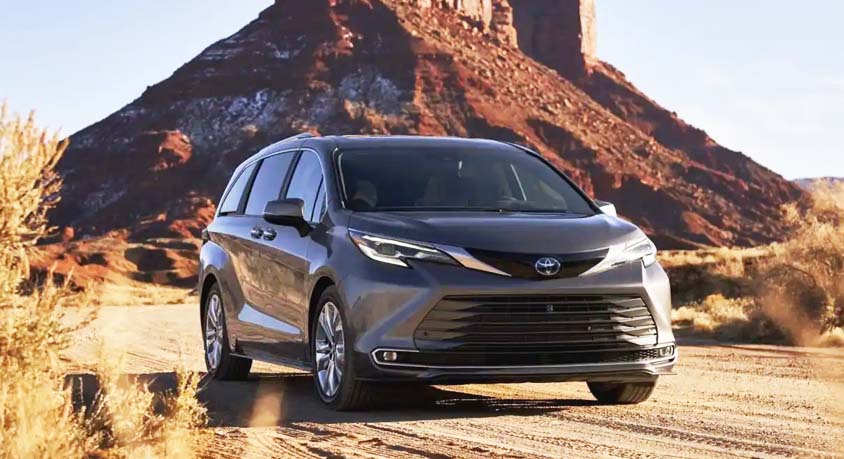
Day-to-day convenience is the currency of survival. Here, the Carnival shines with thoughtful, parent-tested details. The second-row seats have built-in armrests with cupholders, and the available "Sleeping Mode" tilts all seats for child napping. The infotainment system is fast, intuitive, and the available dual-screen rear-seat entertainment system is a digital pacifier of the highest order. Yet, this tech-forward approach has a downside: the capacitive touch buttons for climate control are frustrating to use without looking, a dangerous distraction when your eyes should be on the road. The Sienna’s approach is more analog and spread-out. It boasts an incredible eighteen cupholders and seven USB ports in higher trims, but its infotainment system feels dated, with slower response times and less intuitive menus. Its killer feature is the standard hybrid powertrain, which delivers a staggering 36 MPG combined—a number that translates to over 600 miles of range, effectively turning a coast-to-coast road trip into just two or three fuel stops, a massive logistical and financial advantage.
On the road, their characters diverge further. The Sienna’s hybrid system, a 2.5-liter four-cylinder paired with electric motors, is tuned for serene, efficient progress. Acceleration is adequate but never exciting, and the continuous variable transmission (CVT) amplifies the engine drone under hard acceleration, a sound that can grate during long mountain climbs. The ride is comfortable and quiet, prioritizing isolation. The Carnival, with its conventional 3.5-liter V6 and 8-speed automatic, feels more powerful and responsive when passing or merging. Its steering is more communicative, and its body control feels tighter. However, you pay for this at the pump, with EPA ratings in the low 20s MPG, a significant long-term cost delta for a high-mileage family. Its ride, while generally compliant, can transmit more road noise and sharp impacts into the cabin than the Sienna’s more pillowy setup.
The choice, therefore, crystallizes into a question of primary family values. The Toyota Sienna is the rationalist’s choice. It is an appliance of unparalleled efficiency, a tool that minimizes its operational cost and maximizes range, asking you to accept its bland driving dynamics and utilitarian interior in exchange for financial and environmental frugality. It is the vehicle for the family that logs thousands of miles per year and views fuel stops as lost time and money. The Kia Carnival is the emotional pragmatist’s choice. It offers more style, more conventional power, and a cabin that feels more like a contemporary family lounge than a mobile daycare. It asks you to accept higher fuel costs for more driving pleasure and daily delight, banking that its clever storage and upscale ambiance will offset the pain at the pump.
Both are valid answers to the modern family’s complex transportation equation. They succeed by attacking the Odyssey’s long-held dominance from two different flanks: the Sienna with ruthless efficiency, the Carnival with clever packaging and emotional appeal. Their rise signals a shift in the family vehicle market. It’s no longer just about having enough seats. It’s about which vehicle best manages the economy, psychology, and relentless logistics of raising a family on the move. The winner isn't the one with the most horsepower, but the one that leaves parents feeling less drained at the end of the journey—whether that’s through money saved at the pump or through a cabin that kept the peace without feeling like a compromise.
Disclaimer: Mention of any brand or trademark is for identification only and does not imply partnership or endorsement