


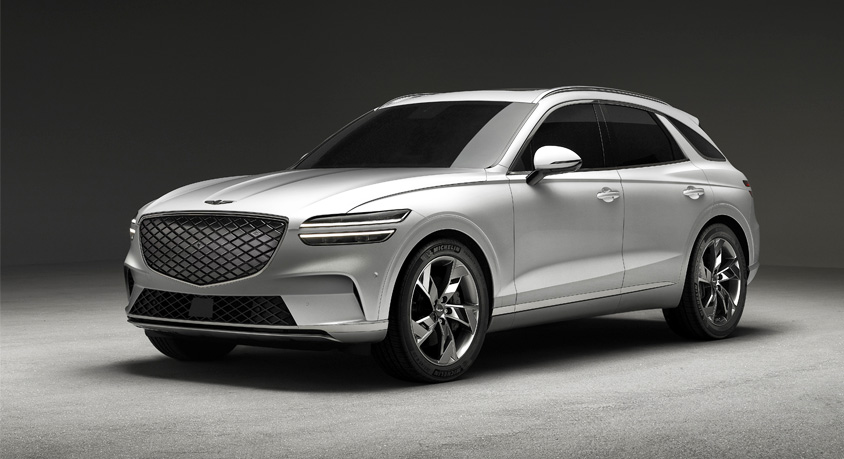
You feel it first in the dealership, a subtle but palpable shift in atmosphere. At the German luxury showroom, the ambiance is one of curated aspiration, the price tags are assumed to be justified by an invisible aura of heritage and performance. Then you cross the street. You sit in the driver's seat of a Genesis GV70, surrounded by Nappa leather and genuine aluminum trim, or examine the artisan-inspired stitching in a Mazda CX-90. The features list is longer, the warranty is superior, and the sticker price is $15,000 to $20,000 less for a comparably equipped vehicle. This cognitive dissonance is the heart of the "near-luxury" revolt. Brands like Genesis and Mazda are no longer asking you to buy a cheaper car; they are asking you to re-evaluate what you're actually paying for when you buy a badge. The central question for 2026 is brutally simple: does the experiential delta between a Genesis GV70 and a BMW X3, or a Mazda CX-90 and a Mercedes GLE, truly justify the massive financial chasm between them?
Slide into the Genesis GV70, and the assault on preconceptions is immediate and tactile. The interior is a masterclass in restrained luxury, with quilted seats, soft-close doors, and a clean, driver-focused layout that feels more cohesive than the sometimes-busy cabins of its German rivals. The 3.5-liter twin-turbo V6 delivers 375 horsepower with a smooth, confident thrust, and the adaptive suspension expertly balances comfort and control. Standard active safety and driver-assist features that are expensive options on a BMW or Mercedes are included here. The value proposition is undeniable, almost mathematical. Yet, the driving experience, while supremely competent, lacks a certain signature flavor. A BMW X3 communicates road feel through its steering wheel with a specific, chattery precision; the GV70’s steering is accurate but more isolated, prioritizing serene ease over sporty dialogue. The brand’s relative newness also means a smaller, less ubiquitous dealer network, and the resale value, while strong, still trails the psychic security of a three-pointed star or a blue-and-white roundel.
The Mazda CX-90 takes a different, more philosophical tack. It doesn't try to out-feature the Germans on a spec sheet; it attempts to out-craft them. Its new 3.3-liter inline-six turbo engine is a statement of intent, a return to a smooth, refined powertrain layout that even BMW is abandoning for four-cylinders in many models. The cabin employs fabrics, muted colors, and driver-centric ergonomics that feel inspired by a bespoke library rather than a tech startup. The driving dynamics are where Mazda’s ethos shines brightest; the steering is wonderfully weighted and communicative, the chassis feels taut and balanced, rewarding the driver with a sense of connection that many base-model German SUVs have sanitized away in pursuit of comfort. However, this focus comes with trade-offs. The third-row space is tight, best for children. The infotainment system, controlled by a rotary dial, is intuitive for some but feels dated compared to modern touchscreens. The inline-six, while smooth, doesn't deliver the explosive, low-end shove of a German turbo V8, positioning the CX-90 as a driver's choice rather than a brute-force powerhouse.
This reveals the core tension in the "premium alternative" space. These challengers excel at providing the objects of luxury: the soft leather, the premium audio, the powerful engine, the quiet cabin. What they are still cultivating is the subjectivity of luxury—the intangible brand narrative, the decades of motorsport pedigree, the instant social recognition. A Genesis doesn't yet whisper "success" in the same ingrained, shorthand way a Mercedes-Benz does in certain circles. A Mazda, no matter how beautiful, is still associated with mass-market affordability in the minds of many. The German brands sell an aura, a historical membership. The challengers sell a proposition of rational superiority, asking buyers to be iconoclasts, to derive pride from discernment rather than designation.
The practical compromises extend beyond brand perception. While reliability scores often favor the Japanese and Korean entrants, the experience of ownership when something does go wrong can be different. Finding a specialist for a rare Genesis or a complex Mazda inline-six might be harder in rural Nebraska than finding a BMW mechanic. The technological ecosystems, while excellent, don't have the same depth of third-party integration or the over-the-air update track record of Tesla or the established German marques. You might be giving up not just a badge, but a piece of seamless, connected convenience that has become part of the modern luxury expectation.
So, do they deliver 90% of the experience for 70% of the price? On a purely objective, feature-and-comfort level, the answer is a resounding yes, and often it's more like 95% for 70%. The Genesis GV70 cossets you as well as any Lexus or mid-tier German SUV. The Mazda CX-90 engages the driver more honestly than a base-model GLE or X5. They are spectacular vehicles that make the financial logic of the traditional luxury purchase seem emotionally driven. Yet, the final 5-10% of the experience resides in the intangible realm of brand heritage, social signaling, and a specific, sometimes irrational, driving character that has been honed over generations. The new value champions are winning the battle for the rational mind. The war for the heart—and the ingrained status anxieties it contains—is a longer, more complex campaign. For the growing number of buyers willing to define luxury on their own terms, these alternatives aren't just compromises; they are declarations of independence, proof that exquisite engineering and refined design need not come with an aristocratic tax.
Disclaimer: Mention of any brand or trademark is for identification only and does not imply partnership or endorsement