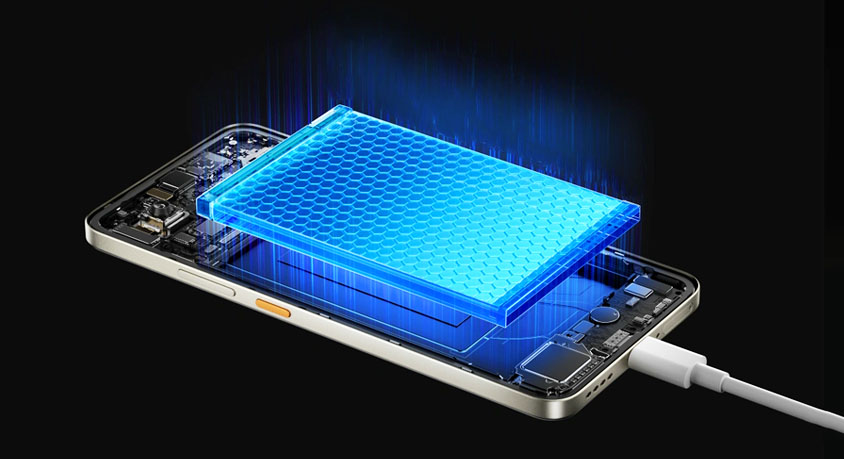
We are locked in a silent, two-front war with our smartphones. The first is the daily battle against the battery percentage indicator. The second, more insidious conflict, is against the gradual, irreversible decay of the battery itself. Fast charging has been marketed as the triumphant solution to the first problem, offering liberation from the outlet. But every engineering solution creates a new set of constraints. The inconvenient truth, backed by electrochemistry and data, is that the very feature sold to save your time is actively shortening the functional lifespan of your device. This isn't a minor trade-off; it's a calculated degradation with a predictable timeline, often aligning suspiciously with a manufacturer's upgrade cycle. Let's examine the variables.
At the core is lithium-ion battery chemistry. A battery's lifespan is measured in full charge cycles (using 100% of its capacity) and is degraded by two primary stressors: heat and high states of charge. Fast charging aggressively exacerbates the first and, through software management, often manipulates the second. The equation is simple: Power (Watts) = Voltage (Volts) x Current (Amps). To push more power into a battery quickly, you must increase voltage or current, or both. This process has an inescapable byproduct: resistive heat. A standard 5W charger might gently warm your phone. A 20W PD charger creates noticeable warmth. A 65W or 100W super-fast charger can make a device uncomfortably hot to the touch. Heat is the arch-nemesis of lithium-ion cells. Elevated temperatures accelerate the chemical reactions that form a permanent, passive layer (the Solid Electrolyte Interphase) inside the battery. This layer is necessary, but its overgrowth permanently reduces the battery's capacity to hold ions—its maximum charge.
Let's quantify this. Academic studies and industry whitepapers consistently show that keeping a lithium-ion battery at elevated temperatures (e.g., 40°C/104°F vs. 25°C/77°F) can double or triple the rate of capacity loss. A phone being fast-charged, especially while in use, can easily reach these temperatures. Consider a typical scenario: you plug in your phone with a 30W charger at 20% battery while continuing to scroll through social media. The processor is working, the screen is on, and the battery is accepting a high-current charge. This creates a thermal vortex. Over 500 cycles, a battery charged this way might degrade to 80% of its original capacity, while one charged slowly and coolly might remain at 90% or more. That 10% difference is the margin between your phone lasting a full day and dying at 4 PM.
This is where manufacturer software plays a decisive, and often opaque, role. To mitigate damage, phones employ sophisticated charge controllers. They do two key things: they throttle charging speed as the battery heats up, and they use trickle-charge algorithms near the top (above 80%). However, the primary design goal of this software is user safety and the perception of speed, not long-term battery longevity. The algorithms are optimized to get you from 0% to 50% or 80% as fast as possible—the "stat" they advertise—because that's what users notice. The software does little to discourage you from charging to 100% and leaving it plugged in overnight, a state of high stress for the battery. Some manufacturers now offer "optimized battery charging" features that learn your routine and delay the final 20% of charge until you need it, a rare nod to longevity over convenience.
The narrative of planned obsolescence is nuanced. It is rarely a malicious "kill switch." It is the natural outcome of optimizing a product for thrilling initial performance (fast charging, peak processing speed) at the expense of long-term endurance. A battery degraded to 80% capacity after 18-24 months creates a tangible pain point: the phone no longer lasts a full day. This pain point is a powerful upgrade catalyst. The company didn't break your phone; they sold you a experience that inherently consumed its future.
Therefore, your charging strategy defines your device's lifespan. If you treat your phone as a disposable tool to be replaced every two years, fast charge freely. The convenience outweighs the hidden cost. If you aim to keep a device for three, four, or more years, you must become a battery conservationist.
The evidence-based prescription is clear:
1. Prioritize Slow, Cool Charging for Overnight: Use an old, low-wattage (5W-10W) charger or a standard wireless pad overnight. Speed is irrelevant for 8 hours.
2. Use Fast Charging Strategically: Reserve your 20W+ charger for true emergencies when you need 50% power in 20 minutes. Unplug once you have enough.
3. Avoid the Extremes: Try to keep your battery between 20% and 80% for daily cycling. Avoid letting it hit 0% or sit at 100% for extended periods.
4. Manage Heat: Never fast charge while gaming or using GPS. Remove the case if the phone feels warm during charging.
The math is clear: the faster you fill the tank, the more wear you incur on the pump. Fast charging is a phenomenal feature for moments of crisis. Adopting it as your default, daily habit is a pact with planned decay. You are trading the long-term health of a $1,000 device for the daily convenience of 15 saved minutes. The winning move is to reject this forced choice. Use the right tool for the right job. Let slow charging preserve your battery's future, and let fast charging save your present when it truly must. Your phone's longevity is less about the silicon inside it and more about the electricity and heat you choose to feed it.
Disclaimer: Mention of any brand or trademark is for identification only and does not imply partnership or endorsement