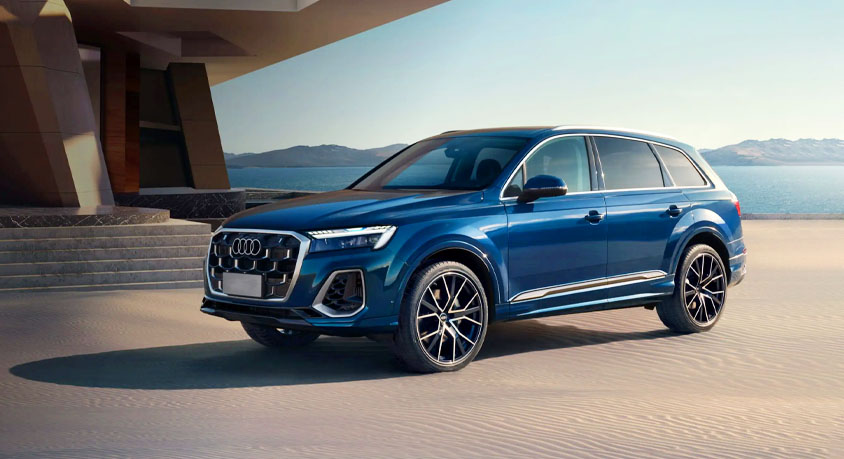
The service advisor delivers the news with a practiced expression of sympathy. Your 2018 Audi Q7 requires a new control arm, and the parts cost alone is $1,200. The labor, because the suspension is complex and the engine bay is tight, adds another $800. You sign the estimate, hand over your credit card, and drive away feeling like you've funded a small renovation project. What you didn't know, and what the dealer will never tell you, is that the exact same control arm, manufactured in the same factory, stamped with a different part number, is available for $300 from Volkswagen. Your Q7 shares its platform, its suspension geometry, and many of its components with the Volkswagen Touareg. The only difference is the four rings stamped into the metal and the 400% markup that accompanies them. This is the hidden architecture of the automotive industry, a system of platform sharing and parts bin engineering that luxury brands exploit for profit and savvy owners exploit for savings.
The Volkswagen Group provides the most transparent example of this phenomenon. Audi, Porsche, Bentley, and Lamborghini all share underlying architectures with more pedestrian Volkswagens. The Audi Q7 and Q8 share their MLB platform with the Porsche Cayenne, the Bentley Bentayga, and the Lamborghini Urus. But more importantly, they share countless components with the Volkswagen Touareg. Suspension arms, brake calipers, wheel bearings, even engine components on certain variants are identical parts, sourced from the same suppliers, meeting the same specifications. The difference is the packaging and the price. A brake rotor for an Audi RS model might carry a $600 dealer price; the identical part, sourced from a Porsche dealer or even a high-quality aftermarket supplier, can cost half that. The challenge is identifying which parts are shared and navigating the parts catalog to find the cross-reference.
Toyota's luxury division, Lexus, operates on the same principle but with a twist. Many Lexus models are essentially Toyota products with upgraded interiors, sound deadening, and feature content. The Lexus RX shares its platform, its engine, and its transmission with the Toyota Highlander and Camry variants. A cabin air filter for a Lexus RX is the same part as for a Toyota Avalon, but the dealer price differs by a factor of three. The oil filter, the air filter, the brake pads—all are identical to Toyota parts, available at any Toyota dealer or parts store for a fraction of the cost. The only exception is when Lexus uses unique components for its higher-performance F Sport models or its multi-link rear suspensions, but even then, cross-referencing can yield savings. The key is knowing which Toyota model shares your Lexus's bones.
Ford's relationship with Lincoln follows the same logic. A Lincoln Navigator is a Ford Expedition in a tuxedo. The engine, the transmission, the suspension components, the brake system—all are shared. The difference is the interior leather, the sound insulation, and the grille. When your Navigator needs front brake rotors, you can buy the identical Ford parts, often with the same engineering drawings and supplier quality standards, for 40% less than the Lincoln-branded alternatives. The same applies to the Ford Explorer-based Lincoln Aviator. The parts are interchangeable, the fit is identical, and the performance is indistinguishable. The only barrier is the dealer's unwillingness to tell you this and the Lincoln owner's assumption that their vehicle requires exclusive components.
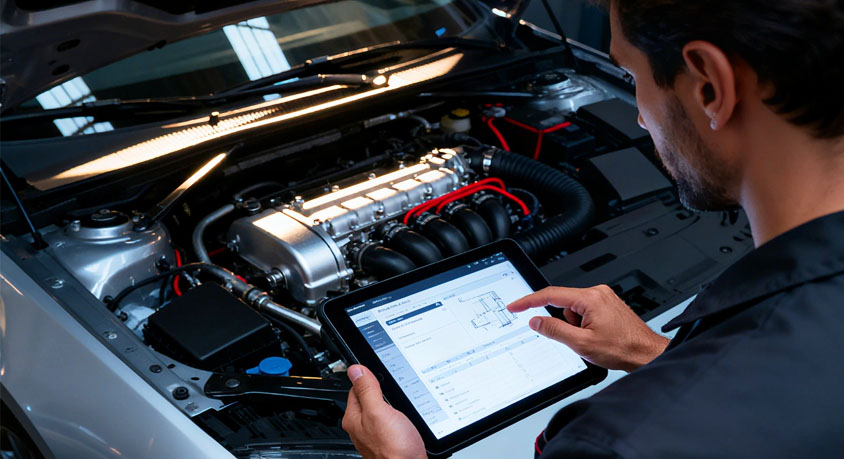
The engine bay is where the savings can become truly dramatic. German luxury brands, in particular, use the same engine families across multiple marques. The Audi 2.0-liter turbocharged four-cylinder, found in countless A4, A5, and Q5 models, is fundamentally the same EA888 engine that powers the Volkswagen GTI, Golf R, and numerous other VW models. The timing chain components, the water pump, the intake manifold—all are shared. When the inevitable water pump failure occurs, the VW-branded replacement is identical to the Audi part, manufactured in the same facility, and available for hundreds less. The same applies to the 3.0-liter supercharged V6, shared between Audi, Porsche, and Volkswagen. The supercharger itself, a complex and expensive component, carries different part numbers and price tags across the brands, yet the underlying unit is identical.
The catch, and there is always a catch, lies in the details. Not every component is shared, and identifying the correct cross-reference requires research. Some parts, while physically identical, may have different specifications for tuning or durability. Brake pads, for example, might share a backing plate but use different friction compounds. Suspension components might share bushings but have different rates. The savvy owner must verify compatibility through part number research, forum knowledge, and sometimes direct comparison. The dealer's parts department will not help you with this; their job is to sell the higher-margin branded part. The independent mechanic, particularly one specializing in your brand, is often the best source of knowledge, having learned through experience which parts interchange and which do not.
The broader implication of this parts-bin engineering is a fundamental question about the nature of luxury itself. If the mechanical components are identical, what exactly are you paying for when you buy the premium brand? The answer, of course, is the interior materials, the sound deadening, the brand cachet, and the dealer experience. But the mechanicals, the parts that wear out and break, the components that generate the repair bills, are often the same as those in the mass-market sibling. The luxury car owner who pays dealer prices for a water pump is paying for the privilege of not knowing that the same pump is available elsewhere. The informed owner, armed with knowledge and a willingness to research, can enjoy the luxury experience without the luxury tax on maintenance.
Disclaimer: Mention of any brand or trademark is for identification only and does not imply partnership or endorsement