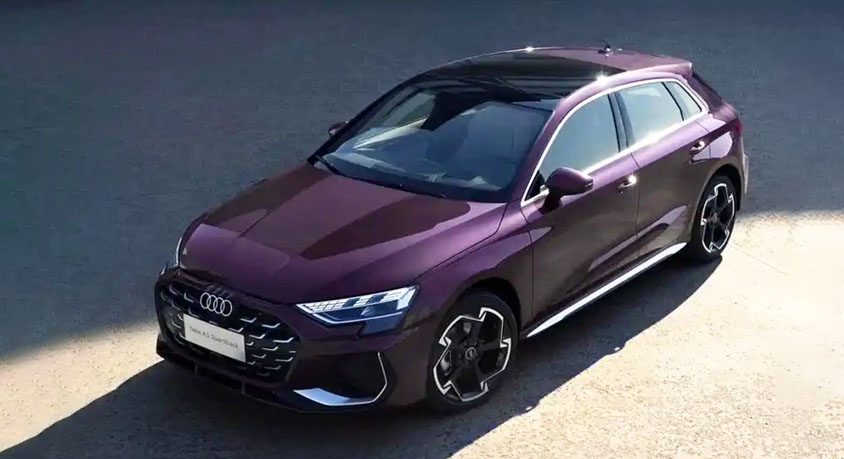
The check engine light doesn't illuminate anymore. It asks for your credit card. Imagine merging onto the Brooklyn-Queens Expressway at dusk, the city lights reflecting off your windshield, when a notification pings on the infotainment screen: "High Beam Assist available. Activate now for $9.99/month." The hardware has been sitting in your headlights since the factory, fully capable, intentionally dormant—waiting for you to pay ransom for your own property. This is the reality of the 2026 Audi A3, the brand's entry-level sedan that now doubles as a laboratory for the subscription economy. But beneath this philosophical controversy lies a genuinely competent compact luxury car, one that might represent the last of a dying breed: the pure internal combustion Audi. We spent a week with the new model, navigating the tight streets of Manhattan and the winding roads of the Hudson Valley, to determine whether the A3 remains a smart entry point into premium ownership or a cautionary tale about where the industry is heading.
Let's address the subscription controversy head-on, because it frames every conversation about this car. Audi has expanded its "functions on demand" program for 2026, allowing owners to unlock hardware-enabled features temporarily or permanently through the myAudi app. The most controversial example is adaptive high beam assist—the hardware exists in the headlights of every A3, but unless you pay, the feature remains disabled. Other subscription options include traffic sign recognition, navigation plus, and even certain ambient lighting configurations. The pricing structure varies: $9.99/month, $99/year, or a one-time $299 fee for permanent activation. From a pure engineering perspective, this is brilliant—it reduces manufacturing complexity, allows features to be added post-purchase, and creates recurring revenue streams. From an ownership perspective, it feels like being nickle-and-dimed for a car you already bought. The philosophical question cuts to the heart of modern consumption: do we own our possessions, or merely license access to them?
The mechanical hardware beneath this digital debate deserves equal scrutiny. The 2026 A3 carries over the turbocharged 2.0-liter four-cylinder, producing 201 horsepower and 236 pound-feet of torque. The 0-60 mph sprint requires just 6.0 seconds, which in real-world terms means you'll never feel underpowered merging onto the West Side Highway or dodging taxis in Midtown. The seven-speed dual-clutch transmission snaps off shifts with the precision of a Swiss chronograph, though it occasionally hesitates at parking lot speeds, a quirk that owners simply learn to anticipate. The standard Quattro all-wheel drive, unique in this segment, transforms wet Brooklyn streets from hazards into opportunities, delivering traction that front-drive competitors simply cannot match. The mild hybrid system, a 48-volt belt-driven starter generator, smooths the stop-start function and allows coasting at highway speeds, contributing to EPA ratings of 28 mpg combined—respectable if not class-leading.
The driving experience rewards those who value precision over emotion. The steering, electrically assisted, weights up naturally in Dynamic mode and delivers feedback that, while artificially generated, proves consistently accurate. The suspension, tuned for American roads rather than German autobahns, absorbs Manhattan's moonscape pavement without floatiness, though the optional 18-inch wheels transmit sharper impacts into the cabin. On the twisting roads of Bear Mountain, the A3 reveals its Volkswagen Group DNA—the MQB platform delivers predictable handling, modest understeer at the limit, and a sense of composure that inspires confidence rather than excitement. It's not a hot hatch, and it doesn't pretend to be. It's a small luxury sedan that happens to handle reasonably well.
The cabin represents both the A3's strongest argument and its most frustrating compromise. The 2026 model finally standardizes the Technology package across all trims, which means every A3 now receives the 12.3-inch Virtual Cockpit Plus digital instrument cluster, MMI Navigation Plus with traffic sign recognition, and Audi's Connect Plus services with a three-year subscription. The 10.1-inch touchscreen, integrated neatly into the dashboard rather than floating atop it, responds crisply and supports wireless Apple CarPlay and Android Auto. The materials, however, reveal the cost-cutting necessary to meet the $41,395 starting price. Hard plastics appear below the beltline, and while the touchpoints remain pleasant, the overall ambiance lacks the Teutonic solidity of Audi's larger sedans. The ambient lighting, multi-colored and adjustable, attempts to distract from these economies—and largely succeeds at night.
The space efficiency deserves analysis from a geometric perspective. The A3 stretches 177.3 inches long on a 103.7-inch wheelbase, dimensions that make parallel parking in Manhattan genuinely stress-free. Front occupants enjoy 41.2 inches of legroom and 36.8 inches of headroom, sufficient for six-foot adults to find comfort. The rear seat, however, reveals the compromises of subcompact dimensions: 35.2 inches of legroom means adults behind a tall driver will find their knees intimately acquainted with the front seatbacks. The trunk measures just 10.9 cubic feet, small even by segment standards, and the opening angle limits the size of boxes you can load. These aren't flaws; they're physics. You cannot cheat the geometry of a vehicle this size.
The safety technology package deserves recognition for its comprehensiveness. Premium Plus trims now include a 360-degree camera view and Park Assist Plus as standard, features that transform urban parking from chore into spectator sport. The newly standard front cross-traffic assist, borrowed from Audi's larger models, watches for pedestrians and vehicles when pulling out of blind alleys or parking garages. The adaptive cruise control, part of the optional Driver Assistance Plus package, maintains distance smoothly and works in stop-and-go traffic. The Euro NCAP rating remains five stars, though the testing protocol dates to 2020, and the Insurance Institute for Highway Safety has not yet updated its evaluation for the current generation.
The value proposition grows murkier when you consider the competition. The BMW 2 Series Gran Coupe undercuts the A3 slightly on price and matches it on performance, while the Mercedes-Benz CLA commands a premium for its flamboyant styling. The Acura Integra, starting thousands less, offers more space but front-wheel drive only. The real threat comes from below: the Volkswagen Golf GTI, sharing the same platform and engine, delivers more excitement for less money, though it wears a mainstream badge. The A3's resale value, projected at around 50 percent after three years, trails the BMW and Mercedes but exceeds the Acura. The new Signature Care service plan, which includes three years or 30,000 miles of complimentary maintenance, adds tangible value to the ownership equation.
Disclaimer: Mention of any brand or trademark is for identification only and does not imply partnership or endorsement