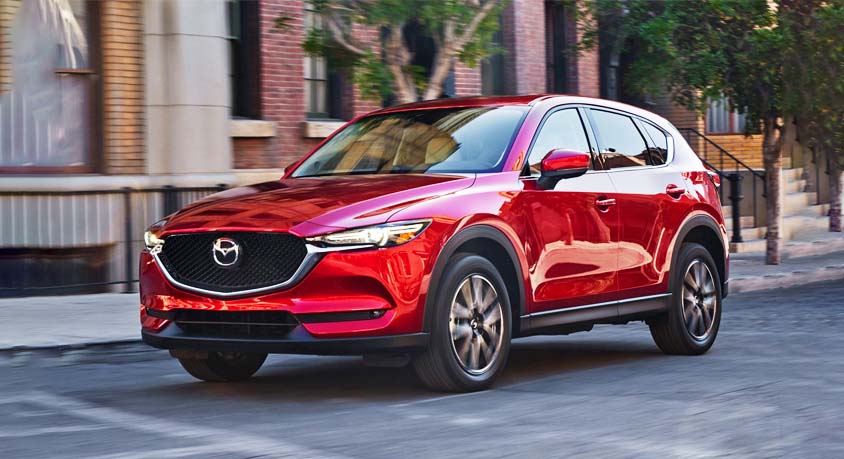
You’re navigating the crumbling asphalt of a midwestern state highway in a friend’s sleek, screen-heavy SUV, trying to turn down the blaring radio. Your finger stabs at a glossy, black panel, aiming for a virtual volume slider just as the right front tire plunges into a deep rut. The jolt sends your tap three centimeters astray, and instead of lowering the volume, you’ve now opened the seat massage menu. For the next 4.7 seconds—a small eternity at 55 mph—your eyes are locked on the central display, decoding hieroglyphics instead of watching the road. This daily, minor indignity is the frontline of a quiet counter-revolution, one where brands like Mazda are not following a trend, but correcting a fundamental error in human factors engineering. The 2026 Mazda CX-5’s steadfast commitment to rotary dials and physical buttons isn’t a nostalgic throwback; it is a data-driven declaration that the touchscreen’s decade-long reign over primary controls was a dangerous, if profitable, detour.
The data on driver distraction paints an unequivocal, damning portrait. Studies from the AAA Foundation for Traffic Safety consistently rank touchscreen-based systems as creating “high” or “very high” levels of cognitive and visual distraction. Manipulating a climate control menu on a touchscreen can demand over 40 seconds of a driver’s attention per 10-minute drive, with eyes-off-road times exceeding 2 seconds for simple tasks—beyond the threshold where crash risk spikes dramatically. A 2025 J.D. Power U.S. Tech Experience Study revealed that dissatisfaction with touchscreen-only controls is now the single greatest complaint among new-vehicle owners, with nearly 80% expressing a strong desire for physical knobs for audio and climate functions. The market has not embraced the all-screen future; it has endured it, and the frustration is reaching a measurable boiling point.
Mazda’s philosophy, articulated in its "Human-Machine Interface" doctrine, treats the cabin as a cockpit for a split-focus task. The central screen is positioned far forward, requiring a slight glance down but not a full head turn, and it is operated exclusively by a tactile, rotary Commander Control knob on the center console. Your right hand rests on the knob, its knurled metal providing instant orientation; a click left or right scrolls menus, a press down selects. Your eyes never leave the road’s horizon. The system relies on muscle memory and proprioception—your body’s innate sense of position—rather than fragile hand-eye coordination on a flat, vibrating plane. It is the difference between typing on a physical keyboard and a tablet screen; one is confirmatory, the other demands constant visual verification.
This design choice reveals a deeper understanding of driving as a physical act. On a winding road like California's Pacific Coast Highway or during a tense merge in Atlanta’s rush hour, the driver’s body is subjected to lateral and longitudinal forces. A physical knob provides resistance and detents—clear, click-stop feedback that confirms an action without looking. A touchscreen offers no such confirmation; it is a silent, binary oracle. You must look to know if your touch registered. Mazda’s approach acknowledges that a vehicle is not a living room; it is a dynamic environment where controls must be operable under vibration, G-forces, and stress. The click of a physical button is a solved problem in human interface design, a reliable mechanical handshake between driver and machine.
The economic and aesthetic seduction of the all-screen dashboard is easy to understand. For manufacturers, a single large LCD is cheaper to source and install than an array of bespoke switches, and it presents a minimalist, “futuristic” façade that is easy to market. However, this minimalist purity often comes at the cost of layered, complex menu structures that bury frequently used functions. What is sold as “clean” design frequently results in “cluttered” cognitive load for the driver. Mazda’s cockpit, with its dedicated climate control knobs and hard buttons for major functions like seat heating and hazard lights, trades an Instagram-perfect first impression for day-in, day-out usability. It prioritizes the user’s time and attention over a designer’s ideal of unbroken surfaces.
This is not to say the approach is without compromise. Critics rightly point out that Mazda’s infotainment system, while intuitive, can feel less graphically dazzling than the latest high-resolution, gaming-engine-powered interfaces from German rivals. The screen itself is smaller. For passengers, the lack of a touchscreen can feel restrictive, a denial of the direct manipulation they are accustomed to on their personal devices. The brand makes a deliberate choice: the primary user is the driver, and their safety and focus are non-negotiable. Passenger entertainment is a secondary consideration to driver engagement and reduced distraction.
The movement back toward tactility is gaining momentum beyond Mazda. Volkswagen, a pioneer of touch-sensitive sliders, is reintroducing backlit physical buttons for climate control in its next-generation models. Honda and Toyota have consistently hedged their bets, keeping critical knobs alongside screens. This industry pivot is a quiet, collective admission that the pursuit of aesthetic minimalism ventured too far into the territory of functional recklessness. It turns out that what feels “futuristic” in a design studio can feel dangerously distracting on a rain-slicked freeway at dusk.
Ultimately, the 2026 CX-5’s interior is more than a collection of switches; it is a statement of principle. In an era where digital integration is often confused with progress, it argues that true innovation sometimes means judiciously saying “no.” It asserts that the most advanced interface is not the one with the most pixels, but the one that most seamlessly and safely disappears into the task at hand. The winner in this rebellion isn’t a specific brand, but the driver whose eyes stay on the road, whose fingers find the knob without a search, and whose cognitive bandwidth remains focused on the complex, real-world physics of driving. The tactile feel of a rotating click is the sound of common sense reasserting itself, one well-engineered detent at a time.
Disclaimer: Mention of any brand or trademark is for identification only and does not imply partnership or endorsement