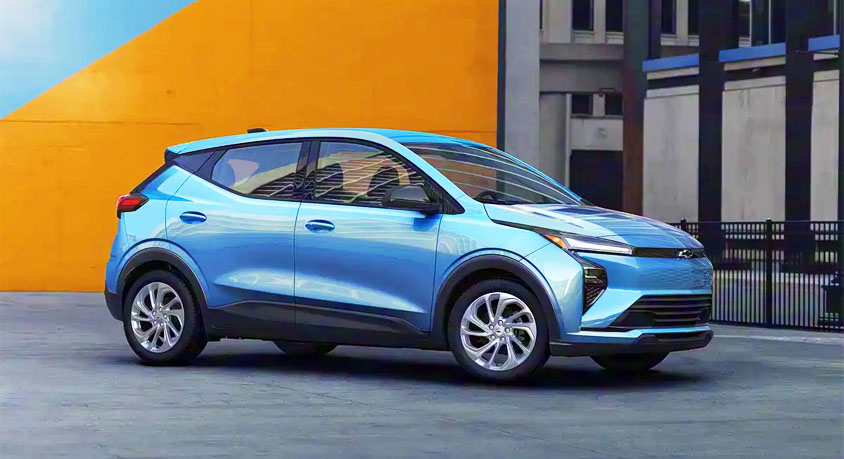
The mood in the brightly lit dealership showroom shifts from hopeful anticipation to a familiar, weary calculation in the time it takes for the sales manager to slide a single sheet of paper across the desk. You came in armed with the manufacturer's website printout, the one that boldly advertises the 2026 Chevrolet Bolt 2LT at a starting MSRP of $32,500. You’ve spent months believing in that number, budgeting for it, seeing it as your family’s ticket into a modern, efficient future. The paper now facing you, the “Buyer’s Order,” lists a final price of $48,217. The air seems to leave the room as your eyes trace the line items that transformed a democratic promise into a financial affront: a $7,500 “Market Adjustment,” a $2,395 “Protection Package” of tint and floor mats you didn’t want, a $1,295 destination charge, and the relentless creep of taxes, title, and a $499 “document fee.” This is not a pricing error; it is the standard operating procedure for the “affordable” EV in 2026, a systematic dismantling of the headline price by a distribution model fundamentally at odds with the concept of transparency. The story of the new Bolt is not about its commendable 300-mile range, but about the $15,000 canyon between its advertised ideal and its transactional reality.
The Manufacturer's Suggested Retail Price (MSRP) has always been a theoretical starting point, a North Star visible from the marketing department but often obscured by the atmospheric friction of the dealership lot. For high-demand, low-supply vehicles—a category that still includes compelling, budget-conscious EVs—this fiction becomes a weapon. The Bolt, or a base Tesla Model 3 when inventory is tight, represents a rare commodity: desirable, federally compliant, and wearing a low sticker that generates massive foot traffic. The dealership, a franchised independent business, exists to maximize profit on each transaction, not to fulfill a manufacturer’s marketing promise of accessibility. The “Market Adjustment” fee is pure, unadulterated arbitrage, a price gouge enabled by scarcity and consumer desperation. It has no correlation to the vehicle’s value or features; it is a simple inflation of the price until the buyer’s willingness to pay is exceeded.
Beyond the blatant markup lies a more insidious layer of profit engineering: the forced accessory package. This is where the $32,500 car is physically transformed into a $35,000 vehicle before you even begin negotiating. Dealers routinely order base models with port- or dealer-installed add-ons like nitrogen-filled tires ($199), paint protection film ($1,295), anti-theft etching ($299), or pinstriping ($199). These items have astronomically high profit margins and are presented not as options, but as non-negotiable features of “the cars we have on the ground.” To refuse them often means walking away empty-handed, as the dealer will simply wait for a less informed buyer. This practice effectively creates a new, hidden MSRP that is thousands above the one used in national advertising, penalizing the least savvy consumers who can least afford the premium.
The contrast with a direct-to-consumer sales model, like Tesla’s or Rivian’s, is stark and instructive. There, the price you see online is the price you pay, plus destination, order fee, and state taxes. The anxiety and theater of negotiation are eliminated. Traditional automakers like General Motors are caught in a paradox: they spend billions to develop compelling EVs to meet regulatory and market demands, then hand over the customer experience—and ultimate pricing power—to franchised dealers whose financial incentives are misaligned with the goal of rapid, scalable EV adoption. The dealer makes more money selling fewer cars at higher margins than moving volume at the advertised price, creating a perverse disincentive to actually make electric cars accessible.
The final financial blow comes from the financing office, or F&I manager. Even if you navigate the markup and accessory maze, you are ushered into a small office to discuss loans, warranties, and insurance products. Here, the focus shifts from the car’s price to the monthly payment, a number that can be manipulated to hide thousands in additional profit through extended warranties, prepaid maintenance plans, and gap insurance sold at several times their market rate. The salesperson’s mantra of “what do you want your monthly payment to be?” is a deliberate tactic to obscure the total cost of ownership, making a $48,000 car seem palatable with a longer loan term. For a buyer already stretched by the inflated purchase price, these add-ons can be the final, unsustainable straw.
The consequence of this systemic markup is a betrayal of the EV movement’s core promise. Electric vehicles were supposed to be cheaper to “fuel” and maintain, with a lower total cost of ownership that would eventually offset a higher purchase premium. By allowing the dealership model to inflate the purchase price by 30-40%, the industry nullifies this economic advantage for the middle class. The $32,500 Bolt, once a beacon of pragmatic transition, becomes a $48,000 luxury for which the gas savings will take a decade to recoup. It pushes affordable electrification further into the future, reserving it for those who can either absorb the dealer premium or navigate the exhausting process of hunting for a rare, no-markup dealer hundreds of miles away.
The vehicle itself, when finally obtained at a rational price, is a competent, even impressive machine. The Bolt’s updated interior is quiet and spacious, its ride compliant for daily commutes on pockmarked city streets, and its one-pedal driving mode intuitive. Yet, its merits are forever shadowed by the predatory acquisition process. It serves as a perfect case study in how legacy automotive retail, a system built for a bygone era of haggling and information asymmetry, is actively sabotaging the technological and environmental transition its parent companies are trying to engineer. The extra $15,000 doesn’t buy a better battery or a more efficient motor; it buys you the privilege of navigating a gauntlet designed to extract every possible dollar from your desire for progress. The affordable EV isn’t a myth; it’s being held hostage in plain sight, its ransom note printed on a dealership buyer’s order.
Disclaimer: Mention of any brand or trademark is for identification only and does not imply partnership or endorsement