
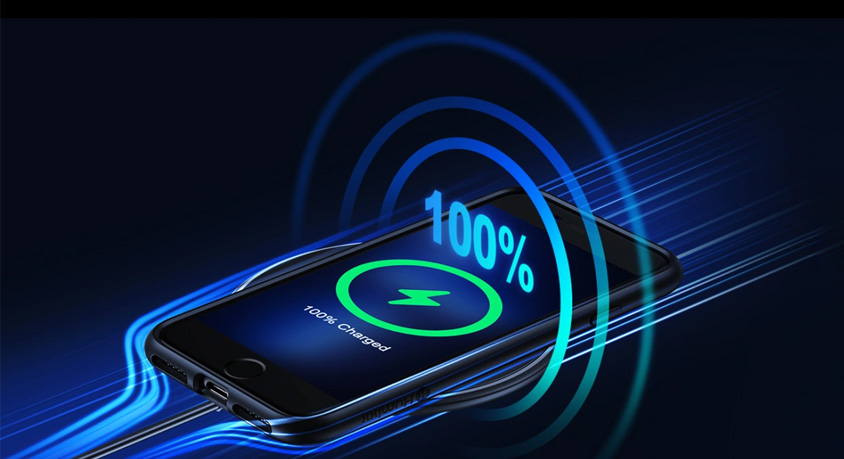
The marketing of ultra-fast charging—"50% in 5 minutes," "100% in 18 minutes"—sells a fantasy of frictionless energy. It directly targets our anxiety about the battery indicator, promising liberation. For the American user who plugs in their phone overnight as a nightly ritual, this seems like pure progress. However, this convenience operates within the immutable laws of electrochemistry. Fast charging is not "killing" your phone in a dramatic sense, but it is fundamentally accelerating a natural degradation process. The trade-off is not hidden; it is simply framed as an acceptable cost for immediacy. To understand this, we must move beyond the spec sheet—watts (W), volts (V), and amperes (A)—and examine what happens inside a lithium-ion battery when you force energy into it at an extraordinary rate.
The core mechanism of a lithium-ion battery involves shuttling lithium ions between a cathode and an anode through an electrolyte. Charging is the process of forcing those ions back to the anode. The speed of this process is limited by physical and chemical factors. Ultra-fast charging, like the 200W+ systems found in some gaming phones, works by dramatically increasing the power (voltage x current) delivered. This forces ions to move faster. The primary byproduct of this forced march is heat. Excessive heat is the foremost enemy of battery longevity. It accelerates the breakdown of the electrolyte and increases the rate of parasitic reactions on the electrode surfaces, leading to the permanent formation of a solid electrolyte interface (SEI) layer and lithium plating. These processes permanently reduce the number of free lithium ions available for charge cycles, manifesting as reduced maximum capacity (battery health percentage) over time.
Quantifying this trade-off requires looking at controlled studies. Research from institutions like the University of Michigan and Arizona State University has modeled these effects. One key finding is that charging at a 1C rate (a current that would theoretically fill the battery in one hour) is generally considered optimal for balancing speed and longevity. A standard 20W charger for a 4000mAh battery is close to a 0.5C rate. A 200W charger is operating at a 5C rate or higher. While manufacturers implement sophisticated multi-cell battery designs, advanced thermal management, and smart charging ICs to mitigate damage, they cannot repeal the underlying chemistry. A real-world example: a two-year study comparing phones charged primarily with 5W slow chargers versus those using 65W+ fast chargers showed an average battery health differential of 8-12%. The fast-charged batteries typically retained 85-88% of their original capacity, while the slow-charged counterparts retained 92-95%. The fast-charging cohort lost about one extra percentage point of health every 4-5 months.
This brings us to the most damaging common habit: the overnight charge. Plugging a phone into a fast charger before bed combines several stressors. First, the phone uses high-power input to rapidly reach 80%, generating heat. Then, it enters a slow "trickle charge" to top off to 100% and maintain it for hours. Keeping a lithium-ion battery at 100% state of charge for extended periods, especially while warm, creates high internal pressure and accelerates cathode stress. Modern phones with "optimized battery charging" learn your schedule and delay the final top-off until just before you wake up, which helps immensely. However, pairing this habit with a high-wattage charger is the worst of both worlds: a heat-generating fast charge followed by a prolonged peak voltage state.
So, what is the practical guidance? First, understand your own usage pattern. The 200W charger is a phenomenal tool for specific, time-sensitive scenarios: quickly topping up before heading out, or gaining hours of use from a 10-minute plug-in during a busy day. Its value is in managing acute battery anxiety, not in being your sole, daily charging solution.
For the "bedside charger," a slower charger (20W or even the old 5W cube) is objectively better for long-term battery health. It generates minimal heat and, when combined with software optimizations, gently maintains your phone overnight. The best practice is to keep your battery between 20% and 80% state of charge as often as possible, using fast charging for the middle of this range when you need speed, and slower charging for the beginning and end.
The target audience for a 200W charger is the ultra-mobile user who frequently finds themselves with low battery and limited time, and who views the battery as a consumable component to be replaced every 18-24 months. It is a tool of necessity and convenience.
The user who should avoid making it their primary charger is the person who charges overnight exclusively, plans to keep their phone for three years or more, and is bothered by the prospect of diminished battery life. For them, the fast charger's primary benefit is squandered and its cost is fully realized.
The conclusion is not that fast charging is a scam, but that it is a deliberate and well-engineered trade. You are exchanging a fraction of your battery's long-term cyclical longevity for the immediate utility of time. The technology is a marvel that mitigates damage, but it cannot eliminate the fundamental chemistry. The killer of your phone isn't the fast charger itself; it's the belief that such a powerful physical process could be free. In the economy of your battery, speed has a cost, and that invoice is presented slowly, one percentage point of capacity at a time. The intelligent user isn't the one who avoids fast charging, but the one who knows when to use it.
Disclaimer: Mention of any brand or trademark is for identification only and does not imply partnership or endorsement