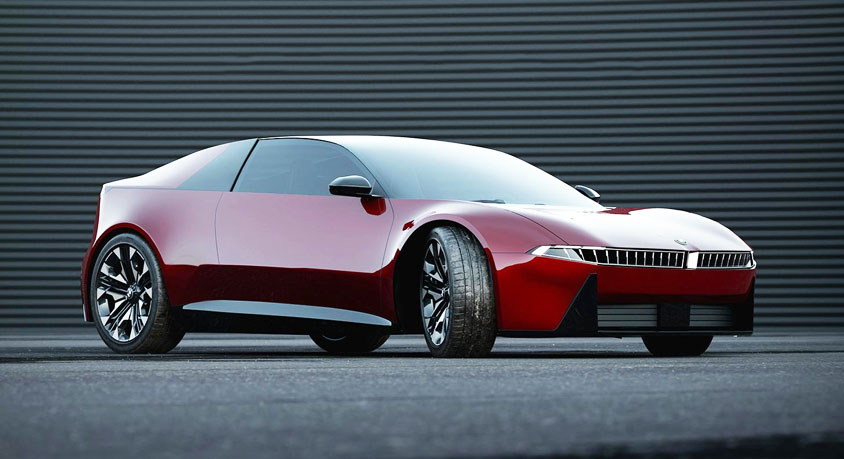
The showroom sheen of the new BMW i3—a cornerstone of the revived Neue Klasse lineup—presents a perfect, sustainable tableau. Sunlight glints off body panels forged from 100% secondary aluminum, the cabin smells of distinctive, earthy "bio-leather," and the door cards have a subtle, flecked texture from recycled plastics. It feels progressive, virtuous, and undeniably premium. Yet, the most revealing test occurs not under gallery lighting, but in a Phoenix parking lot five years from now, when that same door card, baked by 10,000 hours of desert sun, might show a faint warp, or the non-aniline dyed seat bolsters display a wear pattern different from their conventional counterparts. This is the core tension BMW asks its customers to navigate: is the higher price tag—often a 10-15% "green premium" over a conventionally manufactured equivalent—a payment for superior, future-proof engineering, or is it a subsidy for a complex, energy-intensive recycling supply chain that delivers environmental credentials at the cost of traditional, time-tested material longevity? The car isn't just built from recycled content; it's built on a promise, and promises have a lifecycle all their own.
The manufacturing process for this "circular" luxury is a story of immense complexity hidden behind a simple marketing term. "Secondary aluminum" doesn't magically appear; it comes from shredded end-of-life vehicles and industrial scrap, requiring a meticulous, energy-intensive sorting, cleaning, and re-alloying process to meet the strict metallurgical standards for automotive-grade panel stiffness and crash safety. The recycled plastics, often sourced from old fishing nets (nylon) or water bottles (PET), must be purified, re-polymerized, and compounded with virgin stabilizers to withstand UV radiation and temperature cycles without becoming brittle or fading. This isn't a low-cost shortcut; it is often a more logistically challenging and costly pathway than mining bauxite or pumping oil, especially in the infancy of these supply chains. The premium you pay partially funds the development of this industrial ecosystem.
Inside the cabin, the sensory and tactile experience tells a nuanced story. The bio-based leather alternative, typically derived from cactus, pineapple leaves, or mycelium, presents an immediate divergence. It possesses a unique, often pleasing, natural grain and a more matte finish than glossy, heavily corrected bovine leather. It is also, by its nature, more variable—batch differences in color and texture can occur, framed by BMW as "proof of natural origin" but potentially clashing with traditional expectations of German manufacturing uniformity. The seat fabric woven from recycled polyester may feel exceptionally durable, but some early adopters of similar materials in other brands have noted a tendency to attract pet hair and dust more aggressively than virgin wool blends, a small but real ownership friction.
The critical, unanswered question is one of material senescence over a decade. Conventional automotive materials have a century of empirical data backing their performance. We know how standard leather cracks, how typical plastics UV-stabilize, and how paint fades. The long-term behavior of these novel, composite materials is a projection. Will the polymer chains in plastics with high recycled content degrade differently under thermal cycling? Will bio-fabrics resist mold and staining in the humid climate of Florida as effectively as synthetics? BMW subjects them to accelerated aging tests, but these cannot perfectly replicate five years of real-world, variable abuse from children, groceries, sports equipment, and chemical exposures from cleaners and sunlight. The warranty covers defects, but not the gradual, acceptable "patina" that may develop in unexpected ways.
From a pure driving and ownership perspective, the car delivers the quintessential Neue Klasse experience: razor-sharp handling from the new electric architecture, a serene cabin, and blistering acceleration. The sustainable materials are acoustically dampened and structurally sound; you do not feel you are driving a compromise. The dissonance arises in the financial and philosophical calculus. The consumer is being asked to pay more upfront for a product that uses less virgin material, bearing the brunt of the industry's R&D and logistical costs for decarbonization. The value proposition shifts from "owning the ultimate driving machine" to "funding the ultimate sustainable transition." For some, this is a badge of honor; for others, it feels like being charged a fee to absolve the manufacturer's environmental liabilities.
Ultimately, the BMW i3 (Neue Klasse) is not a product of "garbage," but of meticulously curated, technologically reborn feedstock. The "truth" behind the price is not a sinister one, but a reflection of a painful economic reality: building sustainably at a luxury-grade level is currently more expensive than the extractive model it seeks to replace. The vehicle is a high-profile experiment in material science and consumer values. It challenges the owner to redefine what "premium" means: Is it the flawless, immutable perfection of virgin resources, or is it the intelligent, responsible, and perhaps more characterful application of reclaimed ones, complete with their unknown aging narrative? The car is a litmus test for the market's willingness to finance a circular future, one where the luxury isn't just in having the finest materials, but in knowing your purchase actively helped to ensure there are more fine materials left for the future—even if that means your door panel might tell a different story in five years than its traditional counterpart would have.
Disclaimer: Mention of any brand or trademark is for identification only and does not imply partnership or endorsement