

The marketing of modern smartphones centers on connectivity—download speeds, latency, network slicing. Yet, this promise evaporates completely in vast, empty spaces where the infrastructure of civilization ends. To test the true frontier of connection, I took three distinct devices to one of the most hostile environments in the contiguous United States: Death Valley National Park. The ambient temperature was 118°F (48°C), with ground heat exceeding 150°F (66°C). The devices were a mainstream flagship (iPhone 17 Pro), a hardened "adventure" smartphone (Cat S75), and a purpose-built satellite communicator (Motorola Defy Satellite Link). The goal wasn't to test peak performance, but survival and utility. The experiment quickly shifted from evaluating 5G to assessing a device's fundamental ability to preserve its own functionality and establish any link to the outside world when traditional networks are a mirage.
The environmental assault is immediate and multidimensional. The intense, dry heat acts as a thermal load on the battery and SoC. Direct, relentless solar radiation overheats dark-colored casings. Fine, abrasive dust seeks every port and crevice. The iPhone 17 Pro, with its sleek titanium and glass construction, is a masterpiece of urban engineering. Its A19 Pro chip and advanced modem are unparalleled in a city. Here, within 20 minutes of being left on a rock to attempt a speed test (where there was a single, frail bar of 4G LTE), it displayed its first warning: "iPhone needs to cool down before you can use it." The screen dimmed to almost unreadable levels, and all intensive functions were disabled. It protected itself intelligently but became a inert, overheated slab. Its sophisticated 5G capabilities were utterly irrelevant.
The Cat S75, built to military ruggedness standards (MIL-STD-810H), presented a different physical response. Its thick, rubberized polycarbonate body and port covers shrugged off the dust. Its design prioritizes thermal mass over dissipation. It didn't throttle as dramatically because its components are rated for higher operating temperatures, but it also grew very warm. Its key advantage was persistence: it continued to scan for a signal long after the iPhone had entered its thermal cocoon. However, in the heart of the valley, its perseverance was futile—there simply was no terrestrial signal to find. Its ruggedness ensured it continued to function as a camera and an offline GPS device, but it could not create a connection where none existed.
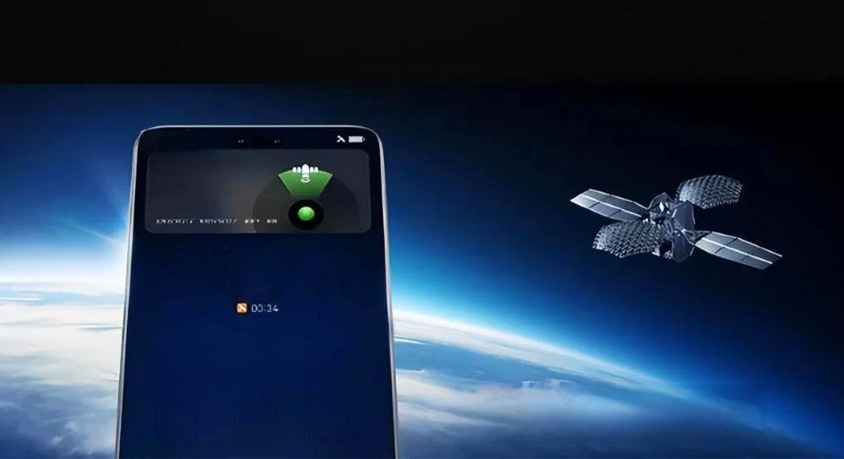
This failure of terrestrial radio is the entire rationale for the third device. The Motorola Defy Satellite Link is not a smartphone. It's a small, rugged puck with an e-ink display, a single physical button, and a sole purpose: to connect to low-earth orbit (LEO) satellites. It pairs with a standard smartphone via Bluetooth for message composition, but its core functionality works independently. When triggered, it uses its integrated hemispherical antenna to find a passing satellite. In the brutal heat, its simple design was an advantage. With no bright, power-hungry OLED screen and a minimal processor, it generated little internal heat. It locked onto a satellite within 90 seconds. From the middle of a baking salt flat, I sent and received preset "I'm okay" and "SOS" messages. The data rate is glacially slow (dozens of bytes), and there's a significant latency. But the binary outcome—"connected" versus "not connected"—was unambiguous. In this scenario, it was the only device that could alter the outcome of a genuine emergency.
Therefore, the assessment crystallizes around use case and probability. The mainstream flagship (iPhone 17 Pro, Samsung Galaxy S25 Ultra) is designed for a world blanketed in cell towers. Its thermal and radio performance is optimized for that reality. Taking it into an extreme environment like Death Valley is an error of user judgment, not a product failure. It will protect itself by shutting down.
The ruggedized smartphone (Cat S75, Sonim devices) is a tool for harsh industrial or outdoor environments where drops, water, and dust are the primary threats, and where some cellular infrastructure is presumed to be within reach—like a construction site or a forest with sporadic coverage. It is built for physical durability, not for creating connectivity ex nihilo.
The satellite communicator (Motorola Defy, Garmin inReach) is the only legitimate safety tool for intentional travel beyond reliable cellular coverage. Its value is binary and absolute: it works when nothing else can. It is insurance.
The "one phone that walked out alive" metaphor is flawed because it suggests a single device can be all things. The truth is more compartmentalized. For the vast majority of life, the flagship is the correct tool. For venturing into the true wilderness, the satellite link is the non-negotiable safety backup. The real test in Death Valley isn't about which phone survives a day in the heat; it's about whether the user understands that in the most extreme environments, the lifeline isn't a faster download speed, but the ability to send a simple, slow, and priceless "SOS" from the absolute middle of nowhere. The most advanced cellular modem is a local network wonder. A satellite link is a link to the whole planet, and in the desert, that makes all the difference.
Disclaimer: Mention of any brand or trademark is for identification only and does not imply partnership or endorsement