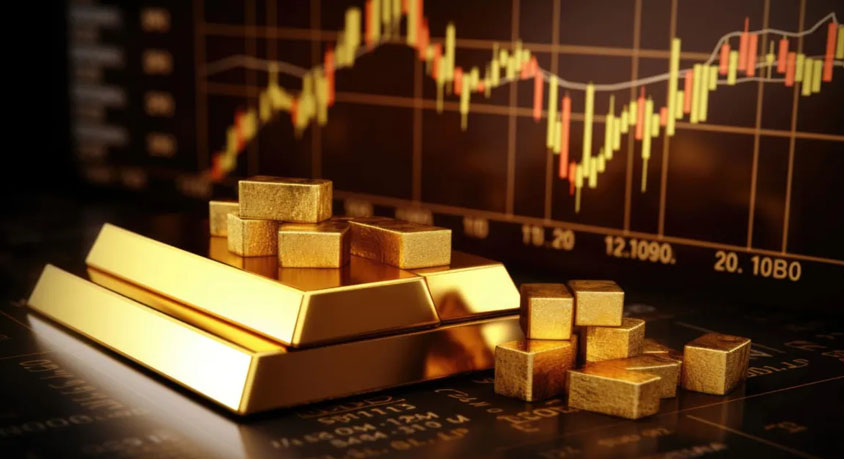
If you also watch financial news and feel a nagging suspicion that traditional assets are moving in lockstep, leaving nowhere to hide when inflation whispers or roars, you’re sensing a real structural shift. The old 60/40 stock-bond portfolio feels like a leaky lifeboat in a storm of currency debasement and geopolitical uncertainty. While headlines scream about gold hitting new highs—and it’s a valid hedge—there’s a quieter, more nuanced migration happening at the highest levels of capital. Having structured investments and analyzed value for decades, I can tell you the smart money isn’t just buying shiny metal; it’s acquiring scarce, physical objects that represent value beyond a central bank’s balance sheet. The truth is, gold is the mainstream narrative. The insider play is in the niches where intrinsic scarcity meets irreversible demand.
Let’s define the playing field: Hard Assets. These are tangible items with inherent utility, cultural value, and, most importantly, a finite supply that cannot be inflated by a keyboard. Ordinary investors see gold and maybe silver. But masters of capital preservation see a spectrum. It includes strategic commodities like copper and lithium (the “electricity metals”), but extends far further into what’s termed “collectibles of passion” with a proven financial track record: rare vintage watches, specific eras of fine art, top-tier classic cars, and even rare whisky casks.
The common thread isn’t aesthetics; it’s monopoly economics. You cannot print a 1960s Paul Newman Daytona. You cannot replicate a specific master’s brushstroke. The supply is perfectly inelastic. When demand from growing global wealth increases, the price isn’t set by earnings reports or interest rates, but by pure auction dynamics between willing buyers. This creates a powerful non-correlation to paper markets.
Now, understand the “why” beyond inflation. It’s about sovereignty over value. A fiat currency’s worth is a promise. A government bond is a promise. A stock is a claim on future promises. In times of systemic stress, trust in promises can waver. A hard asset is a claim on nothing but itself. It is the promise. This is the ultimate hedge against monetary policy missteps. A billionaire allocating 1-5% of their portfolio to these assets isn’t seeking explosive growth; they are buying insurance against the devaluation of their other 95%. They are parking value in a vehicle that exists outside the digital banking system. When you hear of a Picasso selling for $150 million, part of what you’re witnessing isn’t art criticism; it’s a colossal, secure, private value transfer.
However—and this is critical—this is not a game for the uninformed. I advise you to stop romanticizing this as a simple “buy and hold” alternative. This is a professional arena with steep barriers: authentication, storage, insurance, illiquidity, and transaction costs that can be brutal. The master’s framework involves three filters.
First, Provenance is Everything. The asset’s history and authenticity constitute 90% of its value. A certificate matters more than the object’s beauty. Second, It Must Have a Dual Market. The best hard assets have a passionate collector base and a financial investor base. This creates multiple avenues for future demand. A rare Patek Philippe has watch enthusiasts and hedge fund managers bidding. Third, the Cost of Carry is the Silent Killer. That $5 million sculpture needs climate-controlled storage, insurance at 1% per year, and security. If the asset doesn’t appreciate at least at the rate of these carrying costs plus inflation, you are losing wealth in a “safe” haven.
So, what’s the actionable insight for the pragmatic investor? You likely shouldn’t rush to buy a vintage Ferrari. But you can adopt the capital allocation principle. Start by auditing your portfolio for pure paper exposure. Then, consider if a micro-allocation (think 1-3%) to a tangible, scarce value-store makes sense for your overall strategy. This could be as simple as converting a portion of your cash holdings into physical, fully-allocated silver bullion in a secure vault—a direct step into a hard asset. The goal is not to get rich; it is to own something that no one can hack, devalue by decree, or dilute with a share offering. It’s about having a foundational layer of your wealth that is analog, real, and sovereign.
The new frontier in wealth preservation isn’t a faster algorithm. It’s a return to the oldest form of value: something real you can touch, that others desire, and that they cannot make more of. While the crowd stares at the gold ticker, the sophisticated are building private museums that double as the most elegant, unprintable bank vaults imaginable. Their secret isn’t the specific asset; it’s the strategic understanding that in a world of infinite digital promises, ultimate security may lie in finite physical truth.
Disclaimer: Mention of any brand or trademark is for identification only and does not imply partnership or endorsement