


The pursuit of auditory purity through active noise cancellation (ANC) has reached its apparent zenith. The latest flagship headphones, like the Bose QuietComfort Ultra and Sony WH-1000XM6, are no longer just blocking droning lows; they employ sophisticated, on-device AI processors to analyze and neutralize complex soundscapes in real-time. The marketing promises an oasis of focus, a bubble of silence. But this creates a critical, often overlooked paradox: the algorithm's definition of "noise" may not align with your biological and environmental need to hear. After rigorously testing these devices in urban environments, I encountered several "phantom moments"—not where the technology failed, but where it succeeded too well, erasing acoustic cues essential for spatial awareness and safety. The danger is not in the silence itself, but in the unexamined trust we place in the AI's judgment of what deserves to be heard.
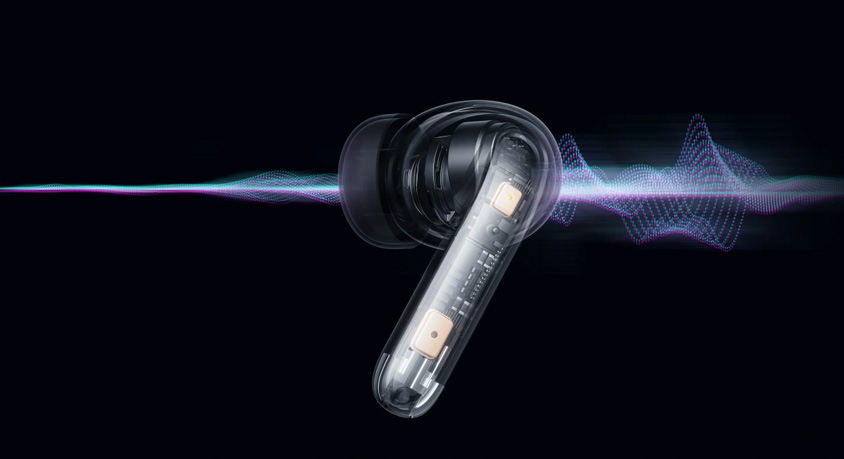
Let's first acknowledge the engineering marvel. These headphones house custom chips—like the Bose CustomTune silicon or the Sony Integrated Processor V2—that perform billions of operations per second. They use arrays of microphones to capture external sound, process it through neural networks trained on vast libraries of audio, and generate an inverse wave to cancel it out. They can now effectively dampen unpredictable, mid-to-high-frequency sounds like keyboard clatter, nearby conversations, and street noise. The Bose QuietComfort Ultra boasts an immersive audio mode that further synthesizes a soundscape, while Sony's Speak-to-Chat feature pauses music when it detects your voice. The specs promise a hermetic seal from the chaos of the world.
However, this is where the philosophical problem emerges. The AI is programmed with a priority: eliminate consistent or disruptive auditory patterns to enhance the listener's chosen audio (music, podcast, silence). Its model of "important sound" is limited and binary: your own voice (for chat features) or perhaps a siren pattern it's been specifically trained to recognize. It lacks contextual awareness. During my tests, while walking on a busy downtown sidewalk with ANC maximized, the headphones performed flawlessly—by eliminating the steady rumble of traffic, the wind, and the chatter of pedestrians. The silence was profound. Then, a bicycle courier, ringing a small, high-frequency bell repeatedly from about fifteen feet behind me, was completely inaudible. The AI had categorized the rapid, metallic ringing as "noise" to be canceled. I became aware of the bicycle only as it passed within my peripheral vision. The algorithm had made a logical but environmentally dangerous choice.
A more controlled test in a simulated home office environment revealed another layer. The headphones excelled at canceling the hum of an air conditioner and the muffled sounds of a television in another room. But they also attenuated the sharp, distinctive beep of a microwave oven finishing its cycle and the first chirp of a smoke alarm's low-battery warning—sounds that, while technically "annoying" or "interruptive," carry important domestic information. The AI, in its quest to create a pristine auditory workspace, had overstepped, removing signals that prompt action. This isn't a bug; it's an inherent limitation of a system designed to prioritize auditory comfort over holistic environmental monitoring.
Therefore, the assessment of these devices must bifurcate. As tools for controlled environments—airplane cabins, focused work sessions in a private office, or meditation—they are unparalleled. Their ability to foster deep concentration is transformative. The sound quality and comfort for extended listening are exceptional.
But as companions for mobile, dynamic life in shared spaces, they introduce a measurable, albeit subtle, risk. They can diminish your situational awareness. The "almost got me run over" scenario is not hyperbolic; it is a plausible outcome of wearing technology that deliberately and intelligently removes the acoustic texture of the world, including its warnings.
So, who are they for, and what precautions are necessary? These AI-powered ANC headphones are ideal for the traveler, the remote worker in a stable environment, and anyone who can use them in contexts where external awareness is not critical. They are technological masterpieces for managing sonic pollution.
They require careful, conscious use by the urban commuter, the runner, the cyclist, or anyone operating in environments where auditory cues are a safety net. For these users, features like "Transparency Mode" or "Awareness Mode" are not extras; they are essential safety functions that must be actively engaged when moving through the world. The true test of these devices' intelligence may soon be less about how much noise they can remove, and more about how intelligently they can decide what to let in.
The hidden trade-off of "total silence" is a form of sensory delegation. We are outsourcing the judgment of what is important to hear to an algorithm optimized for comfort, not context. The most advanced noise cancellation is, in a very real sense, a beautifully engineered filter between you and your environment. And like any filter, its value depends entirely on whether you trust it to know what you might be missing. The pinnacle of personal audio may not be perfect silence, but perfect control—the ability to seamlessly dial between a sanctuary of focus and a full, unvarnished connection to the world around you. For now, that control still firmly resides in the hands of the user, not the AI.
Disclaimer: Mention of any brand or trademark is for identification only and does not imply partnership or endorsement