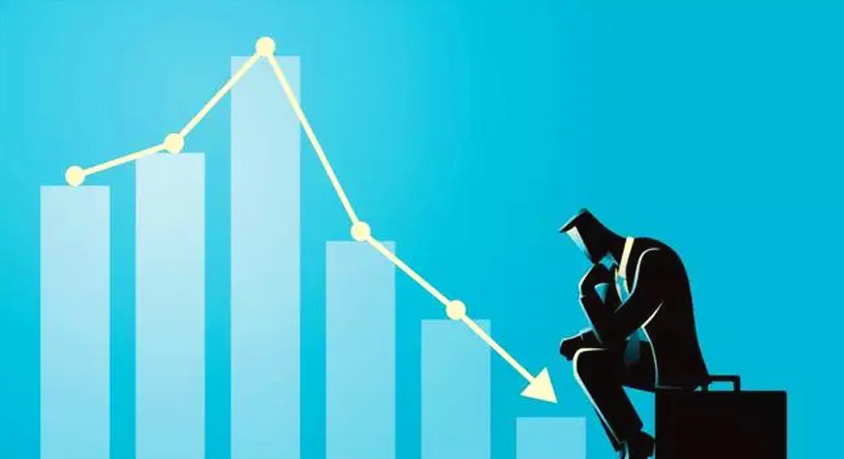
If you also watch the financial headlines with a sense of unease, noticing that even the most seemingly recession-proof sectors are showing cracks, you understand that economic cycles spare no one. The recent performance of luxury giants like LVMH and Kering—reporting slowing sales growth and declining demand in key markets—isn't just a story about handbags and haute couture. It is one of the clearest, most high-frequency readouts on the psychological state of the global affluent class. There exists a powerful paradox: when a company like Hermès, with its legendary waitlists and pricing power, signals a deceleration, it’s time to pay acute attention. This isn't about fashion; it's about fear, confidence, and the silent shifting of capital. The slowing of "non-essential ultra-premium consumption" is often a canary in the coal mine, signaling a shift in the economic climate long before it appears in GDP reports or unemployment data.
Most people look at a luxury slowdown and see a simple story of reduced consumer spending. They are actually wrong, or rather, they are looking at the wrong consumer. The core clientele for a $10,000 Birkin bag or a $5,000 Savoir suit is not affected by grocery inflation or modest interest rate hikes. Their consumption is driven by the "wealth effect"—the feeling of financial well-being and confidence derived from the value of their investment portfolios, real estate holdings, and private business interests. Therefore, a pullback in this rarefied segment is a direct signal of a shift in sentiment at the very top. It indicates that these individuals, often with the best market information and sharpest economic intuition, are feeling less wealthy or less certain about the near-term future. They are not cutting back on food or fuel; they are postponing the purchase of a tangible, depreciating asset (a luxury good) in favor of holding more liquid financial assets or paying down debt. This is a profound change in behavior.
The mechanism here is both psychological and financial. For years, low interest rates and booming asset prices created a "double engine" for luxury. First, rising stock and property portfolios made the wealthy feel richer, emboldening discretionary purchases. Second, cheap debt allowed for the financing of such luxuries with minimal cost. The current environment has flipped this. Higher interest rates have increased the cost of carrying debt, making that financed purchase less attractive. More importantly, increased market volatility and economic uncertainty have dampened the wealth effect. When your net worth fluctuates by millions in a quarter, buying a new watch feels less like a celebration and more like an unnecessary drawdown on precious capital. The wealthy begin to "tighten their purse strings" not out of necessity, but out of precaution and a reassessment of opportunity cost. That capital is likely being redirected toward more defensive or strategic positions—paying down margin loans, increasing cash reserves, or moving into private credit and other alternative assets perceived as less correlated to public market swings.
So, what practical insight can an observer glean from this? I advise you not to see luxury sales data as a niche retail metric. See it as a leading indicator of high-net-worth sentiment, which often leads broader economic trends by several quarters. Ordinary people wait for the official recession declaration from an economic bureau. But masters monitor the quarterly reports and commentary from the luxury conglomerates, listening for changes in geographic demand, inventory levels, and clientele behavior. A slowdown in Asian markets or a shift from high-margin leather goods to lower-margin accessories can be early whispers of regional economic stress or changing consumer priorities.
To translate this into a usable framework, consider a simple three-point analysis you can perform using public information. First, track the "Aspirational vs. Absolute" customer mix. When times are good, brands expand into more accessible product lines (cosmetics, lower-end accessories) to capture aspirational buyers. When uncertainty rises, these buyers retreat first, and the brands refocus on their core, ultra-wealthy clientele. A strategic pivot in marketing language often hints at this shift. Second, analyze the "Inventory-to-Sales" dynamic. Luxury is about scarcity and managed supply. If earnings calls start mentioning efforts to control inventory or adjust production due to softening demand, it’s a significant tell. It means the pullback is real enough to threaten the carefully curated perception of exclusivity. Third, listen for the "Asset-Based" commentary. When executives stop talking solely about "record sales" and start emphasizing the "enduring value of our houses," "brand strength," and "long-term heritage," they are subtly preparing the market for a period of slower growth, reinforcing the investment-like quality of the brand to justify its valuation multiple.
The chill in the luxury market is more than a sector correction. It is a sophisticated signal about capital preservation, risk appetite, and forward-looking confidence among those with the most resources and information. Hermès’ paradox—the idea that even its unparalleled desirability is not immune—tells us that we are in a moment where the perceived safety and utility of financial assets is being weighed against the joy of ultimate material indulgence. For the savvy observer, this doesn't call for predicting a recession, but for understanding that the economic clock may be moving into a phase where prudence, liquidity, and defensive positioning are becoming the new status symbols. The real luxury, it seems, is increasingly becoming the luxury of financial security itself.
Disclaimer: Mention of any brand or trademark is for identification only and does not imply partnership or endorsement