
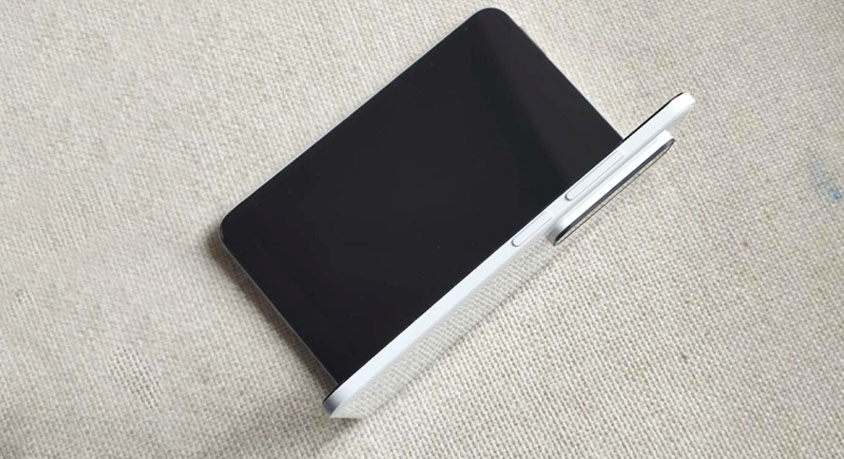
We are living through an era of design pathology. For over a decade, the smartphone industry's defining metric, its holy grail, has been the relentless pursuit of thinness. We have celebrated each shaved millimeter as progress. But this quest has reached a point of severe diminishing returns, where each incremental reduction in thickness now mandates a significant sacrifice in core functionality, battery life, and thermal performance. The cult of thinness has become a straitjacket. It is time to rebel. I am not advocating for a return to bricks, but for a rational embrace of intelligent thickness—a mere 2-3 additional millimeters—to reclaim what we have lost: all-day power, sustained performance, and uncompromised camera optics. The future of the smartphone is not thinner; it is smarter, and that requires a more generous volume.
The tyranny of thinness manifests in three critical compromises. First is the Battery Compromise. Physics is unforgiving: battery capacity is directly proportional to volume. A phone with an 8mm thick chassis has severely limited internal volume for a battery compared to one at 10mm or 11mm. Manufacturers compensate with higher-density cells and software optimization, but they are fighting a losing battle against larger, brighter screens and more power-hungry processors. The result is the "battery anxiety" that defines modern smartphone use. A phone that is 2mm thicker could accommodate 30-40% more battery capacity, transforming the experience from "can it last the day?" to "I haven't thought about the charger in two days." This is not a marginal gain; it is a fundamental shift from scarcity to abundance in our most precious digital resource.
Second is the Thermal Compromise. Modern smartphone chipsets are desktop-class computers in a thumbnail-sized package, generating tremendous heat. Effective heat dissipation requires surface area and thermal mass—copper vapor chambers, graphite sheets, and space for air to move. A thin device has neither. The heat becomes concentrated, forcing the processor to throttle its performance aggressively to avoid damage. This is why your flagship phone can feel blisteringly fast for a short benchmark or game, then become noticeably sluggish during a prolonged video edit or gaming session. A thicker chassis provides the internal space for a robust cooling system. It allows heat to spread out and dissipate, sustaining peak performance for longer. The thin phone is a sprinter; a thoughtfully thick phone is a marathon runner with the stamina for real work.
Third is the Optical Compromise. The laws of physics governing cameras are immutable: larger image sensors capture more light, and higher-quality lenses with complex elements produce sharper images with less distortion. Both require physical space. The camera bump is a direct admission of this fact—a desperate protrusion because the main body is too thin to house the necessary hardware. Instead of these unsightly, wobbling islands, why not simply thicken the entire body by the height of the bump? A uniformly thicker phone could seamlessly integrate larger sensors and more advanced lens assemblies without a protrusion, potentially even incorporating a true optical zoom mechanism instead of digital cropping. We are sacrificing image quality at the altar of a flat back that immediately disappears into a case.
The counter-argument is ergonomics and aesthetics. A thicker phone, the logic goes, is less comfortable to hold and less sleek. This is a valid concern, but it is overstated and addressable through design. A 10-11mm thick device with carefully curved edges and a balanced weight distribution can feel more secure and substantial in the hand than a slippery, wafer-thin slab. The aesthetic premium on thinness is a learned social construct, fueled by marketing. There is no inherent beauty in a device that prioritizes a spec sheet measurement over its ability to perform its core functions reliably all day.
Therefore, the "fat phone" philosophy defines its ideal user with clarity. It is for the power user, the traveler, the mobile gamer, the content creator, and anyone who uses their phone as a primary tool rather than a fashion accessory. It is for the person who values uninterrupted utility over fitting into the thinnest possible jeans pocket. This user would gladly trade a millimeter or two for the profound peace of mind that comes with a 6,000mAh battery, a cooling system that never throttles, and a camera that needs no computational tricks to take a stunning low-light photo.
You should reject this idea if your primary phone criterion is its silhouette in a tight pocket, or if you upgrade annually and thus never experience the long-term battery degradation that thicker batteries would mitigate.
The industry's obsession with thinness is a solved problem looking for new constraints. We have achieved thin. Now, we must solve for endurance, power, and fidelity. The most radical, user-centric innovation in smartphone design right now would be a flagship device that proudly adds strategic thickness and loudly proclaims the benefits: "Two-Day Battery," "Studio-Grade Sustained Performance," "No Camera Bump." It would be a device designed for the reality of use, not for the aesthetics of a store display. The choice is clear: we can continue to chase an arbitrary and exhausting ideal of thinness, or we can demand devices that are built to serve us, robustly and without apology. Give me a fat phone. Or stop pretending the current path leads anywhere but to more dongles, power banks, and frustration.
Disclaimer: Mention of any brand or trademark is for identification only and does not imply partnership or endorsement