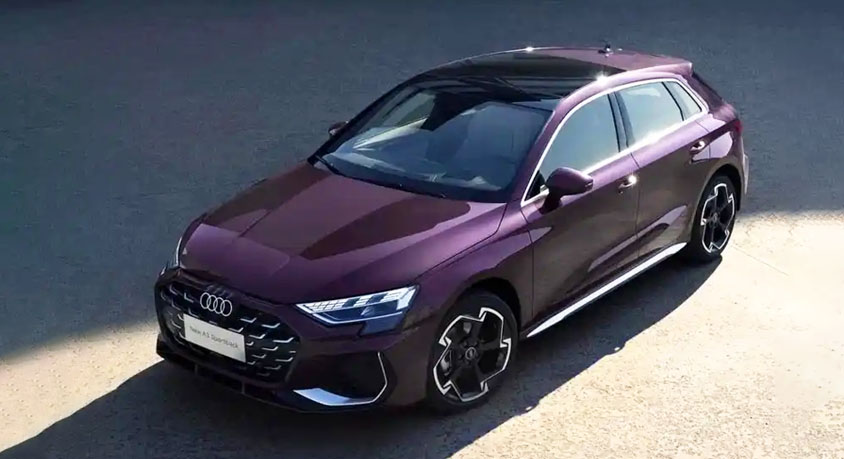



The Craigslist ad glows with the warm promise of a deal too good to refuse. A 12-year-old BMW 7 Series, a first-generation Nissan Leaf, an Audi Q7 with the V8. The photos show faded paint and worn leather, but the price—often under $5,000—whispers temptation. You imagine yourself in a luxury car for the price of a used golf cart. But the automotive world operates on a principle of deferred costs. The initial purchase price is merely the admission fee; the true expense reveals itself in repair shops, tow trucks, and the quiet horror of a part that costs more than the car itself. In 2026, as new car prices push more buyers into the used market, a familiar trap is snapping shut on unsuspecting wallets. Here are five vehicles that represent the pinnacle of that danger: cheap to buy, catastrophic to own.
The BMW 7 Series with the N63 V8 engine is the poster child for this phenomenon. You can find a early 2010s 750i for under $7,000, a car that originally cost over $90,000. The allure of that luxury presence is intoxicating. The reality is a maintenance schedule that reads like a horror novel. The N63 engine, BMW's first attempt at a twin-turbo V8, is notoriously prone to oil leaks, coolant leaks, and carbon buildup. The turbochargers are located in the hot "valley" of the engine, requiring hours of labor to access. A simple valve stem seal failure can lead to catastrophic oil consumption, with repair bills easily exceeding $8,000. The air suspension, a hallmark of luxury, inevitably fails, with replacement struts costing thousands. The electronics, from the iDrive system to the door lock actuators, fail with regularity. You are not buying a $5,000 car; you are buying a $90,000 car that has already consumed its own value and now requires $90,000 worth of maintenance spread over a collapsing structure.
The first-generation Nissan Leaf, particularly the 2011-2013 models, represents a different but equally devastating trap: battery degradation. You can find these for $4,000 or less, an enticing entry point into electric mobility. The car still drives, still charges, still seems functional. But the original battery pack, with its passive thermal management, has been cooked by years of hot American summers. What was once an 84-mile range is now 40 miles on a good day, 25 miles in winter. The cost to replace the battery pack? Often $6,000 to $8,000, more than the car's value. The owner faces an impossible choice: scrap a perfectly functional car or invest more than its worth to restore its utility. The early Leaf is a rolling monument to the importance of battery thermal management, and a financial black hole for the unwary buyer who thought they were being environmentally and economically responsible.
The Audi Q7 with the 4.2-liter V8 from the late 2000s offers the allure of German SUV capability for pocket change. Sub-$6,000 examples are common. But this vehicle is a symphony of expensive failure points. The timing chain tensioners fail, and when they do, the engine self-destructs. The repair requires engine removal and costs $5,000 to $8,000. The air suspension, shared with the Touareg and Cayenne, fails with regularity, with individual struts costing over $1,000 each. The mechatronic unit in the automatic transmission fails, requiring a $3,000 rebuild. The sunroof drains clog, flooding the cabin electronics. The alternator bracket, made of plastic, cracks and leaks coolant. Every system in this vehicle was engineered to a standard of luxury performance, but that engineering assumed maintenance at a dealership with a $150 hourly labor rate. On a $5,000 car, that assumption becomes a nightmare.
The Mercedes-Benz S-Class with the ABC (Active Body Control) hydraulic suspension is a masterpiece of 2000s engineering that has become a modern curse. The system, which uses hydraulic fluid and computer-controlled struts to eliminate body roll, was revolutionary. On a used S600 or S55, now selling for under $8,000, it is a time bomb. The hydraulic lines rust and leak. The suspension pumps fail. The struts themselves, when they leak, cost over $2,000 each to replace. The system requires specialized diagnostic equipment and fluid that costs $30 per liter. A single suspension failure can easily result in a $5,000 repair bill. The rest of the car, from the complex bi-xenon headlights to the massaging seat modules, follows the same pattern. You are not buying a car; you are buying a commitment to maintaining a technological marvel that was never designed to be cheap.
Finally, the Range Rover with the 5.0-liter supercharged V8, particularly the L322 generation from 2010-2012, offers British luxury for Land Rover prices that have collapsed to below $7,000. The engine suffers from timing chain tensioner failure, often signaled by a rattle on startup that owners learn to ignore until the engine jumps timing and destroys itself. The air suspension fails. The electronics, from the window regulators to the touchscreen, fail with impressive regularity. The transfer case can fail. The differentials can fail. The cooling system is prone to leaks. The labor rates at independent Land Rover specialists are high, and parts supply for these aging vehicles is becoming erratic. The Range Rover ownership experience, even on a new model, is often described as character-building. On a $6,000 example, it is character-destroying.
The common thread among these vehicles is the chasm between their original market positioning and their current state. They were engineered to a standard of luxury and performance that required significant maintenance when new. That maintenance burden does not diminish with age; it compounds. Parts wear out, seals harden, electronics fail, and the cost of replacing them remains tied to the original price of the vehicle, not its current depreciated value. The $5,000 BMW or Audi is not a bargain; it is a liability, a bet that you can outrun the inevitable repair bills. The savvy used car buyer in 2026 knows that the cheapest car to buy is rarely the cheapest car to own. Sometimes, the most expensive decision you can make is the one that looks like a deal.
Disclaimer: Mention of any brand or trademark is for identification only and does not imply partnership or endorsement