
There is a moment, after every major smartphone launch, when the internet fills with side-by-side comparisons. A photo of a city skyline at dusk, taken with the new OnePlus 15, next to the same shot from the Xiaomi 16 Ultra. The comments overflow with praise for the dynamic range, the punchy colors, the way the shadows lift without losing the highlights. These images are undeniably stunning. They pop on social media feeds. They elicit likes and shares. But if you zoom in, if you look closely at the fine print of the image metadata, a strange truth emerges. These photographs are not photographs in the traditional sense. They are interpretations. They are algorithmic guesses dressed up as captured light. And the gap between what we see and what the camera sees has never been wider.
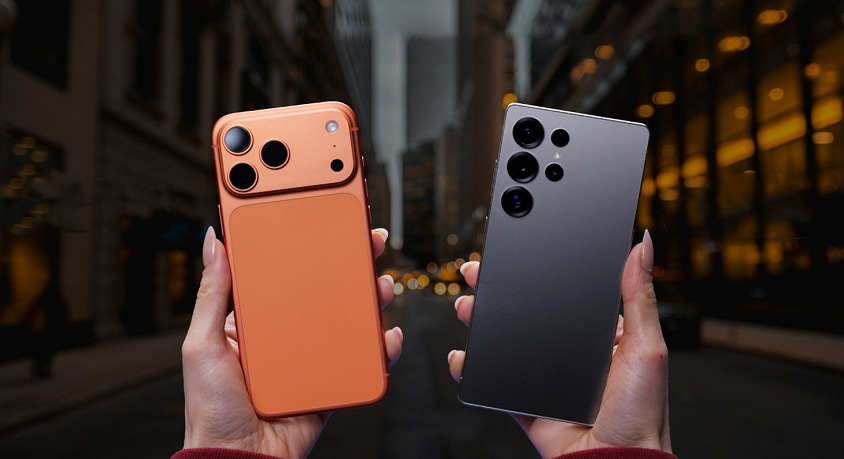
Hold the OnePlus 15 and the first thing you notice is the camera bump. It is substantial, a multi-layered island of glass and metal that houses a primary 50-megapixel sensor, an ultrawide, and a telephoto lens. The Xiaomi 16 Ultra takes this further, with a design that mimics a traditional camera, complete with a leather-like back panel and a massive circular module that dominates the rear. These are phones that want to be seen as serious imaging tools. They feel dense, balanced, and unmistakably premium in the hand. For the user who wants to leave their dedicated camera at home, the physical promise is seductive: this is all the camera you will ever need.
The screens on both devices are, predictably, exceptional. The OnePlus 15 features a vibrant 120Hz LTPO AMOLED that hits eye-searing brightness levels, making your photos look punchy and vivid in any light. The Xiaomi 16 Ultra's display is similarly impressive, with color accuracy that rivals professional monitors. For reviewing shots in the field, for showing friends the photo you just captured, the experience is immediate and satisfying. Battery life, thanks to large silicon-carbon cells, comfortably lasts a full day of heavy shooting, though the Xiaomi's more aggressive image processing can drain it faster during extended camera use.
The performance, powered by the latest Snapdragon 8 Gen 5 chip in both devices, is effortless. Apps open instantly, multitasking is smooth, and the camera app launches in a fraction of a second. For a parent trying to capture a child's first steps, the speed and reliability are genuine improvements over previous generations. You won't miss the moment because the camera took too long to start.
But the moment you press the shutter, the process diverges from everything we understand about traditional photography. A dedicated camera, even a modern mirrorless one, captures light. It records the photons that hit the sensor, applies some basic demosaicing, and saves a file that represents, within the limits of the hardware, what was actually there. A smartphone does something fundamentally different. It captures a burst of images, sometimes dozens, at different exposures. Then the neural processing unit, the NPU, takes over. It analyzes the scene. It identifies faces, skies, grass, buildings. It separates the subject from the background. And then it reconstructs the image from scratch, pixel by pixel, based on what its training data tells it a "good photo" should look like.
Consider a common scenario: a candlelit dinner at a restaurant. You want to capture the intimate atmosphere, the warm glow on your companion's face. You take a shot with the OnePlus 15. On the screen, the result is astonishing. The face is perfectly lit, the background is softly blurred, the candle flame is sharp. But look closely at the skin texture. It is smooth, almost porcelain-like, with none of the natural pores or fine lines that would be visible to the naked eye. The algorithm has decided that skin should look flawless, and has painted over the reality. The Xiaomi 16 Ultra, with its partnership with Leica, takes a different approach, offering a more contrasty, moody aesthetic. But it is still an aesthetic. It is still a filter, baked into the hardware by a team of engineers in a lab who have never met your dinner companion.
This becomes even more pronounced with zoom. The telephoto lenses on both phones are physically limited by the thinness of the device. To deliver the advertised 10x or even 20x zoom, they rely heavily on computational upscaling. The result is an image that looks sharp at a glance, but dissolves into watercolor-like smudges when inspected closely. Text on a distant sign becomes unreadable. Fine details, like the texture of tree bark or the weave of a fabric, are hallucinated by the AI, filled in with patterns that look plausible but are not real. The phone isn't showing you what was there. It is showing you what it thinks should have been there.
The low-light performance tells the same story. The OnePlus 15's Night Mode and the Xiaomi's Ultra Night algorithms produce images that are bright, clear, and colorful from scenes that were pitch black to the human eye. It is a technical marvel. But it is also a lie. The atmosphere of the moment, the mystery of darkness, the way our eyes struggle and adapt—all of that is erased in favor of a bright, uniform, easily shareable image. The phone has not captured the experience. It has replaced it with a more palatable version.
Who, then, are these devices for? The OnePlus 15 is for the user who wants consistent, vibrant, social-media-ready photos with minimal effort. It is for the person who values convenience and shareability above all else. The Xiaomi 16 Ultra, with its Leica branding and more sophisticated processing options, is for the enthusiast who wants some control over the final aesthetic, who might shoot in raw format and appreciate the hardware collaboration. They are not for the purist, the documentarian, or anyone who believes that a photograph's primary duty is to record reality as it was. For those users, a dedicated camera with a larger sensor and minimal in-camera processing remains the only honest tool.
Disclaimer: Mention of any brand or trademark is for identification only and does not imply partnership or endorsement