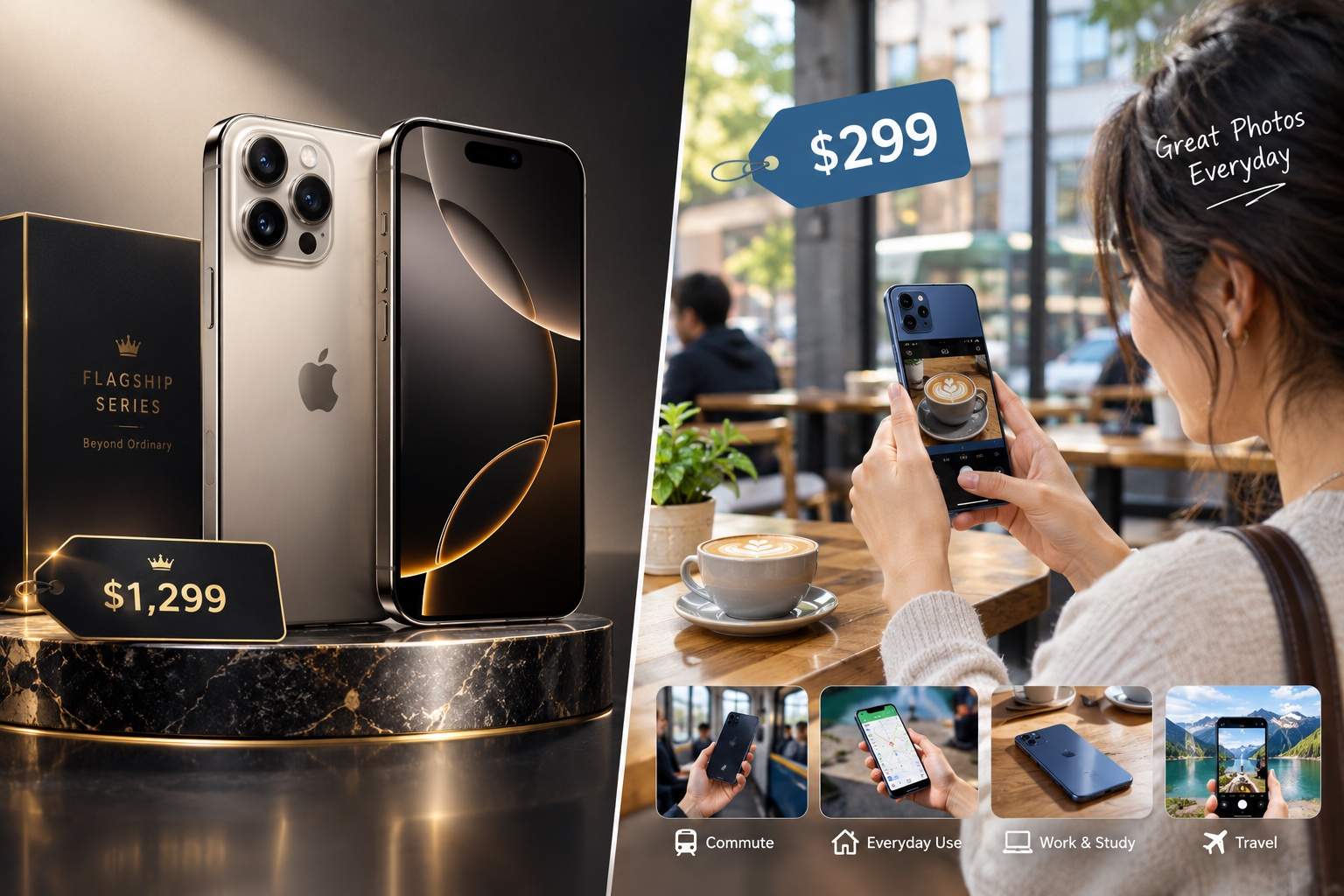

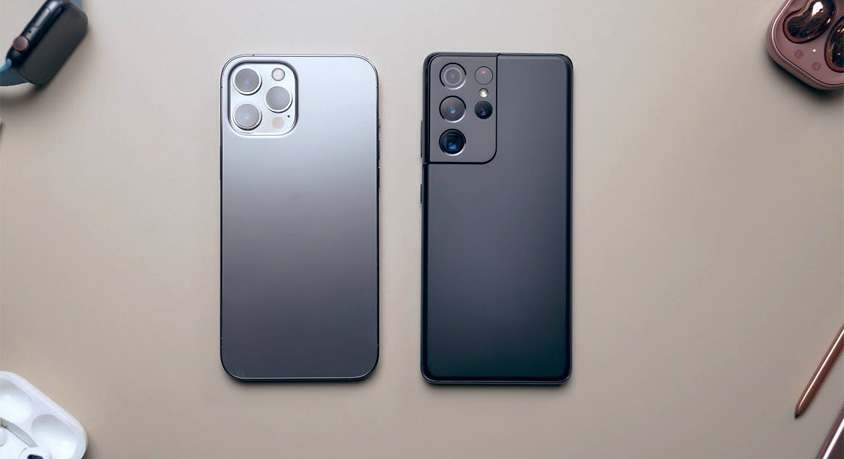
There is a rhythm to the consumer electronics industry, a heartbeat synchronized to annual product launches. Every September, a new iPhone arrives, and a familiar anxiety spreads: is my phone now obsolete? The marketing machine insists it is. Faster chips, better cameras, more AI features—the message is clear. To keep up, you must upgrade. But what if this rhythm is fiction? What if the device sitting in your drawer, the one from five years ago, is still capable of handling almost everything you throw at it? After spending a month using a 2020 iPhone 12 Pro and a Galaxy S21 Ultra as my primary devices, I discovered that the gap between old and new is far narrower than the industry wants you to believe. The secret is not a hack. It is simply recognizing that flagships are built to last, and the upgrades are increasingly marginal.
Pick up an iPhone 12 Pro today and the first thing that strikes you is the heft. The stainless steel frame, the matte glass back, the precise weight distribution—it still feels like a premium object. It lacks the flat sides of the latest models, but the curved transition to the screen is comfortable in the hand. The Galaxy S21 Ultra, with its contour-cut camera housing and polished aluminum frame, similarly exudes quality. It is slightly lighter than modern Ultra models, but the build is solid, the buttons are clicky, and the glass is cool to the touch. For a user who values craftsmanship, these devices have not aged. They are not relics; they are artifacts from a time when flagship meant flagship.
The screens on both are, by today's standards, merely very good rather than best-in-class. The iPhone 12 Pro's 60Hz OLED is the most noticeable concession to age. After using modern 120Hz displays, scrolling feels slightly sticky, less fluid. But it is a difference you adapt to within days. The panel itself is still bright, color-accurate, and perfectly adequate for reading, watching video, and browsing. The S21 Ultra, with its 120Hz Dynamic AMOLED, holds up far better. It is bright, smooth, and vibrant, competitive with many mid-range devices released this year. For a user who doesn't compare them side-by-side with the latest models, both screens are entirely satisfactory.
Performance is where the argument for obsolescence collapses. The A14 Bionic in the iPhone 12 Pro and the Snapdragon 888 in the S21 Ultra are not the latest chips, but they remain astonishingly capable. Everyday tasks—email, messaging, social media, web browsing, navigation—are handled with no perceptible lag. Apps open quickly, multitasking is smooth, and even light gaming is perfectly enjoyable. The only place where age shows is in sustained heavy workloads, like editing long 4K videos or playing the most graphically intense games at maximum settings. For the vast majority of users, whose daily usage consists of communication and content consumption, the performance gap is academic, not experiential.
The camera systems tell a similar story. The iPhone 12 Pro's triple-lens array, with LiDAR, still captures excellent photos in good light. The computational photography features of the day, like Deep Fusion and Night Mode, remain effective. Compared to the latest iPhone, the differences are real but subtle: slightly less dynamic range in harsh backlight, a touch more noise in extreme low light, a less aggressive processing style that some may actually prefer. The S21 Ultra's 108MP main sensor and dual-telephoto system continue to impress. Its 10x optical zoom, a feature still rare today, gives it a genuine advantage over many current phones. For a photographer who values optical reach over computational trickery, the S21 Ultra remains a uniquely capable tool.
Battery life is the one area where age is an undeniable factor. After five years, lithium-ion batteries degrade. The iPhone 12 Pro, with its original battery at 84% health, needed a midday top-up to survive a full day of heavy use. The S21 Ultra, similarly aged, would reach evening with about 15% remaining. But this is not a permanent limitation. A battery replacement, costing around seventy to ninety dollars, restores both devices to all-day vitality. For the cost of a fraction of a new flagship, the endurance problem is solved. For a user willing to invest in this simple maintenance, the phone's useful life extends significantly.
Software support has changed the equation entirely. The iPhone 12 Pro runs iOS 18, with full access to the latest features and security updates. It is not a second-class citizen; it is a fully supported device. The S21 Ultra, while no longer guaranteed the latest Android version immediately, remains on a current and secure build with Samsung's continued update policy. The app ecosystem does not discriminate based on age. Everything you need is available and works well. For a user who cares about security and functionality, not having the absolute latest OS version is a non-issue.
Who, then, are these old flagships for? The iPhone 12 Pro is for the user who wants a compact, premium device with excellent software support and a great camera, and who is willing to accept a 60Hz screen and replace a battery. The S21 Ultra is for the photography enthusiast who values optical zoom and a smooth display, and who prefers a larger form factor. They are not for the user who needs the absolute fastest processor for mobile gaming, the very latest camera features like AI object removal, or the newest design trends. But for the vast majority of users—the ones who check email, scroll social media, take photos of their family, and stream video—these five-year-old devices are not just adequate. They are good.
The deeper truth is that the smartphone industry has matured. The leaps from year to year are now tiny steps. The improvements are real, but they are incremental. The idea that a phone becomes unusable after two or three years is a marketing fiction, sustained by the absence of a competing narrative. The secret that the industry does not want you to know is that a flagship from half a decade ago, with a fresh battery and the latest software, is still a flagship. It is still fast, still capable, still beautiful. The anxiety of obsolescence is manufactured.
Disclaimer: Mention of any brand or trademark is for identification only and does not imply partnership or endorsement