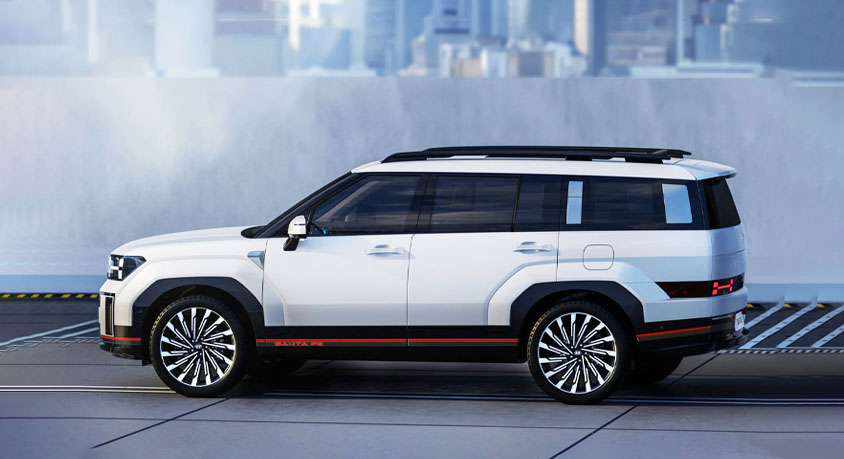
Hyundai took a huge risk with the new Santa Fe. It's boxy, angry, and looks like a budget Defender from certain angles. I actually like the design. You can see the hood corners from the driver's seat, which makes parking in tight garages easy. But then I filled up the tank for the first time. The hybrid version is rated at 36 mpg combined. I saw 31. That's not terrible, but the Toyota Highlander Hybrid gets 36 in the real world. And the Santa Fe's gas tank is only 17.7 gallons, so range is barely 500 miles. My neighbor's Honda Pilot gets 22 mpg but has a 19-gallon tank and similar range. The hybrid advantage disappears on road trips.
Let me describe a school run. I have three kids to drop off – two in car seats, one in a booster. The Santa Fe's second row slides and reclines, which is rare in this class. I slid it forward, and my 10-year-old climbed into the third row without a fight. The third row actually fits humans up to 5'6" for an hour. The Pilot's third row is still roomier, but the Santa Fe beats the Mazda CX-90 by a mile. Cargo space behind the third row is 14.6 cubic feet – enough for a folded stroller and two backpacks. The Pilot gives you 22.5. So you'll use the roof box more often.
The interior is where Hyundai beats Toyota. Soft-touch materials on every surface, physical buttons for climate, and a curved display that integrates the gauge cluster and infotainment. No cheap hard plastic on the door panels. But the fingerprint scanner for starting the car is a gimmick. It failed to recognize me three times in the rain. I had to enter a PIN on the screen. Hyundai, just give us a normal push button. The ambient lighting changes colors, which my kids loved. I found it distracting at night. The gear selector is a stalk on the steering column, like Mercedes. It works fine, but my muscle memory kept reaching for the center console.
The driving experience is average. The hybrid system combines a 1.6-liter turbo with an electric motor for 231 horsepower. That's enough, but the transmission is a six-speed automatic, not a CVT. That's good for reliability, but shifts are noticeable. The Honda Pilot's 10-speed is smoother. The Santa Fe's steering is light, almost too light. On the highway, it requires constant small corrections. The Hyundai Tucson feels more planted. Off-road, the Santa Fe has 8.3 inches of ground clearance and a terrain mode dial. I took it on a gravel fire road, and it handled fine. But it's no Bronco Sport.
Here's the real problem. The Santa Fe Hybrid costs $38,000 to start. A loaded one hits $48,000. At that price, you're competing with the Pilot Trailsport and the Telluride. Both have more space and similar fuel costs. The Santa Fe's only unique selling point is the design. That boxy shape hurts aerodynamics – at 75 mph, wind noise is loud. I measured 72 decibels inside. The Pilot was 68. Long drives get tiring.
Skip the non-hybrid Santa Fe. The 2.5-liter turbo gets 24 mpg on premium fuel, which is stupid. The hybrid is the only sensible choice. Also, avoid the 21-inch wheels on the Calligraphy trim. The 18-inch wheels on the SEL give a better ride and cheaper tires. And if you need real third-row space, buy a used Palisade or a new Pilot. The Santa Fe is for people who want the look of a boxy SUV without the gas bill of a real off-roader. It's stylish, but style has a cost. I'd take the Highlander Hybrid for efficiency or the Pilot for space. The Santa Fe tries to do both and excels at neither. Still, I smiled every time I looked back at it in my driveway. That counts for something. Just don't expect Land Rover capability. Or Land Rover problems, thankfully.
Disclaimer: Mention of any brand or trademark is for identification only and does not imply partnership or endorsement