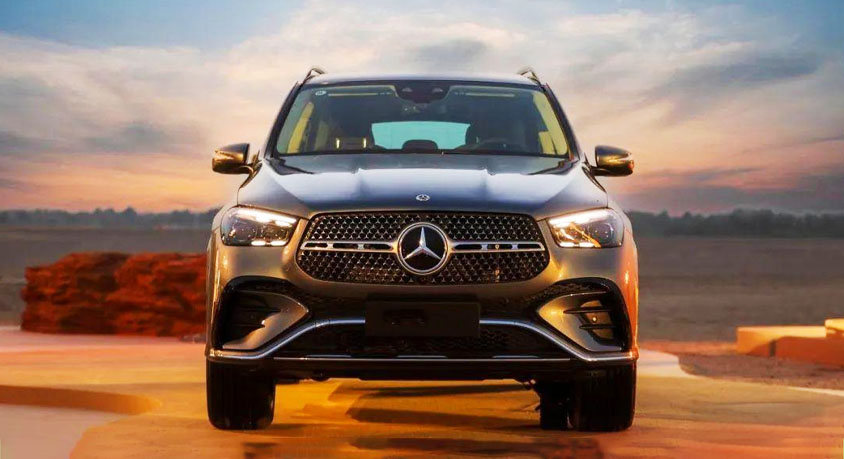
I was standing in the service bay of a local dealership last Tuesday, watching a technician chase a phantom electrical "fuzz" in a three-year-old Mercedes-Benz GLE, and it hit me: we have reached the era of the disposable luxury tank. The owner was there too, looking pale because his "check engine" light turned out to be a failure in the 48-volt integrated starter-generator (ISG) system—a repair that costs more than a decent used Miata. Mercedes wants you to believe the new GLE is a bridge to a green future, a seamless blend of combustion and electricity that offers the best of both worlds. But from where I’m standing, with a wrench in my hand and twenty years of grease under my fingernails, it looks like a ticking financial time bomb wrapped in expensive leather.
The marketing fluff calls this "electrification," but for the guy who actually owns the car out of pocket, it’s just more layers of "stuff" to break. Even the "entry-level" GLE 350 has ditched the honest mechanical simplicity of the past for a complex mild-hybrid setup. Mercedes-Benz has developed an obsession with complexity that borders on the pathological. Take the interior, for example. I have a seething, visceral disdain for the touch-capacitive "sliders" on the steering wheel. Trying to adjust the volume while merging onto a rain-slicked I-95 feels like trying to play a high-stakes game of "Operation" on a frozen smartphone. It’s a solution to a problem that didn't exist, and it feels cheap—like a PS5 controller made of recycled soda bottles—compared to the solid, metallic "thunk" of a BMW X5’s physical switchgear.
When you bury the throttle, the GLE doesn't give you a "scream" or a "deep burble"; it provides a hushed, digitized surge of momentum that feels entirely disconnected from the road. The electric motor fills in the gaps before the turbo wakes up, which is great for a smooth school run or a trip to the country club, but it lacks the mechanical soul of a Porsche Cayenne. The steering is light and numb, feeling more like a flight simulator than a vehicle. If you’re driving home from a late-night soccer tournament with three exhausted kids in the back, you’ll appreciate the isolation. But if you’re a driver who wants to feel the texture of the asphalt through your palms, the GLE will leave you feeling like you’re wearing thick winter mittens.
Imagine you’re planning a five-year road trip across the country, hauling a small Airstream and a trunk full of gear. In a Lexus GX, you have the peace of mind that comes with a robust, over-engineered mechanical foundation. In the GLE, you are constantly negotiating with a dozen computers that all have to agree before the car will move. The complexity is staggering. We’re talking about an engine that has no belts—everything is electric, from the water pump to the AC compressor. That’s great for efficiency while the car is under warranty, but what happens when that electric water pump decides to quit in a Costco parking lot in 2030? You aren't fixing that with a basic socket set and a YouTube tutorial. You’re calling a flatbed and opening your 401(k).
Compared to the BMW X5, the Mercedes is undoubtedly the king of comfort. It rides like it’s floating on a layer of heavy cream, soaking up potholes that would make a Tesla Model Y rattle your teeth out of your skull. However, the BMW still understands that a car needs to be an extension of the driver. The X5’s inline-six feels like a precision instrument; the Mercedes powertrain feels like an appliance that’s trying too hard to hide its own internal combustion. The BMW is the car you want to drive; the Mercedes is the car you want to be seen in while someone else drives.
The real tragedy is that underneath all the sensors and the "Hey Mercedes" voice-activated nonsense, the GLE is a fundamentally well-built piece of hardware. The seats are some of the best in the business, offering the kind of lumbar support that keeps your spine from turning into a question mark after six hours on the highway. The cabin is eery quiet, blocking out the wind and tire roar better than almost anything else in the segment. But this "all-in" approach to hybrid tech feels like a gamble where the customer takes all the risk. Mercedes is banking on the fact that their target demographic leases these cars for three years and then dumps them before the "48V Battery Malfunction" screen becomes a permanent fixture on the dashboard.
The best cars are the ones you can trust. The new GLE is a magnificent, comfortable, and status-flaunting machine, but I wouldn't trust it as far as I could throw a cylinder head. If you’re a suburban professional who swaps cars as often as iPhones, you’ll love it. But if you’re an enthusiast who takes pride in maintaining your own rig and keeping it for a decade, this car is a nightmare disguised as a luxury asset. It’s a masterpiece of engineering that forgets that, eventually, someone has to pay the bill when the magic wears off. For me, I’ll take a car that has a few more buttons and a lot less "intelligence," because at least I’ll be the one in control when the warranty expires.
Disclaimer: Mention of any brand or trademark is for identification only and does not imply partnership or endorsement