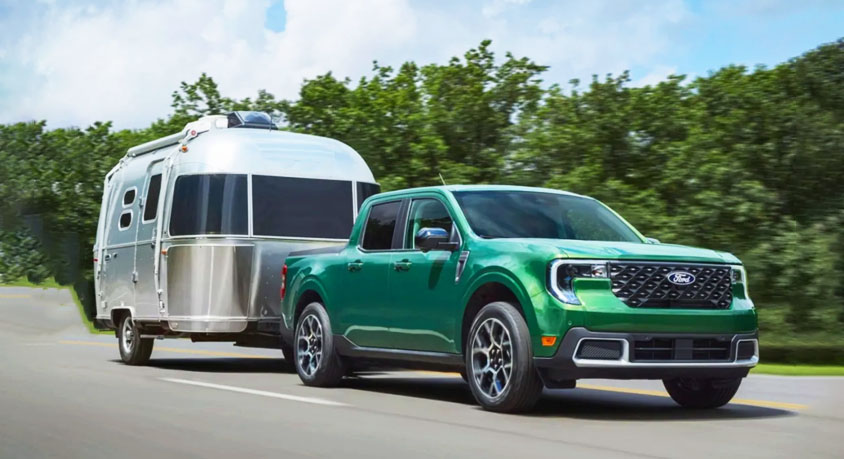
The romance of the American motorcycle is built on a foundation of mythic self-sufficiency: a lone rider, a stretch of open road, and a machine that carries everything needed on its own frame. The reality of attending a rally three states away, however, introduces less romantic variables—a sudden thunderstorm, a mechanical hiccup, or simply the desire to arrive fresh and clean. This is why parking lots at events like Sturgis are increasingly a showcase for two-wheeled artistry flanked by four-wheeled pragmatism. The Harley owner isn't looking for a second vehicle to drive for fun; they're sourcing a mobile garage, a service truck, and a stylistic companion all in one. The choice often narrows to two distinct philosophies, embodied by the compact Ford Maverick and the full-size Chevrolet Suburban.
The Maverick presents a minimalist, tactical solution. Its 4.5-foot bed, while short, can easily accommodate a mid-size cruiser like a Sportster or a stripped-down custom with a simple, single-ramp load. The unibody construction and low load floor make the loading process a one-person job, a critical feature when you're alone in a hotel parking lot. With the available 4K tow package, it can also pull a lightweight trailer for a full-dress Touring model. Its fuel-efficient turbo or hybrid powertrain turns a 500-mile haul into a single-tank, low-cost affair, and its maneuverable size allows it to navigate crowded campgrounds and tight festival parking with ease. It’s a tool, small and sharp, for the rider who views the support vehicle as a necessary piece of logistics, not an extension of their identity.
The Chevrolet Suburban represents the maximalist, traditionalist counter-argument. It is the rolling equivalent of a horse trailer for a prized stallion. With the seats folded, its cavernous interior can swallow a full-dress Harley-Davidson Road Glide, completely enclosed and protected from weather, theft, and road grime. This is the choice for the rider whose motorcycle is a high-value showpiece or who demands absolute security. The Suburban’s towering presence and unabashedly American, utility-first aesthetic form a coherent visual partnership with a big twin Harley. It doesn’t just carry the bike; it escorts it, offering a climate-controlled, secure, and comfortable mobile basecamp for an entire riding group, complete with space for gear, coolers, and passengers.
Beyond pure capacity, the choice hinges on ritual and self-image. Loading a bike into a Maverick is a quick, functional task. Loading one into a Suburban is an event, requiring planning, ramps, and possibly help—a communal ritual that reinforces the bike's special status. The Maverick driver might see their truck as an appliance; the Suburban driver likely sees theirs as a command vehicle. Both, however, are solving the same core problem: extending the range and reducing the risk associated with their prized motorcycle. They are buying freedom from vulnerability.
Ultimately, this trend underscores a mature understanding of the motorcycle as a focused pleasure device, not always suited for every leg of a journey. The support vehicle liberates the ride. It allows the enthusiast to chase perfect roads in one state without enduring a thousand miles of interstate slab to get there, or to bring a pristine show bike across the country. The "right" truck or SUV isn't the one that's the most fun to drive empty; it's the one that disappears into the background of the experience, silently enabling the real passion to shine without compromise. It’s the least glamorous vehicle in the garage doing the most important job: ensuring the glamorous one always gets to the party.
Disclaimer: Mention of any brand or trademark is for identification only and does not imply partnership or endorsement