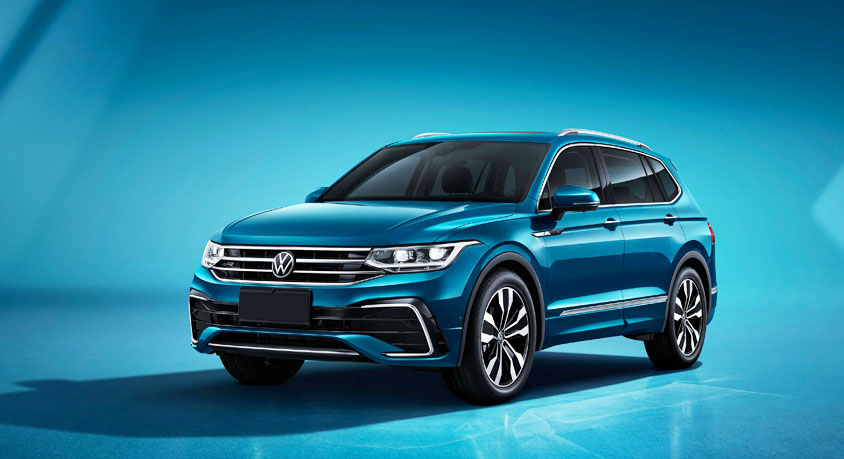
I was carving through a particularly tight set of switchbacks in the hills outside of Nashville last week, trying to enjoy the surprisingly crisp turn-in of the new Volkswagen Tiguan, when my internal temperature hit the boiling point. I wasn't overheated because of the cooling system; I was sweating because I wanted to adjust the fan speed by two notches and I couldn’t find the damn "button." Instead of a tactile, reassuring click of a physical dial, I was forced to take my eyes off the apex and hunt through a massive 15-inch slab of glowing glass. It is a infuriating trend that has infected the halls of Wolfsburg like a virus. Volkswagen used to be the gold standard for logical, "common sense" interiors, but with this new generation, they’ve bet the farm on a digital interface that feels like it was designed by a software engineer who has never actually operated a motor vehicle in a rainstorm.
The Tiguan has always been the "grown-up" choice in a segment filled with over-styled jellybeans. In Southeast Asia, it’s a status symbol for the rising middle class; in the States, it’s the go-to for people who find the Toyota RAV4 too sterile and the Honda CR-V too suburban. But this new cabin architecture is a slap in the face to the driver. They’ve replaced the soul of the machine with an iPad. I have an absolute, seething disdain for touch-capacitive sliders—especially the unlit ones under the screen that control volume and temperature. Adjusting your climate at night shouldn't feel like playing a high-stakes game of "Operation" in the dark. It’s the same corporate laziness that gives us those flush-mounted, motorized door handles that freeze shut in a Vermont winter; it’s tech for the sake of a brochure, not for the human being behind the wheel.
When you actually stop fighting the screen and drive, the mechanical bones of the Tiguan remind you why we liked this car in the first place. The steering wheel grip is substantial, feeling more like the leather-wrapped handle of a high-end baseball bat than the flimsy, PS5-controller-esque wheels found in many Japanese competitors. The suspension has that classic "Teutonic" thump—it’s firm, communicative, and composed. It doesn't wallow over expansion joints like a Nissan Rogue, nor does it feel as hollow and "tinny" as a Hyundai Tucson. There is a sense of mass and integrity in the chassis that makes you feel like the car is carved from a single block of steel, but even that can't fully distract you from the digital ghost in the machine.
Under the hood, the 2.0-liter turbocharged heart remains a steady companion. It doesn't emit a "deep burble" or a high-strung "scream"; instead, it has a purposeful, industrial growl that sounds like it’s actually doing work. Imagine you’re heading home from a long day at the office, or maybe you’re rushing to pick the kids up from soccer practice before a thunderstorm hits. You need to merge into fast-moving highway traffic, and the Tiguan’s DSG transmission snaps off shifts with a precision that makes the CVTs in the Honda or Toyota feel like they’re made of rubber bands. It’s a powertrain that respects your time, providing a linear surge of torque that the "eco-focused" hybrids simply can't match for pure driving engagement.
Compared to its arch-rival, the Toyota RAV4, the Tiguan is undeniably the better "driver’s" car. The Toyota will likely outlast the heat death of the universe, but driving it is about as exciting as watching a washing machine on the spin cycle. The VW has a personality, a rhythm. However, where Toyota wins—and wins big—is in the "I don't have to think about it" department. You can operate a RAV4 while half-asleep and stressed out; in the Tiguan, you are constantly negotiating with a computer that sometimes hesitates or glitches. If I’m towing a small trailer or hauling a trunk full of gear from Home Depot, I want my car to be an extension of my intent, not a device that requires a software update to change the radio station.
The biggest tragedy here is that the rest of the car is actually quite brilliant. The seats are some of the best in the business, offering the kind of lumbar support that keeps your spine from turning into a question mark after a six-hour road trip. The cargo space is cavernous, and the exterior styling is sharp, avoiding the "over-sculpted" mess of the latest Korean crossovers. But Volkswagen’s obsession with a "button-less" future feels like a gamble that treats the driver as a secondary concern. They’ve traded the tactile, mechanical joy of the automobile for a slick, sterile aesthetic that looks great in a glossy magazine but falls apart the second you hit a pothole while trying to mute the navigation.
A car is more than the sum of its specs. It’s about how it makes you feel when you’re tired, when you’re late, or when the road is calling. The new Tiguan is a mechanical triumph wrapped in a digital straightjacket. If you can live with the screen, you’ll find a chassis and a powertrain that still lead the class in maturity and poise. But for the purists who still remember when a Volkswagen meant "The People's Car"—simple, honest, and intuitive—this high-tech pivot feels like a betrayal. It’s a great SUV trapped behind a pane of glass, and I’m just waiting for the day they realize that some things were better when you could actually feel them.
Disclaimer: Mention of any brand or trademark is for identification only and does not imply partnership or endorsement