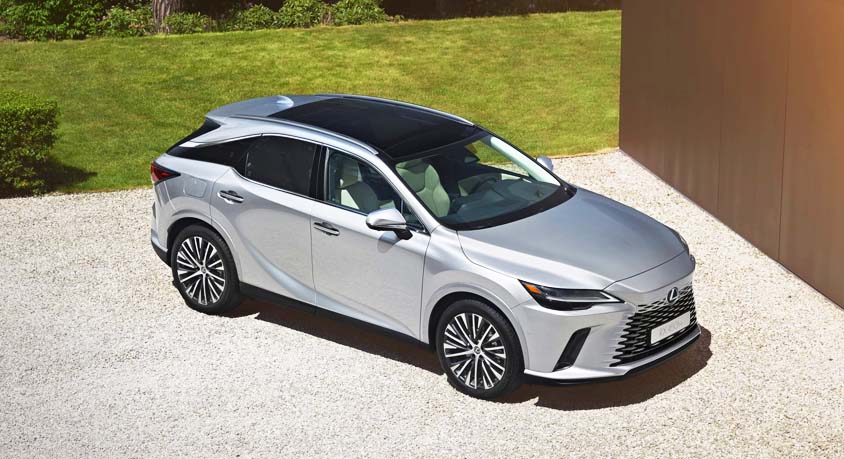
The moment an NFL rookie signs his first contract, he enters a new and perilous economic game, one where sudden, immense wealth meets a lifetime of anecdotes about its rapid dissipation. The pressure to make a symbolic purchase—a declaration of "arrival"—is immense. It’s in this high-stakes environment that a seasoned agent or financial advisor often makes a seemingly counterintuitive, even boring, recommendation: skip the flashy supercar or custom truck, and instead, lease or purchase a vehicle like a Lexus RX 350h or a Cadillac XT6. This advice isn't about denying reward, but about implementing the first and most visible layer of a defensive financial strategy, using the car not as a toy, but as a tool for preserving everything else.
The core of this logic is operational predictability. A young athlete's life is suddenly a whirlwind of training, travel, media, and endorsements; the last thing they need is an unreliable machine creating scheduling chaos or negative headlines. The Lexus RX has topped Consumer Reports reliability rankings for years, a product of Toyota’s glacial, deliberate improvement cycles. Its hybrid powertrain is virtually bulletproof, maintenance intervals are long, and repair costs are predictable. It is a transportation appliance of the highest order, designed to perform its sole function—moving the occupant safely and comfortably from point A to point B—with a near-total absence of drama. This reliability is a form of cognitive tax relief, freeing mental bandwidth for the actual job.
Safety shifts from a feature to a non-negotiable risk-management calculation. Both the RX and XT6 earn top-tier ratings from the IIHS, offering comprehensive suites of standard driver-assist technology. For an individual whose multi-million dollar physical well-being is his primary asset, the vehicle is a mobile safety cell. This isn't merely about crash protection; it's about mitigating the risk of any incident that could derail a career. A minor fender-bender in a rugged truck might be shrugged off, but the same incident in a low-slung, ultra-expensive sports car can become a viral story about recklessness. The safe, capable SUV provides a layer of practical and reputational insulation.
The luxury offered is one of comfort and space, not ostentation. The interiors are quiet, well-appointed with high-quality materials, and offer ample room for family, friends, or fellow players. This addresses real lifestyle needs—driving parents to dinner, giving teammates a ride—without screaming for attention. The aesthetic is intentionally mainstream premium; it signals success without shouting it, allowing the athlete to blend in when desired and avoiding the "instant millionaire" caricature that can attract unwanted scrutiny or targeting. It is a badge of mature taste, deliberately chosen over a badge of flashy wealth.
Ultimately, this recommended purchase is a teachable moment in asset allocation. It demonstrates that a large expenditure can still be a prudent one. The vehicle has strong residual value, moderate operating costs, and serves a legitimate utilitarian purpose. It is the automotive equivalent of buying a blue-chip stock instead of a speculative cryptocurrency—it might not be the most exciting story, but it protects the principal. For the advisor, it’s a successful first test: if the client can accept this rational, delayed-gratification choice, they may be teachable on larger, less visible financial decisions. The boring SUV isn't just a car; it's the first brick in a financial moat, a tangible lesson that the smartest money is often spent on things that don't sparkle but simply, and flawlessly, work.
Disclaimer: Mention of any brand or trademark is for identification only and does not imply partnership or endorsement