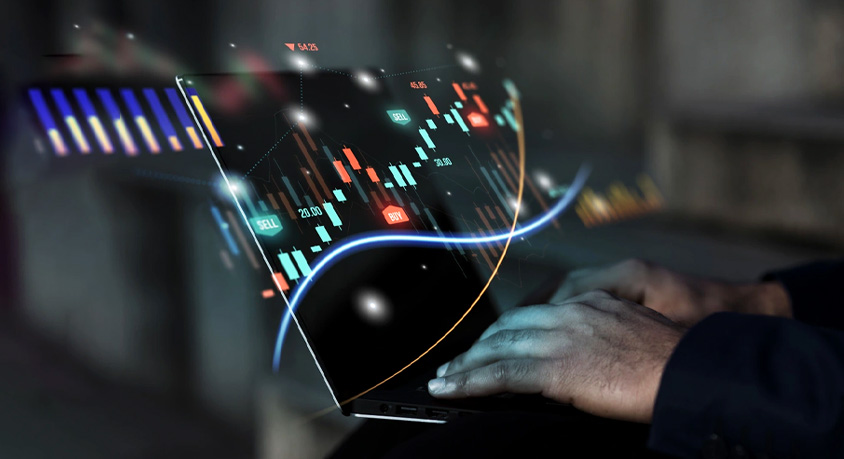
I spent my early twenties in a glass office in Canary Wharf believing that the more buttons I clicked, the more money I would make. I thought my Bloomberg terminal was a weapon and my ability to react to a news flash in three seconds made me a predator in the market jungle. I was wrong. I was actually the prey. The brokerage firms loved me because every time I "pivoted my strategy" or "rebalanced for tactical advantage," they took a cut. I was running a marathon on a treadmill: sweating profusely, breathing hard, and staying exactly in the same place while my capital slowly evaporated into transaction fees and bad timing. Most people treat their investment app like a social media feed that needs constant refreshing. If you are checking your portfolio more than once a quarter, you aren't an investor; you are a victim of your own dopamine.
The first thing you need to do is stop treating your portfolio like a house plant that needs daily watering. It is much more like a concrete foundation. If you keep poking it while it is trying to set, you just end up with a mess. I call this the "Check-In Curse." Every time you open that app, you are inviting your prehistoric brain to make a fight-or-flight decision about a thirty-year goal. You see a sea of red and your amygdala screams that the tribe is starving. You sell. You see a spike of green and you feel like you are missing the party. You buy. To fix this, you must delete the apps from your phone. If you have to log in on a desktop computer like it is 2005, you add a layer of friction that saves you from your own impulses. I started doing this five years ago and my returns improved almost instantly because I simply stopped interfering with the math.
Think of the stock market as a giant, noisy airport. The "pros" are the people screaming about delays and gate changes at the terminal. If you sit there listening to them, you will get a headache and probably change your flight three times, ending up in a city you never intended to visit. The successful investor is the person who puts on noise-canceling headphones, goes to the lounge, and waits for their scheduled departure. The noise doesn't change the destination; it just makes the journey miserable. You need to curate your information intake. If a headline uses more than two exclamation points or promises a "market crash," it is not news. It is entertainment designed to make you click and, by extension, trade.
I once knew a trader in New York who had a "Waiting Room" policy. Whenever he felt the burning urge to buy a hot stock or dump a lagging fund, he wrote the trade down on a physical piece of paper and put it in a drawer for ten business days. He told me that eighty percent of the time, he threw the paper in the trash after the two weeks were up. The "emergency" had passed. The "once-in-a-lifetime opportunity" had cooled down. This is the second method: build a mandatory time-buffer. We are emotional creatures, but emotions have a short half-life. If you force yourself to sleep on a decision, you transition from your emotional brain to your logical one. It is the cheapest and most effective risk management tool in existence.
The third method is to redefine what "winning" looks like. In my London days, I thought winning was beating the S&P 500 by two percent in a month. Now, I realize that winning is simply not doing anything stupid. Most people fail in finance not because they aren't smart enough, but because they can't sit still. There is a famous study about a group of fidelity accounts that performed the best over decades. The owners of those accounts were either dead or had forgotten their passwords. That is not a joke; it is a profound lesson in the power of inactivity. You are your own biggest obstacle. When you feel the itch to trade, ask yourself if you are doing it because the underlying math of your investment has changed, or because you are bored and want to feel "active."
I still feel the urge to fiddle with my holdings sometimes. Last year, when a specific sector started wobbling, I spent an hour staring at the "Sell" button. I had to remind myself that my 10-year plan does not care about a 10-day dip. I closed the laptop and went for a walk. When I came back, the urge was gone. We like to think we are calculating machines, but we are just hairless apes with high-speed internet. We are built for action, but wealth is built on patience. Do you have the courage to do absolutely nothing while everyone around you is panicking?
Disclaimer: Mention of any brand or trademark is for identification only and does not imply partnership or endorsement