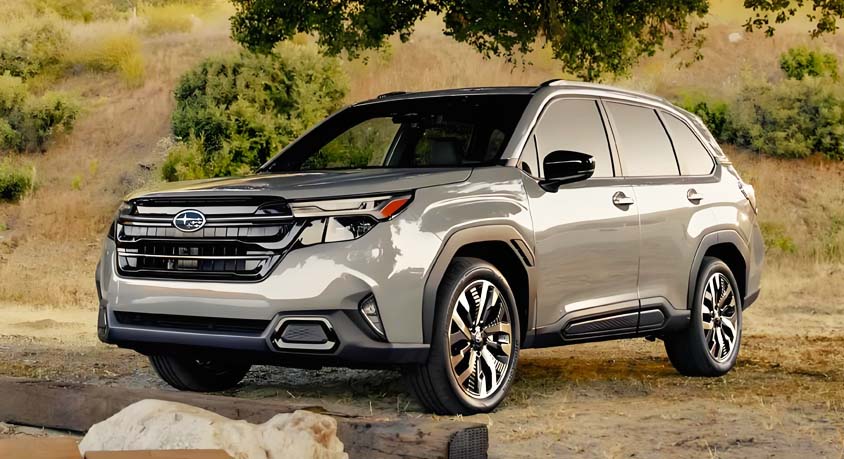
The scene at a lone gas station in central Nevada tells the story. A 2026 Subaru Outback Hybrid pulls in, its driver filling the 18.5-gallon tank in under five minutes before continuing west on Highway 50, “The Loneliest Road in America.” Parked at the only DC fast charger, a sleek electric sedan sits for forty-five minutes, its owner pacing nervously as the charger’s output throttles in the desert heat, adding miles at a glacial pace against the posted warning: “Next Services 82 Miles.” This is the raw, unsentimental reality that sales charts now reflect: the modern hybrid, particularly from masters of the form like Toyota and Subaru, isn't a compromise for 2026; it is the optimal tool. It has become the rational choice for the American commuter who measures distances in hundreds of miles, faces temperatures from -20°F to 120°F, and for whom time and predictability are non-negotiable currencies. The jealousy from some EV owners isn't about technology, but about unimpeachable, simple freedom.
The hybrid’s supremacy in this role stems from its elegant, time-tested solution to energy density. While a cutting-edge EV battery pack might hold the equivalent of 2-3 gallons of gasoline in energy, the hybrid combines a battery good for 30-50 electric miles with a fuel tank holding over 15 gallons of gasoline. The system’s computer acts as a brilliant, miserly traffic controller, seamlessly directing power from the most efficient source for the conditions. The result is a total range figure that humbles even the longest-legged EVs: the 2026 Toyota Camry Hybrid boasts an EPA-estimated 52 MPG combined for over 600 miles of range; the Subaru Outback Hybrid achieves nearly 35 MPG and can reliably travel over 650 miles on a tank. This isn't a laboratory number; it's a real-world guarantee that you can drive from Los Angeles to Phoenix, or Chicago to St. Louis, with one brief, five-minute stop. The “range” is never a lie because it is never conditional on charger availability, functionality, or ambient temperature.
This reliability exposes the three critical fractures in the pure EV value proposition for the American heartland: infrastructure, time, and environmental hostility. The nation's DC fast-charging network has expanded, but it remains a patchwork of differing reliability, cost, and power standards. A road trip in an EV still requires meticulous planning using multiple apps to verify charger status, a ritual the hybrid driver blissfully ignores. Time is the second factor. Replenishing 300 miles of EV range under ideal conditions takes 20-30 minutes; replenishing 600 miles of hybrid range takes 5. Over a 1,500-mile annual road trip, that's hours saved. Finally, extreme cold can slash EV range by 30-40%, and extreme heat can throttle charging speeds. The hybrid’s gasoline engine, while slightly less efficient in these extremes, suffers no such catastrophic performance decay; its cabin heat is instantaneous and free, and its “refueling” speed is unchanged.
Driving the 2026 Outback Hybrid through a simulation of a brutal Chicago commute—sub-zero startup, clogged interstate, followed by a weekend escape to snowy trails—demonstrates its genius. The electric motor provides smooth, torquey launches from stoplights, the gasoline engine cuts in almost imperceptibly at higher speeds, and the all-wheel-drive system, powered by both energy sources, delivers unshakable confidence in foul weather. There is no pre-conditioning the battery via an app, no calculation of whether detouring for a charger will make you late. You simply get in and drive, with the confidence of a 650-mile safety net in your pocket. For the nurse working 12-hour shifts, the salesperson covering a multi-state territory, or the family heading to a national park, this psychological peace is worth more than the theoretical purity of a tailpipe-free existence.
The economic argument has also crystallized. While federal EV tax credits have helped, the transaction price for a comparably equipped mid-size SUV often remains thousands lower for the hybrid than for its pure EV counterpart. Insurance costs can be lower, and the specter of a future $15,000-plus battery replacement does not loom over long-term ownership. Depreciation curves for stalwarts like the Toyota RAV4 Hybrid or Subaru models remain flatter than for many EVs facing rapid technological obsolescence. The hybrid represents a known, depreciable asset with predictably low operating costs, a comforting equation for households where a car is the second-largest purchase after a home.
This is not to dismiss the hybrid’s own compromises. It still burns fossil fuels and produces tailpipe emissions, a moral and environmental calculus each buyer must weigh. Its powertrain, while refined, lacks the breathtaking, silent thrust of a powerful EV. The cabin may not feature the vast, minimalist “frunk”-centric design of some EVs. It is, in essence, a brilliant evolution of the known, not a revolutionary leap into the new.
The “collective eye-rolling” from the EV faithful, then, is not about envy of a greener badge, but of a simpler, more robust ownership experience. In 2026, the hybrid from Toyota or Subaru doesn't ask you to change your life, your route, or your expectations to accommodate it. It accommodates you. It solves for the vast, sprawling, climatically diverse, and infrastructure-inconsistent reality of the United States with a brutally effective, non-ideological solution. It is the vehicle for those who want significant efficiency gains and reduced emissions now, without becoming a beta tester for an energy transition that is still, quite literally, under construction. The hybrid’s victory is a victory of pragmatism over prophecy, proving that for millions of Americans, the right tool for the future is one that masterfully bridges the realities of the present.
Disclaimer: Mention of any brand or trademark is for identification only and does not imply partnership or endorsement