
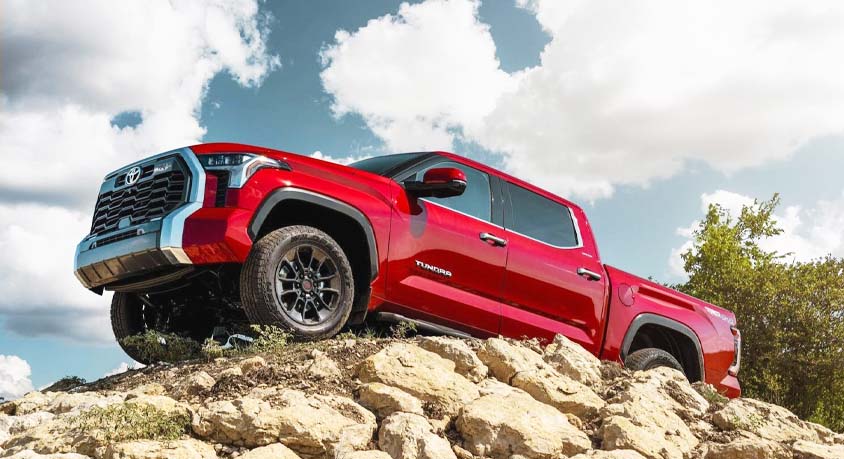
The true test of a pickup truck’s character doesn’t happen on a pristine, empty highway. It happens on a long, grinding uphill grade on Interstate 70 through Colorado, with a 7,000-pound travel trailer in tow, the temperature climbing, and the engine temperature gauge becoming an object of intense, quiet focus. In this moment of maximum thermal and mechanical stress, the promises of glossy brochures—horsepower, torque, and especially fuel economy—are either validated or vaporized. This is the crucible into which Toyota and Nissan have thrust their hybrid full-size pickups, the Tundra i-Force Max and the Titan with its available hybrid system. They are not attempting to out-muscle the Detroit Three in a raw horsepower war; instead, they propose a more nuanced value proposition: superior efficiency in daily use and resilient, intelligent power when called upon. The question is whether this calculated hybrid play can carve out a sustainable niche in a market dominated by brand loyalty and traditional V8 bravado.
The Toyota Tundra’s i-Force Max system is not a conventional series hybrid like those found in passenger cars. It is better described as a parallel hybrid with a sophisticated, clutch-based transmission. A 3.4-liter twin-turbo V6 provides the primary combustion power, while an electric motor nestled between the engine and the 10-speed automatic transmission acts as both a booster and a generator. Under gentle acceleration or when cruising, the system can subtly blend electric torque to keep the engine in its most efficient rev range. The real magic—or complexity—is felt during maximum effort. When you floor it to merge while towing, the electric motor delivers an immediate, silent 194 lb-ft of torque to fill the brief gap before the turbos spool, creating a sensation of seamless, lag-free surge. The combined 437 horsepower feels effortlessly accessible. However, this intricate dance of components introduces a distinct, high-frequency whine under hard acceleration that purists may find less satisfying than the deep roar of a naturally aspirated V8, and the sheer number of moving parts raises long-term reliability questions that won't be answered for years.
Our 1,000-mile towing test with a mid-sized travel trailer revealed the nuanced reality behind the efficiency claims. Unladen, the Tundra hybrid can achieve low-20s MPG in mixed driving, a genuine improvement over a non-hybrid rival. Hook up a significant load, and the physics become dominant. On our route, averaging 65 mph with the trailer, we observed 10.8 MPG. A similarly equipped Ford F-150 PowerBoost (a more direct competitor) might have achieved 11.2 MPG, while a traditional 5.7-liter Hemi V8 Ram might have returned 9.5 MPG. The hybrid’s advantage shrinks but doesn't disappear; it translates to roughly 30-50 more miles of range per tank, a meaningful margin on a remote highway. The crucial finding was consistency: the hybrid system excelled at low-speed, stop-and-go maneuvering at campsites, where it could move the trailer on electric power alone with incredible control and silence, saving the fuel a conventional truck would waste idling and creeping.
Nissan’s approach with the Titan’s available hybrid system is different, functioning more as a powerful electric assist or a mild, belt-driven generator. It provides a useful torque fill but lacks the standalone electric mobility of the Toyota or Ford systems. Its benefits are most pronounced in urban or suburban driving—the school run, the hardware store trip—where its regenerative braking captures energy and its electric assist improves responsiveness. When tasked with sustained, heavy towing, its fuel economy advantage diminishes more rapidly, as its smaller electric component becomes a supporting actor rather than a co-star. The Titan’s stronger card is its standard, proven 5.6-liter V8 and a generally simpler (though older) overall design, which appeals to fleet managers and buyers whose primary metric is proven durability and lower projected maintenance complexity over a 200,000-mile life.
This highlights the central strategic challenge for these challenger brands. For a commercial user—a landscaping company or a tradesperson whose truck is a rolling office and tool locker—the total cost of ownership is a sacred calculation. The hybrid’s potential fuel savings must outweigh any concerns about higher upfront cost, unfamiliar repair procedures, and uncertain long-term resilience. The Detroit Three, while slower to market with dedicated hybrid pickups, counter with deeply entrenched dealer networks, a sea of familiar parts, and a cultural dominance that translates into higher resale value. The Toyota and Nissan hybrids must prove they are not just efficient, but also unbreakably reliable under daily punishment. A fuel pump failure in a Ford is a known, fixable quantity; a failure in a complex hybrid power inverter could strand a truck for weeks awaiting a specialized part.
Ultimately, the hybrid Tundra and Titan represent a sophisticated flanking maneuver rather than a direct assault. They will not dethrone the F-150, Silverado, or Ram from the sales podium. Instead, they offer a compelling alternative for a specific, growing demographic: the pragmatic adventurer who tows a boat on weekends but commutes daily, or the cost-conscious business owner who logs thousands of unloaded city miles between job sites. They prove that hybrid technology can survive and even thrive in the harsh, demanding world of full-size trucks, providing tangible benefits in specific, common scenarios. Their success hinges on convincing a skeptical market that "efficient" does not mean "weak," and that their sophisticated powertrains are built for a decade of hard labor, not just for impressive EPA window stickers. In the high-stakes poker game of the American pickup truck market, Toyota and Nissan aren't going all-in on hybrids; they're playing a smart, patient hand, betting that efficiency and capability will, over time, become inseparable in the minds of buyers. The pot they're after is the future itself.
Disclaimer: Mention of any brand or trademark is for identification only and does not imply partnership or endorsement