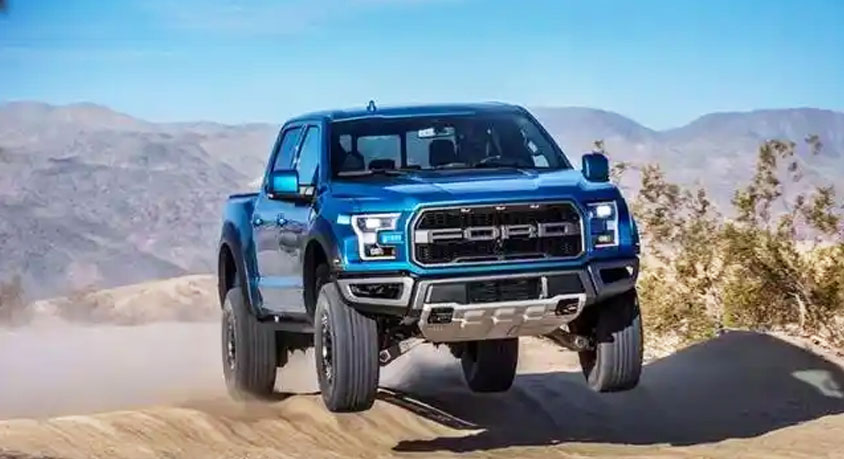
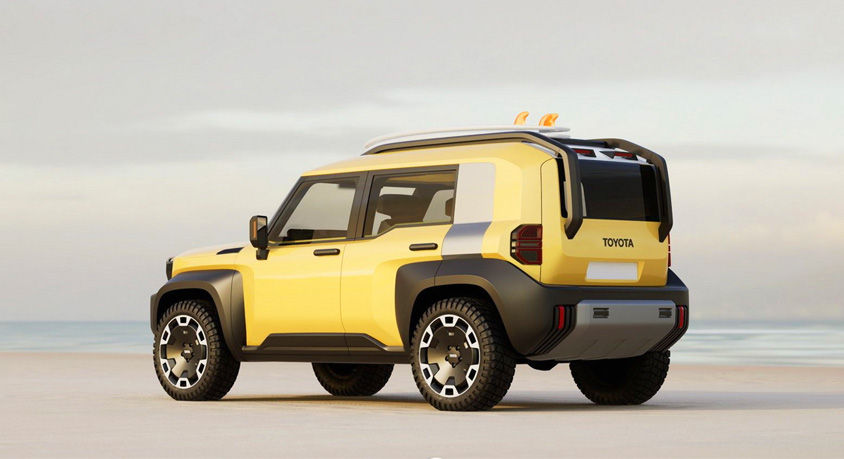
The line at the trailhead to the popular, moderately challenging fire roads outside Moab, Utah, has traditionally been a parade of financial commitment: $60,000 Jeep Wrangler Rubicons, $55,000 Ford Broncos, and the occasional six-figure Land Cruiser 300. On a crisp Saturday morning in 2026, a new shape joins the queue, turning heads not for its expense, but for its jarring affordability. The Toyota Compact Cruiser, a small, boxy silhouette priced from a hair under $30,000, idles patiently behind a lifted Gladiator. Its owner, a graphic designer in her late 20s from Denver, isn't here to conquer the Rubicon Trail; she's here to access a remote campsite after a week of city commuting, and her bank account isn't screaming in protest. This is the vehicle's revolutionary proposition: it offers the permission and capability for adventure at a price point that doesn't require a second mortgage, challenging the very economics of the "weekend warrior" lifestyle. But does its platform, a modified version of the TNGA-F architecture shared with its bigger siblings, grant it true off-road legitimacy, or is it merely a stylish poser with all-terrain tires?
The Compact Cruiser’s most significant engineering decision is its use of a ladder frame chassis, a choice that immediately separates it from car-based "soft-roaders" like the Ford Bronco Sport or Hyundai Santa Cruz. Think of a unibody vehicle as a flexible, monocoque eggshell; strong in specific ways but not designed for concentrated, torsional stress. The ladder frame is a rigid, separate skeleton upon which the body is mounted. This is the foundation of serious off-road durability, allowing the vehicle to twist and flex over uneven terrain without transmitting destructive forces into the passenger cabin. This fundamental truth validates its "baby Land Cruiser" badge more than any styling cue. Combined with a solid rear axle (for articulation) and an independent front suspension (for on-road manners), it possesses a legitimate, mechanical pedigree for dirt.
On a technical off-road course designed to mimic common overlanding obstacles, the Compact Cruiser's spec sheet translates into competent, if not class-leading, performance. Its standard approach (32°), departure (24°), and breakover (22°) angles, coupled with about 9.5 inches of ground clearance, allow it to clear rocks and crests that would stop any crossover SUV dead. The standard, mechanical locking rear differential—a rare and invaluable feature at this price—proves its worth on a slick, angled rock face, providing the absolute traction guarantee that electronic brake-based systems can only simulate. The 2.4-liter turbo hybrid powertrain, with its hearty 278 horsepower and 317 lb-ft of torque, delivers ample low-end grunt to crawl up obstacles without drama. It won't keep pace with a Wrangler on a severe boulder crawl, but for 95% of buyers seeking forest service roads, beach runs, or snowy mountain passes, it is overwhelmingly capable.
Where the Compact Cruiser truly outmaneuvers the traditional hardcore off-roader is in the 99% of life spent on pavement. The on-road refinement gap between it and a base-model Wrangler is a chasm. The steering is precise, the cabin is quiet at highway speeds (thanks to its more aerodynamic shape), and the hybrid system enables a credible 28 MPG combined—a figure that makes a Bronco's V6 engine look positively decadent. The interior, while adorned with durable, washable plastics, is intelligently laid out with physical knobs for climate control and a user-friendly infotainment screen. It acknowledges that you will use this vehicle for Home Depot runs and highway commutes, not just as a trailer queen to the mountains.
This pragmatism, however, reveals its compromises as a "purist" tool. The very frame that gives it strength adds weight, blunting its acceleration compared to a unibody Bronco Sport. The solid rear axle, while great for articulation, delivers a slightly more abrupt ride over expansion joints on the interstate. The interior, focused on durability, lacks the perceived premium feel of its more expensive competitors; it feels tough, not luxurious. Furthermore, its smaller size and wheelbase, while advantageous on tight trails, mean interior cargo space is significantly less than a Bronco or Wrangler four-door, limiting its utility for extended, gear-heavy expeditions without a roof rack.
The genius of Toyota's play is not in building a Wrangler-killer, but in redefining the market's value anchor. For a young professional, the math is irresistible: a well-equipped Compact Cruiser with a locking diff and all-terrain tires lands at $35,000. A similarly capable four-door Wrangler Willys starts near $50,000. The $15,000+ savings isn't just money; it's a fully-funded camping gear budget, a season's worth of ski passes, or the down payment on a small adventure trailer. It makes the "gatekeeping" price of entry into the outdoor lifestyle seem suddenly arbitrary and exploitative.
Ultimately, the Compact Cruiser isn't "faking it." Its ladder frame, locking diff, and legitimate geometry are the real deal. It is, however, a calibrated and conscious trade. It swaps ultimate, rock-crawling prowess for daily livability, and it trades extravagant size for accessible price. It doesn't make the Jeep Wrangler "stupid"; the Wrangler remains the undisputed king of extreme, modification-friendly off-roading. What the Compact Cruiser does is make the Wrangler, and to a lesser extent the Bronco, look like over-specialized, overpriced tools for the vast majority of people who simply want a reliable, authentic key to the outdoors without sacrificing their sanity on the drive to get there. It’s not the hardest core tool in the shed, but it’s the one most people will actually use, and enjoy using, every single day. That’s a revolution wrapped in a small, affordable, and surprisingly capable box.
Disclaimer: Mention of any brand or trademark is for identification only and does not imply partnership or endorsement