The median new car transaction price has drifted into the stratosphere, a number that feels less like a purchase and more like a ransom payment for a basic modern life. In this environment, the act of buying a sensible, affordable car is no longer a mere consumer choice; it’s a form of financial self-defense, a quiet protest against engineered obsolescence and spiraling debt. The real innovation for 2026 isn’t found in the six-figure halo cars, but in the engineering studios focused on a far more difficult problem: how to build a machine that offers dignity, safety, and a sliver of joy for a sum that doesn’t require a second mortgage. We’ve examined the landscape below the $30,000 watermark, focusing on three compelling case studies: the pragmatic surprise of the Chevrolet Trax, the redemption arc of the revived Chevrolet Bolt EV, and the unwavering benchmark, the Toyota Corolla.
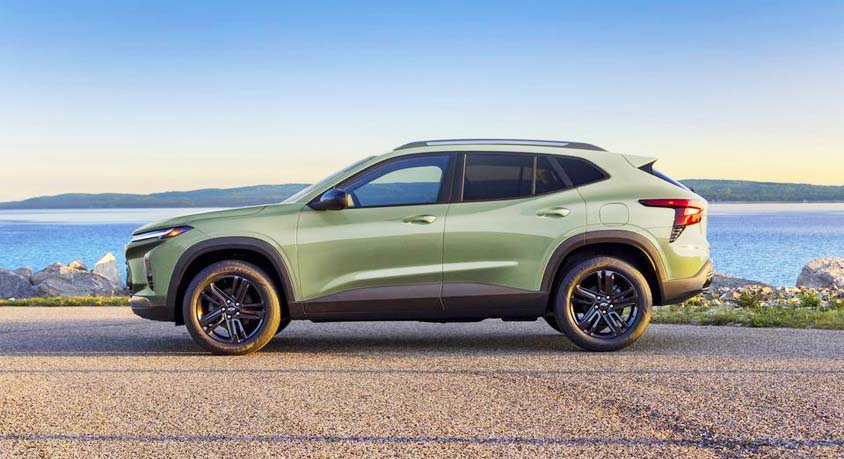
The Chevrolet Trax succeeds not by being exceptional in any one metric, but by mastering the art of spatial economics. Its exterior footprint is modest, easily navigating cramped urban streets and suburban parking lots, yet its interior volume is a lesson in packaging efficiency, offering rear-seat and cargo space that shames some vehicles from a class above. The 1.2-liter turbocharged three-cylinder engine is the mechanical equivalent of a shrewd budget manager; it produces adequate power for merging and highway cruising by prioritizing low-end torque, but it communicates its work through a coarse, thrashy soundtrack under hard acceleration, a constant audible reminder of its frugal displacement. The cabin materials are hard plastics, yes, but they are textured and assembled with a coherence that avoids feeling tragically cheap, creating an environment that is honest about its price point without being depressing.
Returning from its brief hiatus, the 2026 Chevrolet Bolt EV represents a fascinating proposition: the democratization of the electric frontier. Its revised battery chemistry promises faster DC charging and a steadfast EPA range estimate that comfortably covers the vast majority of American weekly commutes. Think of its powertrain not as a complex piece of machinery, but as a simplified appliance; a single, quiet motor delivering instant torque, with far fewer moving parts to maintain or fail than a gasoline engine. The compromise surfaces in its road manners, where the suspension tuning leans heavily toward softness to cope with the battery pack's weight, resulting in noticeable body roll on winding roads and a somewhat disconnected steering feel. The infotainment system, while functional, can feel a generation behind the slick interfaces in more expensive EVs, a trade-off to hit its aggressive price target.
Then there is the Toyota Corolla, the axiomatic proof of the "virtuous cycle" of reliability. Its value is not captured in a brochure spec sheet but is amortized over years of ownership. The 2.0-liter engine and CVT transmission are a study in deliberate, frictionless operation, tuned for seamless daily drivability rather than exhilaration. Every control, from the steering weight to the climate dials, operates with a consistent, light resistance that becomes intuitive within minutes. The safety suite, Toyota Safety Sense 3.0, is comprehensive and standard, intervening with a subtlety that avoids being intrusive—a rare feat in this segment. Its primary weakness is an emotional one: it can feel almost too competent, too anonymized, a tool so perfectly focused on its function that it sparks little passion, a sacrifice made on the altar of long-term dependability.
Each vehicle approaches the problem of affordability from a distinct philosophical angle. The Trax maximizes interior utility and style-per-dollar in the present tense, accepting material and powertrain compromises as a necessary cost. The Bolt EV front-loads its value proposition into the future, offering lower "fueling" costs and simplified maintenance, asking the buyer to accept current limitations in charging infrastructure and driving dynamics. The Corolla operates on a different temporal plane entirely, its higher initial investment compared to the Trax buying a long-term insurance policy against depreciation and repair costs, a bet on predictability.
The common thread weaving these survivors together is a renewed focus on the core architecture of transportation. They have ruthlessly prioritized the fundamentals—a safe cabin, efficient propulsion, functional technology—while eliminating the costly, often superfluous layers that inflate price. A hard plastic dashboard that doesn’t rattle is infinitely more valuable than a soft-touch one that develops squeaks in six months. In an era of 7% APR loans, this engineering honesty translates directly to financial survivability. The choice between them ultimately reduces to a personal calculus of risk and time preference: immediate space (Trax), future-running costs (Bolt EV), or long-term asset preservation (Corolla). Their collective existence is a necessary corrective, a reminder that mobility should enable your life, not become its central, draining financial burden.
Disclaimer: Mention of any brand or trademark is for identification only and does not imply partnership or endorsement