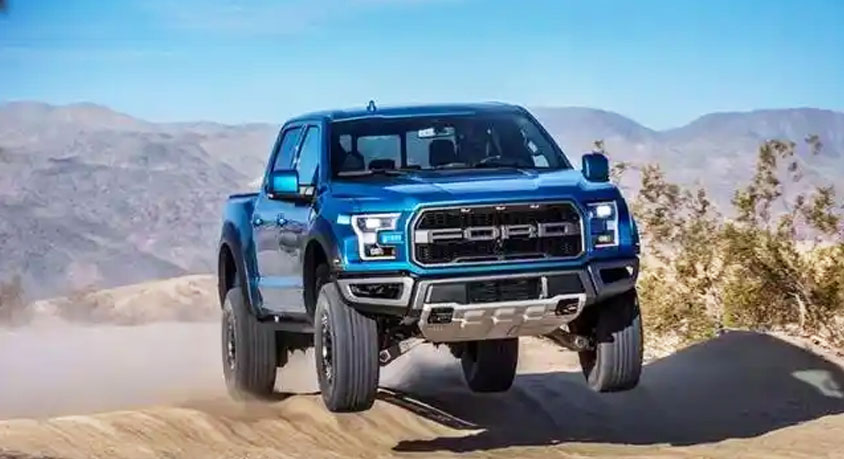
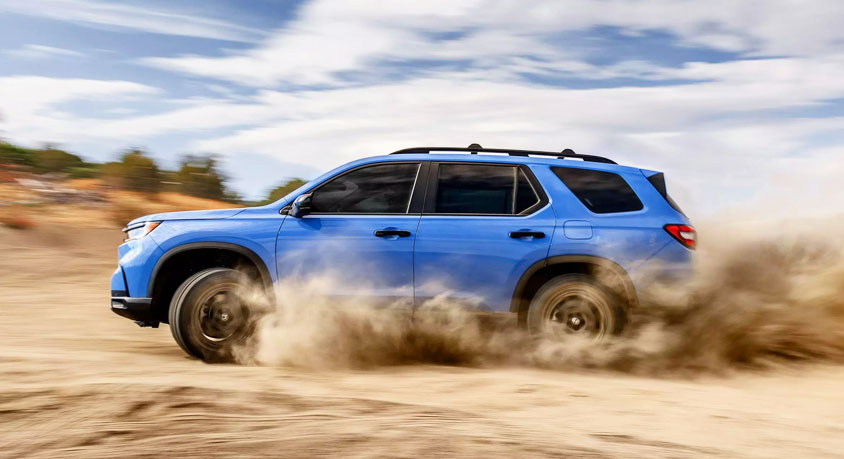
I was standing in a dusty turnout in the Mojave last month, watching a Suburban-sized dust cloud kick up from a Ford Explorer Timberline, when I realized that Honda has finally stopped pretending the Pilot is just a minivan in a trench coat. For years, the Pilot was the ultimate "suburban surrender" vehicle—a soft, bloated box designed to ferry toddlers to swimming lessons without ever touching anything more treacherous than a damp Starbucks driveway. But the new TrailSport trim is Honda’s attempt to reclaim some dignity for the American dad. It looks the part with its knobby all-terrain tires and steel skid plates, but after a week of punishing it on the rocks, I’ve realized it’s a brilliant compromise that still leaves a specific group of enthusiasts wanting more.
The design is finally honest. I’ve always had a seething hatred for the "hidden" electronic door handles that Tesla and now even some Range Rovers use; they are a solution to a problem that didn't exist, and they feel like flimsy plastic toys that will snap off during a Midwest ice storm. Thankfully, the Pilot keeps real, chunky handles that you can grab with a work glove. Inside, the steering wheel feels substantial, like the thick, leather-wrapped grip of a high-end baseball bat, which is a massive improvement over the thin, PS5-controller-esque wheels found in the newest Toyotas. It feels like a machine, not a gaming peripheral.
Under the hood, Honda is sticking with a naturally aspirated V6. While Ford is busy trying to squeeze every last drop of life out of a stressed-out turbocharged four-cylinder in the Explorer, and Toyota has ditched the V6 entirely for a buzzing hybrid setup in the Grand Highlander, Honda gives you a smooth, predictable 285-horsepower mill. It doesn't have a "scream" or a "deep burble"—it has a mechanical, industrial hum that sounds like it could run for three hundred thousand miles without a single complaint. When you’re merging onto a busy interstate with a trailer full of camping gear and three screaming kids in the back, that linear power delivery is exactly what you want.
However, the "rugged" label has its limits, and the weakness is found in the transmission logic. On the road, the 10-speed automatic is as smooth as silk, but the moment you get into technical rock crawling, it gets confused. It lacks the low-end "grunt" and specialized gearing of a Jeep Grand Cherokee L or even the raw towing confidence of a V8-powered Chevy Tahoe. It’s a soft-roader that’s been to the gym, but it’s still not a mountain climber. If you’re planning on traversing the Rubicon Trail, you’re in the wrong zip code. But if your idea of "off-grid" is a forest service road leading to a hidden lake, the TrailSport is actually over-engineered for the task.
In the real world—the world of hauling ten bags of mulch from Home Depot or navigating a slushy Costco parking lot—the Pilot absolutely murders the competition in ergonomics. The center console is deep enough to hide a small child, and the removable middle seat in the second row is a stroke of genius. You can go from an eight-passenger bus to a six-passenger luxury lounge in about two minutes. The Toyota Grand Highlander might have more total cargo volume on paper, but the Honda’s space is more "usable." It feels like it was designed by people who actually have families, whereas the Ford Explorer feels like the interior was an afterthought designed by a committee of accountants.
The biggest trade-off with the TrailSport trim is the on-road refinement. Those General Grabber all-terrain tires look fantastic, but they create a constant, low-frequency rhythmic hum on the highway that you won't find in a standard Pilot Elite. It’s a small price to pay for the "cool factor," but if your life is 99% highway commuting and 1% gravel roads, you might regret the choice after the third hour of a cross-country road trip. The steering is also a bit slower than the standard model, which makes it feel less like a car and more like a truck—a feeling I actually prefer, but one that might annoy someone used to the car-like reflexes of a Honda CR-V.
Compared to the Ford Explorer, the Pilot feels like it was built with a much higher level of mechanical integrity. The Ford’s interior panels creak when you look at them funny, and the transmission has a habit of "hunting" for gears like a confused bloodhound. The Pilot is stoic. It’s a tool. It doesn't try to impress you with fancy ambient lighting or massive portrait-oriented screens that serve no purpose. It provides a solid, mechanical connection to the road that reminds you why Honda became a legend in the first place.
Is the TrailSport a "hardcore" off-roader? No. It’s a family hauler that finally has enough clearance and protection to let you be adventurous without fearing for your oil pan. It’s for the middle-class enthusiast who wants a car they can still change the oil on in their own driveway without needing a software engineering degree. It’s honest, it’s capable, and despite its transmission’s hesitation on steep inclines, it’s the best all-around package in the segment. Just don't expect it to behave like a tank when the pavement ends, and it’ll never let you down. It’s the ultimate "dad-mobile" that doesn't make you feel like you’ve totally given up on your youth.
Disclaimer: Mention of any brand or trademark is for identification only and does not imply partnership or endorsement