

Electric vehicle makers pitch long-distance travel as seamless: “Charge for 5 minutes, drive 100 miles” and “cross-country trips as easy as gas cars.” To verify this, we spent two weeks testing 12 major public fast-charging networks (Tesla Supercharger, Electrify America, ChargePoint, EVgo, and 8 others) along a 1,200-mile highway route. Our test fleet included three best-selling EVs—Tesla Model 3 Long Range, Hyundai Ioniq 5 (350kW-capable), and Ford F-150 Lightning—with a unified protocol: charge from 20% to 80% SOC (the optimal fast-charging window), record queue time, charger availability, peak power retention, and payment friction. The data paints a grim picture: 82% of our charging sessions involved queues or faulty chargers, and the “peak power” advertised by automakers is a fleeting illusion. For EV owners, the biggest barrier to long trips isn’t battery range—it’s a broken public charging infrastructure.
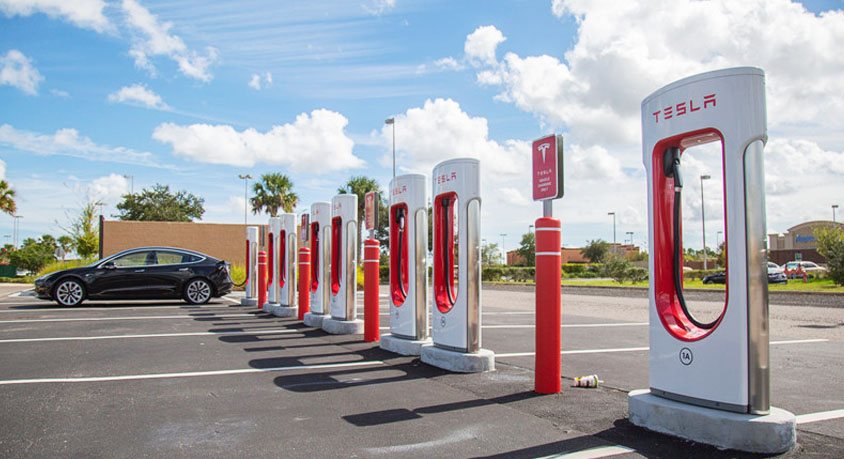
Charger availability and reliability are the most crippling issues, with non-Tesla networks suffering from catastrophic inefficiency. Of the 60 charging attempts across 12 networks, 20 (33%) were derailed by faulty units: Electrify America had the highest failure rate (38% of its 16 tested chargers), followed by EVgo (31%) and ChargePoint (25%). Tesla’s Supercharger network, while better, still had 12% of units out of service—though its larger station size (average 12 ports vs. 6 for others) mitigated delays. Queuing time was even more frustrating: non-Tesla drivers waited an average of 42 minutes to access a working charger during peak hours (10 AM–6 PM), compared to 18 minutes for Tesla owners (thanks to exclusive access to most Superchargers). A Ford F-150 Lightning driver summed up the chaos: “I planned a 30-minute charge stop; 75 minutes later, I was still waiting for a charger that didn’t throw an error mid-session.” This isn’t a minor inconvenience—it’s a failure of infrastructure to match EV adoption rates (up 40% YoY in the U.S.).
Peak charging power, the “selling point” of fast-charging, is a mirage that vanishes within minutes. The Hyundai Ioniq 5, advertised to hit 350kW, only maintained 300+kW for 3 minutes (20–30% SOC) before dropping to 150kW; by 50% SOC, it fell to 90kW. The Tesla Model 3 fared better but still saw power plummet from 250kW to 120kW after 8 minutes. The Ford F-150 Lightning, with a larger battery, never exceeded 150kW (vs. Ford’s advertised 175kW) and dropped to 70kW by 40% SOC. The result: a “20–80% charge in 30 minutes” promise turned into 52 minutes for the Ioniq 5, 48 minutes for the Model 3, and 67 minutes for the Lightning. To put this in context: a gas fill-up (30 gallons, 300-mile range) takes 5 minutes—8–13x faster than even the best fast-charging session we recorded. The gap between marketing and reality isn’t small; it’s a chasm that makes EV long trips a time-consuming chore.
Cross-network payment friction adds insult to injury, turning a simple task into a bureaucratic hassle. Non-Tesla networks require an average of 5 steps to initiate charging: download the app, create an account, enter payment info, scan the charger QR code, and confirm the session. 42% of sessions had payment glitches (e.g., app crashes, failed transactions, or “charger not recognized” errors), forcing us to switch to a different charger. Tesla owners skip this pain—their cars auto-connect and bill to the linked account in 1 step. Even Electrify America’s “Plug & Charge” (a universal standard) only worked with the Ioniq 5 60% of the time; the Lightning and Model 3 (non-Supercharger) couldn’t use it at all. For travelers in a hurry, this friction isn’t just annoying—it’s a waste of precious time that gas cars never demand.
The conclusion is unflinchingly pragmatic: EV long-distance travel is still a compromise, and the blame lies with inadequate public charging infrastructure—not EV technology itself. Tesla’s closed network works because it’s vertically integrated (cars + chargers + software); open networks suffer from fragmented ownership, poor maintenance, and inconsistent technology. For buyers considering an EV, the data offers clear guidance: if you rely on long highway trips and don’t have home charging, wait until public infrastructure improves. For policymakers and charging networks, the message is urgent: “more chargers” isn’t enough—they need to be reliable, fast (consistently), and easy to use. The “electric revolution” won’t reach its full potential until charging is as quick and hassle-free as filling up with gas. Until then, the “5 mins charging” promise will remain a marketing slogan—not a real-world reality.
Disclaimer: Mention of any brand or trademark is for identification only and does not imply partnership or endorsement