
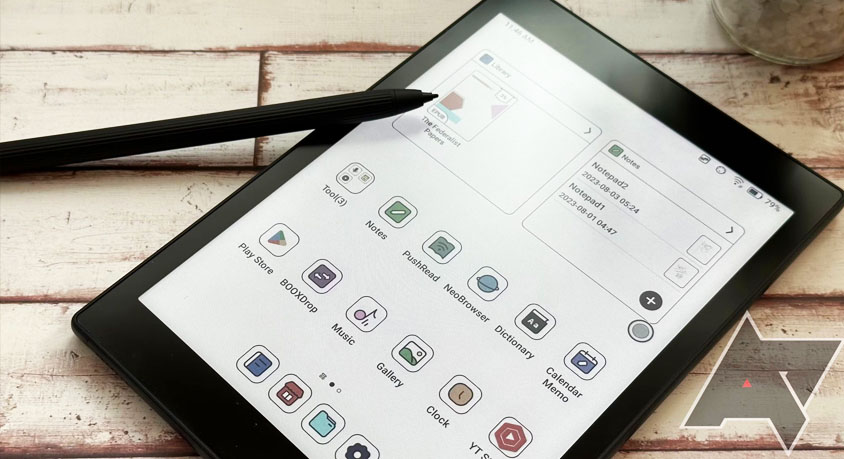
In an age of infinite digital distraction, the quest for focused attention has become a form of modern alchemy. We seek it through software blockers, minimalist apps, and sheer willpower, all while carrying the most potent distraction engines ever invented in our pockets and bags. My iPad Pro, with its dazzling screen and boundless capability, was the ultimate paradox: a tool for everything, and thus, a sanctuary for nothing. My experiment was to replace it, for deep work and reading, with a device that embodies technological regression in service of cognitive progression: a monochrome or emerging-color E Ink tablet, like a reMarkable 2 or a Boox Note Air. This isn't a story about specs overpowering specs. It's about a device's fundamental physics creating a boundary that software cannot.
The first encounter is disarmingly simple. The device is light, often with a textured plastic or grippy surface that feels more like a binder than a gadget. The screen is not glossy; it is matte, with a slight grain that mimics paper. When off, it displays a static image or text, consuming zero power. When on, the E Ink display refreshes with a characteristic, slight flash. It is not bright; it is reflective, like paper, requiring ambient light or a gentle front light. This physicality is the entire argument. There are no blazing colors, no notifications sliding in, no temptation to switch to a streaming app. The interaction is binary: you are reading, or you are writing. The device's slow refresh rate and lack of a traditional backlit screen, its greatest hardware "limitations," are its core features. They enforce a slower, more deliberate pace.
Performance must be measured on a different axis. Comparing an Apple M-series chip to the humble processor inside an E Ink tablet is meaningless. The metric here is endurance and focus. The battery lasts not for a day, but for weeks, because the screen only draws power when it changes. The "speed" is adequate for flipping pages in a PDF, annotating with a stylus, or jotting down notes. Where it excels is in handling PDFs and long-form text. The experience of reading a 100-page academic PDF on an E Ink tablet is categorically different from reading it on an iPad. On the iPad, the luminous screen, even in night mode, creates eye strain over long sessions. The temptation to check email or a message is ever-present. On the E Ink device, the text sits on the surface, static and gentle. You can scribble in the margins with a precise, latency-free stylus that feels like a pen on paper. The device disappears; the content remains. It creates a single-tasking environment not through software restriction, but through physical design.
The software experience is ruthlessly focused. These devices run simplified, custom Android or Linux-based systems designed for one thing: document management and note-taking. Organizing files into folders, syncing to cloud services like Dropbox or Google Drive, and converting handwritten notes to text are the primary functions. There are no app stores full of games, no social media, no video players. The value is in the negation. When you open the device, there is only one path: engage with the document in front of you. For a researcher annotating papers, a student reviewing textbooks, or a writer drafting long-form pieces, this constraint is liberating. It offloads the cognitive load of choice and resistance from your brain to the device's inherent limitations.
This path, of course, has clear boundaries. An E Ink tablet is a terrible choice for anyone whose workflow requires multimedia, fast web browsing, color-coded diagrams, or any form of content creation beyond text and line drawings. The slow refresh rate makes scrolling through a busy website an exercise in patience. The emerging color E Ink technology (like Kaleido 3) offers muted colors suitable for comics or highlighted text but is nowhere near the vibrancy of an LCD or OLED screen. It is a supplemental device, a digital notebook and reader, not a computer replacement.
Therefore, the ideal user for a device like the reMarkable or a Boox Note is someone drowning in PDFs, academic papers, or legal documents, and who craves a digital yet distraction-free way to read and annotate them. It is for the thinker, the writer, the planner who needs a space for unfragmented thought. It is for anyone who experiences digital eye strain from backlit screens during long reading sessions.
You should not buy this if you need a single device for entertainment, communication, and content creation. The iPad remains the unmatched champion of versatility.
My decision to "ditch the iPad for paper" was not about abandoning technology, but about adopting a more specific one. The E Ink tablet didn't replace my computer or my phone. It replaced the messy, distracting middle ground the iPad occupied for focused work. It gave me back the feeling of reading a book until I lost track of time, or filling a notebook with ideas without a single notification. It proved that sometimes, the most advanced tool for a task is not the most powerful one, but the one whose design is most aligned with the human cognitive state you wish to achieve. I traded the illusion of infinite possibility for the profound utility of a single, clear purpose. For deep reading and thinking, that has made all the difference.
Disclaimer: Mention of any brand or trademark is for identification only and does not imply partnership or endorsement