You sit in traffic, watching the fuel gauge drop and the minutes pass, and you do the math. Fifty miles each way, a hundred miles a day, five days a week, fifty weeks a year. That is 25,000 miles annually, a quarter of a million miles over a decade. The car you choose for this grind is not just a vehicle; it is a financial instrument, a machine that will either drain your bank account or leave room for the things that matter. The electric vehicle evangelists tell you to go battery or nothing. The traditionalists tell you to stick with gas. Both are wrong. The rational choice, for the high-mileage commuter, is a plug-in hybrid or a conventional hybrid, depending on your specific circumstances. Here is the math that proves it.
Let us begin with the pure electric vehicle. A 2026 Tesla Model 3, with 350 miles of range, costs roughly $45,000. Charging at home, at $0.15 per kilowatt-hour, costs about $0.04 per mile. Over 25,000 miles, that is $1,000 in electricity. Maintenance is minimal, with no oil changes and few moving parts. Insurance, however, is higher, averaging $2,000 per year. Depreciation on a Tesla, while not as steep as some luxury cars, is still significant, perhaps 40% over five years. The five-year total cost: $45,000 purchase, minus $18,000 resale value, plus $5,000 electricity, plus $10,000 insurance, plus $1,000 maintenance, equals $43,000. That is $8,600 per year, or $0.34 per mile.
Now consider a conventional hybrid. A 2026 Toyota Camry Hybrid, with 50 MPG combined, costs roughly $32,000. Gasoline at $3.50 per gallon costs $0.07 per mile. Over 25,000 miles, that is $1,750 in fuel. Maintenance is slightly higher than an EV, with oil changes every 10,000 miles costing perhaps $500 annually. Insurance is lower, around $1,500 per year. Depreciation on a Toyota hybrid is famously shallow, perhaps 35% over five years. The five-year total cost: $32,000 purchase, minus $11,200 resale value, plus $8,750 fuel, plus $7,500 insurance, plus $2,500 maintenance, equals $39,550. That is $7,910 per year, or $0.32 per mile. The hybrid is cheaper than the EV, even without considering charging infrastructure or range anxiety.
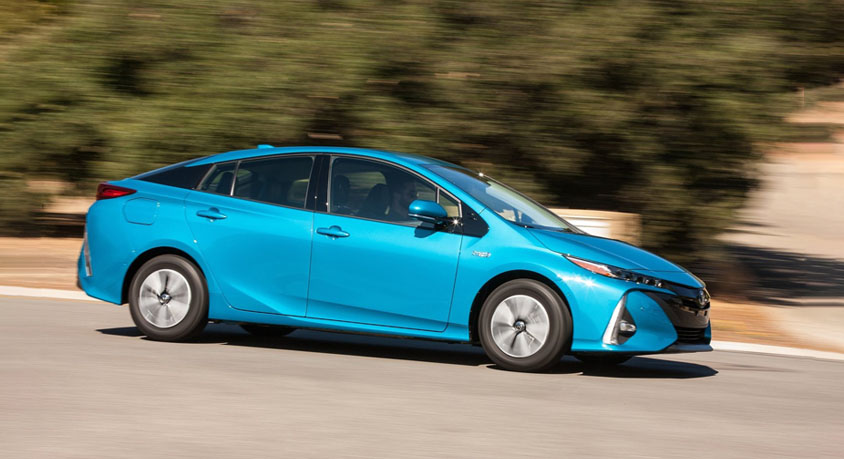
The plug-in hybrid, or PHEV, offers a compelling middle ground. A 2026 Toyota Prius Prime, with 40 miles of electric range and 50 MPG thereafter, costs roughly $35,000. For a 100-mile daily commute, you can drive the first 40 miles on electricity, at $0.04 per mile, and the remaining 60 miles on gas, at $0.07 per mile. The average cost per mile is about $0.058. Over 25,000 miles, that is $1,450 in energy costs. Maintenance is similar to a hybrid, perhaps $500 annually. Insurance is comparable, around $1,500 per year. Depreciation on a Prius Prime is modest, perhaps 35% over five years. The five-year total cost: $35,000 purchase, minus $12,250 resale value, plus $7,250 energy, plus $7,500 insurance, plus $2,500 maintenance, equals $40,000. That is $8,000 per year, or $0.32 per mile. The PHEV is essentially tied with the conventional hybrid in cost, but it offers the option of pure electric driving for shorter trips.
The Honda Accord Hybrid is another strong contender for the long-haul commuter. A 2026 model, with 48 MPG combined, costs roughly $33,000. The fuel cost, at $3.50 per gallon, is $0.073 per mile. Over 25,000 miles, that is $1,825 in fuel. Maintenance and insurance are similar to the Camry Hybrid. Depreciation is slightly higher than Toyota, perhaps 38% over five years. The five-year total cost: $33,000 purchase, minus $11,550 resale value, plus $9,125 fuel, plus $7,500 insurance, plus $2,500 maintenance, equals $40,575. That is $8,115 per year, or $0.32 per mile. The Accord Hybrid is essentially tied with the Camry and Prius Prime in cost, but it offers a more engaging driving experience and a more modern interior.
The conventional gas car, the baseline against which all others are measured, is the loser in this comparison. A 2026 Honda Accord with the 1.5-liter turbo engine, achieving 33 MPG combined, costs roughly $30,000. Fuel cost, at $3.50 per gallon, is $0.106 per mile. Over 25,000 miles, that is $2,650 in fuel. Maintenance is higher, with more frequent oil changes and potential turbo issues. Insurance is similar to the hybrid. Depreciation is steeper, perhaps 40% over five years. The five-year total cost: $30,000 purchase, minus $10,500 resale value, plus $13,250 fuel, plus $7,500 insurance, plus $3,000 maintenance, equals $43,250. That is $8,650 per year, or $0.35 per mile. The gas car is the most expensive option, and it offers no compensating benefits.
The analysis shifts if you cannot charge at home. A plug-in hybrid, without home charging, becomes a heavy conventional hybrid, carrying a battery pack that adds weight without benefit. The fuel economy drops to hybrid levels, but the purchase price remains higher. In this scenario, the conventional hybrid is the clear winner. Similarly, if your utility offers time-of-use rates that drop overnight, the PHEV becomes more attractive, as you can charge at $0.10 per kilowatt-hour or less. The math is sensitive to local conditions, and the rational buyer must calculate their specific numbers.
The non-financial factors matter too. The EV offers a quiet, refined driving experience and the satisfaction of zero tailpipe emissions. The PHEV offers the same electric driving for most trips, with the security of a gas backup. The conventional hybrid offers simplicity, with no plugging in and no range anxiety. The gas car offers the lowest purchase price but the highest operating cost. For the long-haul commuter, the choice depends on your priorities. If you want the lowest total cost, the conventional hybrid wins. If you want the option of electric driving and can charge at home, the PHEV is a close second. If you want the prestige of an EV and are willing to pay for it, the Tesla is an option. But the gas car, the default choice for generations, is now the most expensive option. The math has changed, and the rational commuter must change with it.
The cultural dimension of this choice is worth examining. The EV is a statement, a signal that you are forward-thinking and environmentally conscious. The PHEV is a compromise, a recognition that the infrastructure is not yet ready for a full transition. The hybrid is the sensible choice, the one that prioritizes function over fashion. For the commuter who spends 500 hours per year in their car, the sensible choice is the one that leaves the most money in their pocket. That is the Camry Hybrid, the Accord Hybrid, or the Prius Prime. They are not glamorous, but they are rational. And for the long haul, rational is the only metric that matters.
Disclaimer: Mention of any brand or trademark is for identification only and does not imply partnership or endorsement