

The conventional wisdom in educational technology has long championed the multipurpose tablet as the ultimate academic tool. It consolidates textbooks, notepads, research databases, and communication into a single, vibrant device. Yet, a quiet but pronounced counter-movement is emerging among students at intensive academic institutions. Observing study halls, you'll increasingly see sleek iPads nestled next to or even replaced by monochrome E-Ink tablets like the latest Kindle Scribe or reMarkable 3. The surface-level explanation is eye strain, but that is merely the entry point. After using both a top-tier iPad Pro and a modern 13-inch E-Ink tablet for a semester of graduate-level research, the deeper revelation is that the shift isn't about visual comfort, but cognitive management. The E-Ink device isn't just easier on the eyes; it's engineered to be easier on the mind, creating an environment where sustained, deep comprehension becomes the default state, not a hard-fought achievement.
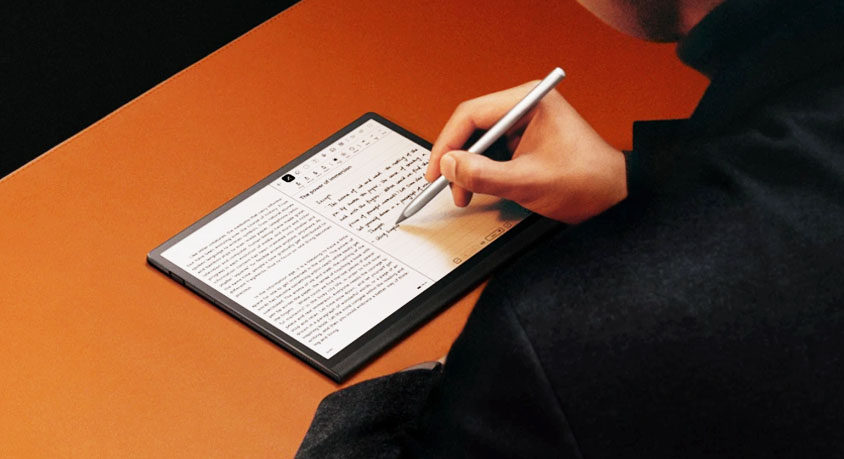
On a pure spec sheet, the comparison seems absurd. The iPad Pro, with its M5 chip, stunning 120Hz ProMotion Liquid Retina XDR display, and versatile iPadOS, is a computational powerhouse. It can render complex animations, edit 4K video, and run countless powerful apps simultaneously. The Kindle Scribe (2026), by contrast, features a 13.3-inch, 300 PPI E-Ink Carta display with a 20Hz refresh rate, a basic quad-core processor, 64GB of storage, and a robust stylus for writing. Its operating system is a locked-down, purpose-built environment for reading and annotating. It lacks color, video capabilities, web browsers, social media, and most app stores. Its battery lasts weeks, not hours. This isn't a weaker computer; it's a different class of object entirely—one whose design parameters prioritize minimizing cognitive "noise" over maximizing computational "bandwidth."
The critical difference manifests in the quality of attention during long-form academic reading. On the iPad, opening a dense PDF in an app like GoodNotes is a visually crisp experience. However, the device is a portal. A notification from a group chat can slide in. The temptation to quickly check a definition via a split-screen Safari window is ever-present, often leading to a 30-minute detour through open browser tabs. The fluid, responsive screen invites interaction and skimming. The backlight, while excellent, creates a layer of emission between you and the text. Reading on the E-Ink tablet is a tactile, slower, and more linear experience. The screen reflects light like paper, eliminating glare and the subtle fatigue of staring at a light source. The slower refresh rate makes rapid scrolling or tab-switching physically unappealing. There is no notification system to pull you away. You are left with the text, your notes, and your thoughts. This enforced simplicity reduces what cognitive scientists call "task-switching overhead" and "attentional residue," where part of your mind remains with the previous distracting context.
This is where the true academic advantage lies. Engaging with complex arguments in philosophy, law, or theoretical physics requires holding multiple abstract concepts in working memory, tracing logical threads, and making connections. The E-Ink tablet, by architecturally removing the possibility of digital multitasking, protects the fragile state of "deep work" necessary for this synthesis. The writing experience—feeling the stylus on a textured screen—fosters a stronger memory connection than typing, aiding retention. The device becomes a dedicated space for intellectual labor, not a multiplex of digital life. For a student writing a thesis, the ability to immerse in source material for three-hour blocks without digital interference is not a minor convenience; it is a significant competitive and qualitative advantage in understanding.
Therefore, the choice is not about which device is "better," but about understanding their distinct roles in an academic ecosystem. The modern E-Ink tablet is the ideal primary device for the consumption and annotation of lengthy texts, for long-form writing, and for thinking that requires guarded focus. It is perfect for humanities majors, law students, PhD candidates deep in literature review, or any learner who needs to engage deeply with textual material.
The iPad Pro remains the superior tool for the synthesis and creation of multimedia projects, for disciplines requiring color imagery (art history, medicine, design), for data analysis using specialized apps, and for collaborative, fast-paced coursework that thrives on connectivity and versatility.
The trend among Ivy League students is a sophisticated form of tool specialization. It reflects an understanding that in an age of infinite information and distraction, the scarcest resource is not processing power, but uninterrupted attention. They are not ditching iPads out of nostalgia for paper, but strategically adopting a tool that applies a beneficial constraint. The $500 "paper" tablet is a statement that for the highest levels of academic work, sometimes the most powerful feature a device can offer is the ability to do less, perfectly. It's a hedge against the very distraction economy that the multipurpose tablet, for all its brilliance, is inherently designed to serve. The return to monochrome isn't a step backward; it's a deliberate step deeper.
Disclaimer: Mention of any brand or trademark is for identification only and does not imply partnership or endorsement