
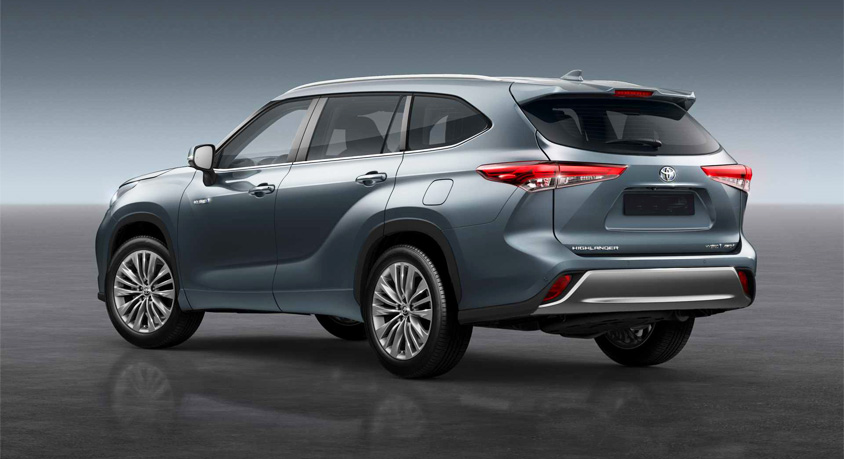
The math is simple, brutal, and often ignored by car reviewers who prefer to talk about acceleration times and leather stitching. Buy a typical luxury SUV for $60,000, drive it for three years, and you'll sell it for perhaps $32,000. You've just spent $28,000 on transportation—roughly $800 per month before fuel, insurance, and maintenance. Buy a 2026 Toyota Highlander Hybrid for $52,000, drive it for the same period, and the market data suggests you'll sell it for approximately $44,000. Your cost of ownership drops to $8,000 over three years, or $222 per month. In an era of 7 percent auto loan rates and inflation squeezing every household budget, this isn't just good financial sense—it's the difference between car payments and investment contributions. We spent a week with the 2026 Highlander Hybrid, driving from the suburbs of Chicago to the Wisconsin Dells and back, to understand why this unassuming crossover has become the most rational financial instrument in the automotive world.
The internal family drama within Toyota's lineup complicates the purchase decision in ways that demand careful analysis. For 2026, the Highlander and Grand Highlander sit side by side in showrooms, and the pricing strategy defies conventional logic. The Highlander Hybrid XLE starts at $47,020, while the Grand Highlander Hybrid LE begins at $44,710—the larger vehicle actually costs less at entry level. The explanation lies in standard equipment: the Highlander now comes exclusively with all-wheel drive and better-equipped XLE trim, while the Grand offers a truly base LE with front-wheel drive. When you compare similarly equipped versions, the Grand commands roughly a $500 premium, but the psychological damage is done. The space comparison tells the real story: the Grand offers 33.5 inches of third-row legroom versus the Highlander's 28.0 inches, and 20.6 cubic feet of cargo space behind the third row versus 16.0 cubic feet. For families who actually use the third row for adults, the Grand's extra space justifies the small premium.
The powertrain represents the engineering honesty that makes the Highlander Hybrid's financial case possible. The 2.5-liter four-cylinder hybrid system produces 243 combined horsepower, which translates to 0-60 mph in approximately 7.3 seconds. These figures won't excite anyone, but they serve a higher purpose: EPA fuel economy ratings of 35 mpg combined, with real-world testing suggesting 32 to 33 mpg in mixed driving. The 17.1-gallon fuel tank promises a theoretical range of nearly 600 miles, though owners report practical fill-ups yield closer to 14 gallons, delivering 450 to 500 miles between stops. The continuously variable transmission, typically an enthusiast's complaint, disappears into the background here—it simply works, seamlessly, without drama. The regenerative braking captures energy smoothly, and the electric motors handle low-speed driving with the serenity of a full EV. Towing capacity checks in at 3,500 pounds, sufficient for a small boat or camper.
The daily driving experience reveals why families tolerate the third-row compromises. The cabin, on XLE and above, offers comfortable front seats with 42.0 inches of legroom, and the second row provides 38.7 inches with either captain's chairs or a bench seat. The interior materials, while not luxurious, wear well and clean easily—essential for the soccer practice and beach trip crowd. The 8.0-inch infotainment screen comes standard, with a 12.3-inch unit available on higher trims, and wireless Apple CarPlay and Android Auto connect instantly every time. The physical climate controls, increasingly rare in this segment, remain separate from the touchscreen, allowing adjustments without taking eyes off the road. The ride quality prioritizes comfort over sport, absorbing Midwestern frost heaves and potholes with composed compliance. Road noise at highway speeds measures acceptably low, though the engine becomes audible under hard acceleration.
The safety story reinforces the family appeal. Toyota Safety Sense 2.5+ comes standard across all trims, including adaptive cruise control, lane departure alert with steering assist, automatic emergency braking with pedestrian detection, and road sign recognition. Blind-spot monitoring and rear cross-traffic alert are also standard, addressing the visibility limitations inherent in three-row SUVs. The National Highway Traffic Safety Administration has awarded the Highlander its highest five-star rating, and the Insurance Institute for Highway Safety rates it well in most crash categories. For parents handing car keys to teenage drivers, this peace of mind carries tangible value.
The compromises, however, require honest acknowledgment. The third row remains genuinely uncomfortable for adults—at six-foot-one, I cannot sit behind myself without performing contortions that would impress a yoga instructor. The cargo space behind that third row measures just 16.0 cubic feet, sufficient for four carry-on suitcases but not a full Costco run with all seats occupied. The infotainment system, while functional, lacks the graphical polish of the best competitors, and the voice recognition occasionally misunderstands commands in ways that frustrate. Some owners report that the navigation subscription, free for the first year, requires a $15 monthly fee thereafter. And the decision to eliminate the base LE trim means entry pricing now exceeds $47,000, placing the Highlander Hybrid in a different financial conversation than previous generations.
The Grand Highlander comparison intensifies the internal debate. For families who need genuine third-row space, the Grand's 33.5 inches of legroom transforms the rearmost seats from punishment into actual accommodation. The 20.6 cubic feet of cargo space behind that third row swallows luggage that would overflow the standard Highlander's hold. The Grand also offers Toyota Safety Sense 3.0, the latest generation of driver assistance technology with improved lane recognition and smoother adaptive cruise control, while the Highlander continues with 2.5+. The Hybrid Max option, exclusive to the Grand, delivers 362 horsepower and 400 pound-feet of torque for those who want performance alongside efficiency. For roughly $500 more in comparable trim, the Grand addresses every space complaint while adding newer technology.
The resale value analysis reveals the Highlander Hybrid's true nature as a financial asset. Data from iSeeCars projects three-year residual values at approximately 62 percent of original purchase price, compared to the segment average of 50 to 55 percent. The five-year projection suggests 50 to 52 percent residual value, meaning a $50,000 Highlander Hybrid retains $25,000 to $26,000 after half a decade of ownership. The reliability data supports these numbers: the Highlander Hybrid demonstrates an average lifespan of 182,000 miles, with a 39 percent probability of reaching 200,000 miles. In financial terms, this translates to depreciation costs roughly half those of competitors, effectively paying for fuel and insurance through retained value alone.
Disclaimer: Mention of any brand or trademark is for identification only and does not imply partnership or endorsement