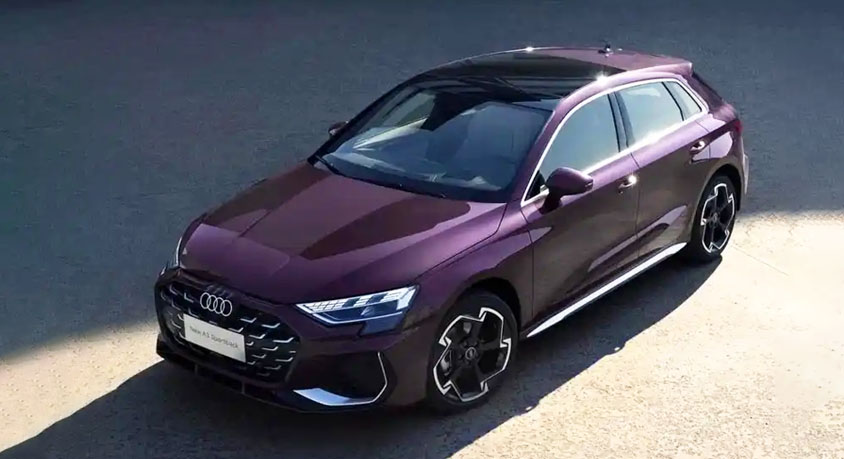
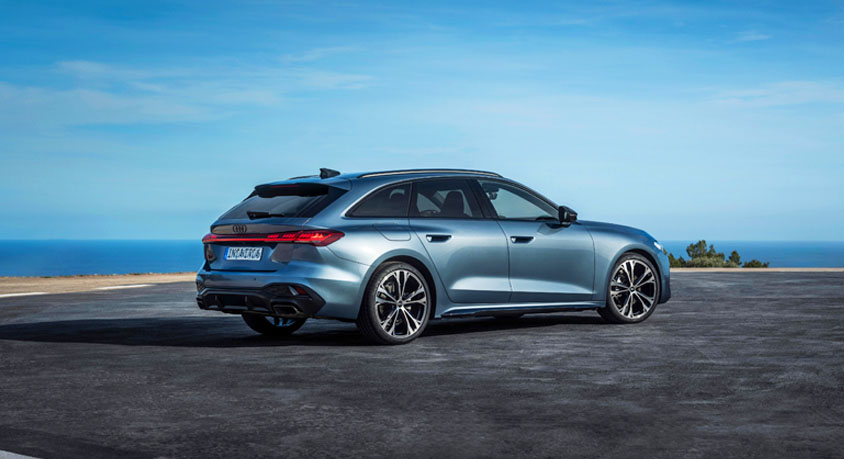
The obituary for the Audi A4 has been written prematurely before, but this time it's official—and the replacement arrives with an identity crisis that reveals everything about where the internal combustion engine is heading. For decades, the naming convention was simple: even numbers for electric, odd numbers for fuel. Then Audi flipped the script, killing the A4 nameplate entirely and rebadging its best-selling sedan as the A5. The 2026 A5 and S5 aren't just a new generation; they're a philosophical statement that German engineering still matters in an era of software-defined vehicles. We spent a week with the new models, carving through the kind of winding roads that made the original A4 a benchmark, to understand whether this renaming exercise masks genuine progress or merely rearranges deck chairs on the Titanic.
The numbers tell the first part of the story, but they require translation. The A5 carries a 2.0-liter turbocharged four-cylinder producing 268 horsepower and 295 pound-feet of torque, while the S5 steps up to a 3.0-liter V6 with 362 horsepower. Those figures place the S5 directly in competition with the BMW M340i and Mercedes-AMG C43, and the performance metrics justify the comparison. In independent testing, the S5 sprints to 60 mph in 3.9 seconds and covers the quarter-mile in 12.5 seconds, figures that would have defined supercar territory a generation ago. The seven-speed dual-clutch transmission delivers shifts with the precision of a surgeon's scalpel, and the standard Quattro all-wheel drive distributes power with an almost prescient understanding of available grip. Yet the numbers miss the point entirely. The S5's acceleration feels effortless rather than violent, cultivated rather than raw—a distinction that matters to buyers who value composure over theatrics.
The chassis represents the most significant engineering investment beneath the skin. The new Premium Platform Combustion architecture, developed specifically for Audi's remaining fuel vehicles, stretches the wheelbase by nearly three inches compared to the outgoing A4, liberating rear legroom that finally accommodates six-foot adults without complaint. The suspension tuning, available with adaptive dampers on higher trims, balances ride compliance with body control in a way that rewards enthusiastic driving without punishing daily commutes. The steering, electrically assisted, weights up naturally in Dynamic mode but still filters out the road texture that enthusiasts crave—a compromise that prioritizes refinement over feedback. At 75 mph on the highway, the cabin registers just 67 decibels, isolating occupants from wind and road noise with the serenity of a vehicle costing twice as much.
The interior represents the most radical departure from Audi tradition, and it's here that the rebellion becomes controversial. The "Digital Stage" dashboard abandons the clean, driver-focused layout that defined Audi interiors for two decades in favor of a curved glass expanse that integrates an 11.9-inch instrument cluster and a 14.5-inch touchscreen into a single visual element. An optional 10.9-inch passenger display adds another layer of digital real estate, creating a cabin that feels more like a technology showcase than a driver's cockpit. The new interface, powered by Android-based software, reduces menu layers and emphasizes graphical elements over text lists, theoretically reducing distraction. In practice, the climate controls now live permanently at the bottom of the touchscreen, requiring eyes-off-road adjustments that the previous generation's physical knobs handled by touch alone. The haptic steering wheel controls, carried over from other Audi models, remain exercises in frustration, though the addition of physical scroll wheels for volume and cruise control represents a partial retreat from full touch dependency.
The technology story extends beyond screens into genuinely useful innovation. The available factory dashcam, integrated discreetly at the base of the rearview mirror, records continuously and can be triggered manually or automatically in the event of a collision. The updated park assist now remembers up to five parking maneuvers, allowing the car to autonomously navigate complex garage situations on private property. The passenger screen supports independent Bluetooth audio, meaning the front passenger can watch videos or listen to music through wireless headphones without disturbing the driver—a feature that transforms long family trips from endurance tests into genuine possibilities. The Bang & Olufsen headrest speakers use vibration to deliver audio directly to the driver, providing navigation prompts and phone calls without disrupting other occupants.
The S5's Dynamic Plus drive mode deserves special attention for what it reveals about Audi's understanding of its customers. Engineers have recalibrated the brake-based torque vectoring and optimized the electronic stability control to permit controlled oversteer, allowing the rear wheels to step out slightly before the systems intervene. This isn't drift mode in the traditional sense—the Quattro system still prioritizes traction over theatrics—but it represents a philosophical acknowledgment that driving enjoyment requires some degree of risk, some willingness to let the driver participate in the outcome. The result is a car that rotates eagerly when you lift off the throttle mid-corner, that responds to steering inputs with a connectedness missing from the standard A5, that rewards the skilled driver without punishing the merely competent.
The compromises, as always, deserve equal billing with the achievements. The rear seat, while improved, still measures just 35.5 inches of legroom—competitive but not class-leading. The cargo capacity, accessed through a liftback rather than a traditional trunk, offers 22 cubic feet with the seats up and 37 with them folded, figures that beat the BMW and Mercedes but trail the Acura Integra. The weight, which approaches 4,000 pounds in S5 guise, manifests in braking distances and cornering limits that the spec sheet alone cannot capture. The fuel economy, rated at 22 mpg combined for the S5, reflects the performance focus, though our 75-mph highway testing returned an impressive 33 mpg, suggesting that real-world efficiency exceeds EPA estimates by a significant margin. The price, starting at $50,200 for the A5 and climbing past $60,000 for a well-equipped S5, places these vehicles firmly in luxury territory.
Disclaimer: Mention of any brand or trademark is for identification only and does not imply partnership or endorsement