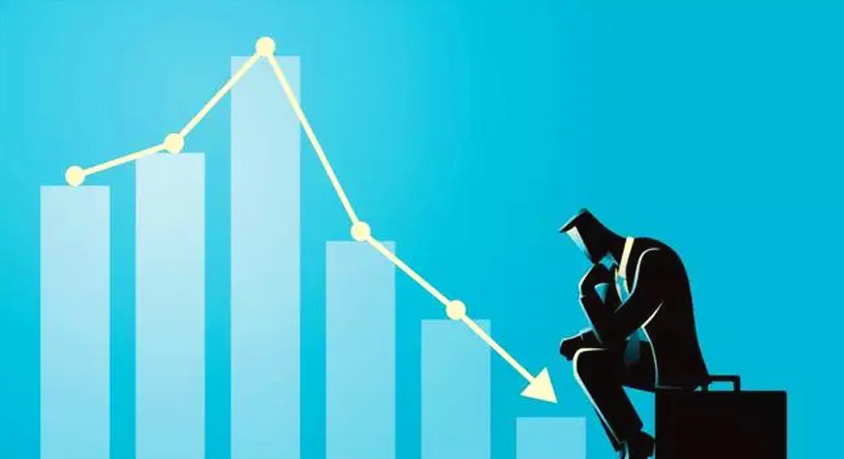

There is a scene that plays out millions of times every year. You pack up your desk. You hand in your badge. You walk out the door of a company you worked for. Somewhere in the confusion of the last day, you remember you have a 401(k) there. You tell yourself you will deal with it later. Later comes and goes. The account sits. It sits for years. It sits for decades. And while it sits, it slowly, quietly, shrinks.
I have spent twenty years watching people make this mistake. Smart people. People who would never leave cash on the table. They leave their old 401(k) behind because dealing with it feels like work. The paperwork. The phone calls. The decisions. It is easier to ignore. The ignoring costs them thousands. It costs them retirement security. It costs them nothing to fix, except the time they will not spend.
The problem is fees. Old 401(k) plans charge administrative fees. They charge recordkeeping fees. They charge investment fees. These fees are often higher than what you would pay in an IRA. They are deducted from your balance every quarter. You do not see a bill. You just see a balance that grows slower than it should. The difference compounds over time. A one percent higher fee over thirty years eats about twenty-five percent of your final balance. That is not a typo. One percent. Twenty-five percent of your money. Gone.
I first understood this when a friend asked me to look at his old 401(k). He had left a job ten years earlier. The account had grown, but not as much as he expected. We pulled the statements. The fees were buried in the fine print. They added up to nearly one point five percent annually. Over ten years, that had cost him over fifteen percent of his potential growth. The account was still there. The money was still his. But a chunk of it had been transferred to the plan administrators without him ever noticing.
The options for an old 401(k) are simple. Leave it where it is. Move it to your new employer's plan. Roll it into an IRA. Each has trade-offs. Each requires a decision. Doing nothing is also a decision. It is the decision to leave it where it is. That decision might be right. It might be wrong. The problem is that most people do not evaluate it. They default into it. Defaults are rarely optimal.
Leaving the account in the old plan has advantages. The funds might be institutional share classes with low costs. The plan might offer protections from creditors that IRAs do not. The investment options might be solid. But these advantages are specific to your plan. They are not universal. You have to check. Most people do not check.
Moving to the new employer's plan consolidates everything in one place. That is simpler to manage. But the new plan might have worse options. It might have higher fees. It might have limited investment choices. You are trading one set of unknowns for another. The consolidation is convenient. Convenience is not the same as optimal.
Rolling to an IRA is the most common choice. It gives you control. You can choose any brokerage. You can choose any investments. You can avoid the fees that plagued the old plan. You can set up automatic contributions. You can manage it alongside your other savings. The control is real. The responsibility is real too. You have to make the choices. Some people prefer that. Some do not.
I have watched people get stuck in analysis paralysis. They cannot decide which option is best. They do nothing. The account sits. The fees accumulate. The years pass. The cost of waiting is often larger than the cost of making the wrong choice. Even a suboptimal choice is better than no choice, because at least you are in motion. Motion allows correction. Stasis allows decay.
The practical steps are simple but require action. First, find the last statement from your old 401(k). Look at the fees. Look at the investment options. Look at the balance. Second, compare those fees to what you could get in an IRA at a low-cost brokerage. Vanguard, Fidelity, Schwab. The difference is often stark. Third, decide. If the old plan is good, leave it. If not, move it. The move takes a phone call and some paperwork. It is not hard. It just requires starting.
I have learned to treat old 401(k)s like loose change. They belong in one place. Having multiple scattered accounts is asking to lose track. It is asking to pay multiple sets of fees. It is asking to forget about asset allocation. Consolidation simplifies everything. It makes monitoring easier. It makes rebalancing easier. It makes retirement planning easier.
There is also the risk of losing track entirely. People move. Companies get acquired. Plan administrators change. The statements stop coming because you moved and did not update your address. The account becomes abandoned. Eventually, it gets turned over to the state as unclaimed property. You can get it back, but it is a hassle. The hassle is avoidable. Just move the money when you leave the job.
I have seen this happen to a friend's parent. They worked for a company thirty years ago. They forgot about a small pension and a 401(k). The company was bought. The records were lost. The money ended up with the state. It took years of paperwork to recover it. The recovered amount was far less than it would have been if it had been invested all along. The lesson is brutal but simple. Do not let your money become unclaimed.
The window for action is open now. It was open last year. It will be open next year. But every year you wait, the fees compound. The growth you lose is gone forever. You cannot get it back. The only way to capture it is to have captured it earlier. Since you cannot go back, the best time to act is now.
I am not suggesting everyone should roll their old 401(k) into an IRA. That is a personal decision based on your specific plan, your specific options, your specific preferences. But I am suggesting that everyone should make that decision intentionally. Defaulting into doing nothing is a choice. It is a choice to accept whatever fees and options your old plan offers. It might be the right choice. It probably is not. The only way to know is to look.
The 401(k) you left behind is not just sitting there. It is slowly being eaten. The eating happens in increments too small to notice. Over years, the increments add up. Over decades, they become a feast. The feast is paid for with your retirement.
Disclaimer: Mention of any brand or trademark is for identification only and does not imply partnership or endorsement