
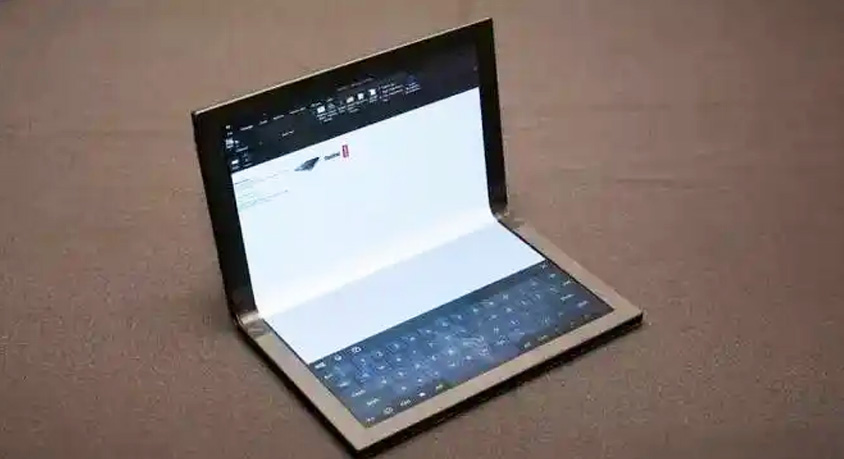
Every few years, the technology industry convinces itself that the path forward lies in making things bigger, brighter, and more immersive. We chase higher pixel densities, broader color gamuts, and screens that consume our entire field of view. But at the recent technology showcases in Barcelona and Las Vegas, a different, almost paradoxical vision of the future emerged from the usual noise of concept devices. It is a vision where the screen, instead of demanding more of your attention, literally steps aside. I am talking about the emergence of transparent and rollable displays—screens that are defined not by what they show, but by what they allow you to see through. The question, as always with bleeding-edge technology, is whether this represents a genuine leap forward or simply a very expensive magic trick.
To understand the appeal of a transparent display, you have to abandon the specifications sheet and think about the physics of seeing. Researchers at institutions like the Interactive Media Lab in Dresden have been exploring this for years, building platforms like "CleAR Sight" to study how we interact with data when the interface itself does not obstruct the world. Their work suggests that the killer app for a transparent tablet might not be watching movies, but rather interacting with augmented reality. Imagine holding a slab of glass that allows you to see a three-dimensional model of a building, a human heart, or a complex data visualization floating in the space behind it. You are not looking at a screen; you are looking through a window into a hybrid world where digital information is anchored to physical reality. For a surgeon planning a procedure or an architect reviewing a site, the value proposition is immediate: the tool disappears, leaving only the task.
But the path from the research lab to your living room is littered with engineering compromises. The current state of the art, as demonstrated by concepts like the Lenovo ThinkPad Rollable XD, focuses less on transparency and more on the related magic of "disappearing" through transformation. Unveiled at CES 2026, this device starts as a relatively compact 13.3-inch laptop. But with a quiet hum of motors, the display unfurls vertically, expanding to a spacious 16 inches. It is a sleight of hand that increases your screen real estate by over 50% without expanding the device's physical footprint. The genius is in the mechanical detail. The unused portion of the flexible OLED panel doesn't just vanish; it rolls neatly behind a curved sheet of Gorilla Glass Victus 2, creating a secondary "outward-facing" display that shows notifications, calendar alerts, or an AI avatar even when the laptop is closed. It is a design that treats screen real estate as a variable, not a fixed constant.
The question that keeps engineers awake at night, however, is durability. The ThinkPad Rollable XD is a marvel of miniaturized motors and precision mechanics. The company employs a dual-motor system specifically to minimize vibration and noise during the expansion process. But for the average user, the mental leap from a solid, unibody slab of metal and glass to a device with moving parts is a significant one. We have been conditioned to believe that moving parts mean points of failure. Will the mechanism survive a drop? What about dust ingress after a year in a bag? These are not trivial questions. While the transparent research prototypes bypass this by being static pieces of glass, the rollable concept introduces a new category of potential failure that the industry has only just begun to address.
This brings us to the core of the "future or folly" debate: the use case. For whom is this technology truly beneficial? Consider the professional on the move. The promise of the rollable is that it eliminates the compromise between portability and productivity. On an airplane, you have a compact 13-inch device that fits on the tray table. In a hotel room, you unfurl it to a 16-inch workstation, giving you the screen real estate to comfortably edit spreadsheets or review code. The secondary outward display, showing a quick glance of your schedule without opening the device, adds a layer of utility that feels genuinely thoughtful. For this user, the rollable screen is not a gimmick; it is a tool that adapts to the environment.
The transparent tablet, however, currently occupies a more ambiguous space. For the entertainment consumer, the person who uses a tablet to watch Netflix in bed, a transparent screen is a downgrade. Transparency inevitably compromises contrast and black levels. You are not watching a movie; you are watching a ghost of a movie superimposed on your bedroom ceiling. The magic only truly works when paired with augmented reality glasses or when used in a professional context where seeing the physical world behind the data is paramount. It requires an ecosystem—headsets, tracking systems, specialized software—to fulfill its promise. Without that ecosystem, it is just a very expensive, very fragile window.
And then there is the unavoidable reality of power. A rollable or transparent display is still an OLED panel, and OLEDs crave energy. The thinness of these devices leaves little room for the one component that heavy users care about most: a large battery. The prototypes we see are often tethered to external power sources or have battery life that would make a power user wince. You are trading endurance for the wow factor of the form factor. For a frequent traveler who spends long days away from an outlet, the ability to expand your screen from 13 to 16 inches means little if the device dies before your connecting flight.
So, who should pay attention to this disappearing act? If you are a professional whose work involves complex 3D data, architectural visualization, or surgical planning, the transparent tablet, integrated with a proper AR ecosystem, is not a folly; it is a glimpse of your future workstation. If you are a road warrior who lives out of a suitcase and craves maximum screen real estate with minimum bulk, the rollable laptop is a compelling evolution of the portable computer.
But if you are the average consumer, the person who uses a tablet for streaming, browsing, and the occasional video call, this first generation of disappearing screens is likely not for you. The trade-offs in durability, battery life, and display quality are too steep. The current wave of transparent and rollable devices is less a consumer product and more a proof of concept. They are engineering exercises designed to answer the question: "What if the screen was not the boundary, but just the beginning?" For now, that question is more exciting as an idea than as a reality. The future of screens may indeed be nothing, but we are not quite ready to live with nothing just yet.
Disclaimer: Mention of any brand or trademark is for identification only and does not imply partnership or endorsement