The line between professional cameras and smartphones continues to blur, with Xiaomi and Vivo partnering with legendary lens makers Leica and Zeiss to redefine mobile imaging. The Xiaomi 14 Ultra and Vivo X100 Pro aren’t just flagship phones—they’re statements about how optical heritage and computational intelligence can collaborate. For photography enthusiasts and casual shooters alike, the question isn’t just which takes better photos, but which aligns with your style: Leica’s iconic German aesthetic or Zeiss’s pursuit of natural realism? Let’s dissect specs, test real-world scenarios (night photography, portraits), and uncover which device turns everyday moments into memorable shots.
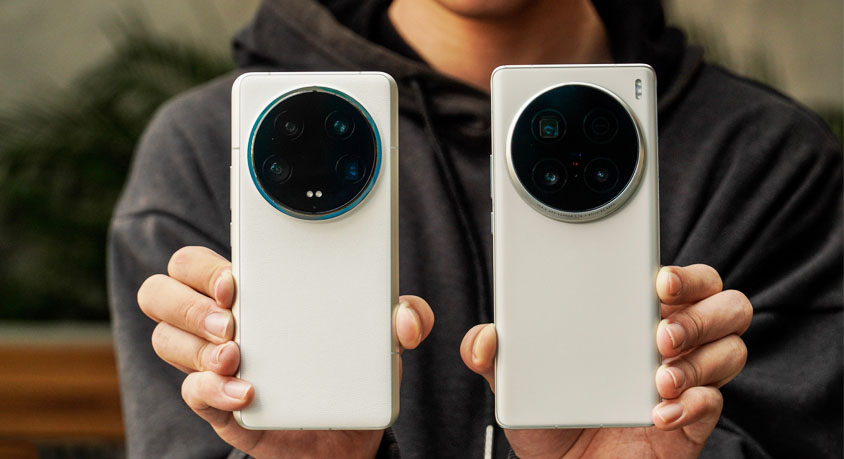
In design, both phones signal their photographic intent with camera-centric builds. The Xiaomi 14 Ultra weighs 234g, featuring a matte ceramic back and a prominent circular Oreo camera bump housing four lenses, wrapped in Gorilla Glass Victus 2 with IP68 water resistance. Its 6.73-inch 2K LTPO AMOLED screen (3200x1440, 120Hz) offers 3000-nit peak brightness, ideal for reviewing photos in sunlight. The Vivo X100 Pro is lighter at 221g, with a leather-textured back and a more streamlined circular camera array, a 6.78-inch 2K AMOLED screen (3200x1440, 120Hz) with 3000-nit brightness, and IP68 protection. The Xiaomi’s ceramic body feels premium but bulkier, while the Vivo’s leather back provides a more comfortable grip during extended shooting sessions.
Under the hood, both pack flagship processors—Xiaomi’s Snapdragon 8 Gen 3 and Vivo’s Dimensity 9300—ensuring smooth camera app performance and fast computational processing. The camera hardware is where differences emerge: Xiaomi pairs a 50MP Leica Summilux main sensor (1/1.31-inch, f/1.42) with a 50MP ultrawide (1/1.55-inch, f/2.2), 50MP 3.2x telephoto (1/1.61-inch, f/2.5), and 50MP 5x periscope telephoto (1/1.55-inch, f/3.0). Vivo opts for a 50MP Zeiss T* main sensor (1/1.31-inch, f/1.48), 50MP ultrawide (1/2.0-inch, f/2.0), 64MP 3x telephoto (1/2.0-inch, f/2.5), and 50MP 5x periscope telephoto (1/1.6-inch, f/3.0). Both use large sensors to capture more light, but their lens tuning and algorithms create distinct signatures.
Night photography testing in a dimly lit urban alley revealed stark differences. The Xiaomi 14 Ultra’s Leica Classic mode produced rich, contrasty shots with deep blacks and warm tones—perfect for capturing the mood of a rainy evening, with sharp details in storefront signs and minimal noise. The Vivo X100 Pro’s Zeiss Natural Color mode delivered more balanced exposure, preserving highlight details in streetlights while retaining shadow information, resulting in more natural-looking images that require less post-editing. In low-light portraits, Xiaomi’s skin tones leaned slightly warmer, while Vivo’s were more true-to-life, though both avoided the artificial smoothing common in mid-range phones.
Portrait photography highlighted their optical heritage. Xiaomi’s Leica Portrait mode created subtle, film-like bokeh with gradual background blur, ideal for artistic shots that emphasize the subject—great for wedding guests or creative portraits. The Vivo X100 Pro’s Zeiss Portrait mode offered more precise edge detection, avoiding the halo effect around hair, and its skin tone reproduction was more consistent across different lighting conditions, making it a reliable choice for family photos or professional headshots. The Xiaomi’s 5x telephoto excelled at candid portraits from a distance, while Vivo’s 3x telephoto felt more natural for close-up shots.
Computational photography algorithms enhance their strengths. Xiaomi’s Leica Vivid mode boosts saturation for vibrant landscapes, though it can overdo reds in some scenarios. Vivo’s Zeiss Super Night mode and HDR Fusion technology handle high-contrast scenes (e.g., sunset over a city skyline) better, merging multiple exposures seamlessly. Both support 8K video recording, but Xiaomi’s Leica Cine-flare mode adds subtle lens flares for cinematic footage, while Vivo’s Zeiss Cinematic mode prioritizes stable, natural motion.
Battery life and charging support all-day shooting: Xiaomi’s 5500mAh battery lasts 11 hours of heavy photography (100+ shots, video clips), while Vivo’s 5500mAh battery extends to 12 hours. Charging speeds favor Vivo: 100W wired (0-100% in 35 minutes) vs. Xiaomi’s 90W (0-100% in 40 minutes), with both offering 50W wireless charging—handy for topping up during photo trips.
The Xiaomi 14 Ultra shines for photography enthusiasts who crave Leica’s distinctive aesthetic and artistic control, perfect for content creators and film lovers. Its drawbacks: bulkier design and occasional over-saturation in Vivid mode. The Vivo X100 Pro is ideal for casual users and professionals who prioritize natural colors, reliable performance, and a more comfortable grip, though its telephoto sensor struggles slightly in extreme low light. Neither is suited for users seeking a slim phone or budget-friendly option, but for those who want a camera phone that marries optical legacy with modern tech, the Xiaomi 14 Ultra is for style-driven shooters, while the Vivo X100 Pro caters to those who value authenticity and versatility.
Disclaimer: Mention of any brand or trademark is for identification only and does not imply partnership or endorsement