
We are currently witnessing a fascinating phenomenon in the mobile industry. Every flagship launch is less about a new phone and more about a new “AI ecosystem.” Google’s Pixel 10 Pro XL and Samsung’s Galaxy S26 Ultra are the latest standard-bearers of this movement, arriving with a suite of features that promise to fundamentally change how we interact with our devices. But if we strip away the marketing veneer and the impressive on-stage demos, we are left with a rather uncomfortable question: Are these “native AI” features genuine breakthroughs that justify a $1,500 price tag, or are they merely sophisticated experiments, designed to obscure the reality of incremental hardware updates?
Let’s start with the physical objects themselves. The Pixel 10 Pro XL has refined its distinctive visor, opting for a polished aluminum finish that feels cool and dense in the hand. It’s a comfortable, if familiar, slab of glass and metal. The Galaxy S26 Ultra, by contrast, leans into its “Ultra” identity. It’s heavier, sharper, and houses the S-Pen, signaling a clear intent toward productivity and note-taking. For a frequent business traveler, the S26 Ultra’s integrated stylus for signing documents on the fly is a tangible benefit. The Pixel, with its slightly curved edges and lighter weight, feels more at home as a daily driver for media consumption and communication.
When we turn to the screen and core performance, the delta between these two giants narrows considerably. Both boast brilliant, high-refresh-rate OLED panels that make scrolling and video playback a visual treat. They are powered by the latest generation processors—the Pixel by Google's custom Tensor G5 and the Galaxy by the Snapdragon 8 Gen 5. In raw computational benchmarks, they trade blows, but in daily use, this translates to buttery-smooth app switching and effortless multitasking. You won't feel a performance deficit in either device; they are both overpowered for 90% of the tasks we throw at them.
The true battleground, however, is computational photography, now rebranded as “AI photography.” This is where the data points become less about megapixels and more about algorithms. Both phones pack versatile lens arrays. The S26 Ultra still holds a hardware advantage with its dual-telephoto system, offering true optical zoom capabilities. In practice, this means you can stand at the back of a concert venue and still capture a recognizable image of the performer. The Pixel, with its smaller sensors, relies more heavily on its “Zoom Enhance” AI, which attempts to fill in missing details after the fact.
And this is where the “AI bubble” becomes most apparent. Let’s consider a specific scenario: you’re in a dimly lit restaurant trying to capture a group photo. The Pixel’s “Magic Editor” can later remove a photobomber or even adjust the expression on a friend’s face. The Galaxy’s “Generative Edit” can do the same. On the surface, this is impressive. But look closer. The results are often synthetic. When you ask the AI to expand a photo’s canvas, it generates plausible, but not real, background detail. It’s not photography; it’s algorithmic illustration. We are paying a premium for a feature that deconstructs the authenticity of the very medium it’s trying to enhance. Are we buying a camera, or are we buying a high-end filter that fabricates reality?
The software experience further complicates the value proposition. Google’s clean Android, free of bloatware, is a joy, and features like the new “Call Notes” which provides a local, on-device summary of a conversation, feel genuinely useful. Samsung’s One UI is heavily feature-packed, but often duplicates core Google services, creating digital clutter. However, many of these headline AI features, like live translation or circle-to-search, are not exclusive to these $1,500 phones. They are software tricks that will inevitably trickle down to mid-range devices or appear in third-party apps within a year.
Finally, let’s talk about the battery. The Galaxy S26 Ultra packs a 5,500mAh battery, while the Pixel houses a 5,100mAh unit. For the average user, both will comfortably get you through a full day of mixed use. For the power user constantly using the camera or playing graphics-intensive games, the Galaxy’s extra capacity and slightly faster charging offer a tangible peace of mind. The Pixel’s battery, while competent, will leave you hunting for a charger by late evening if you’ve been heavily utilizing its AI imaging tools.
In the end, these are both exceptional pieces of technology. The Galaxy S26 Ultra is the ultimate tool for someone who wants every hardware feature imaginable, particularly optical zoom. The Pixel 10 Pro XL is for the user who prioritizes a seamless software experience and is intrigued by the potential of on-device AI, even in its nascent form.
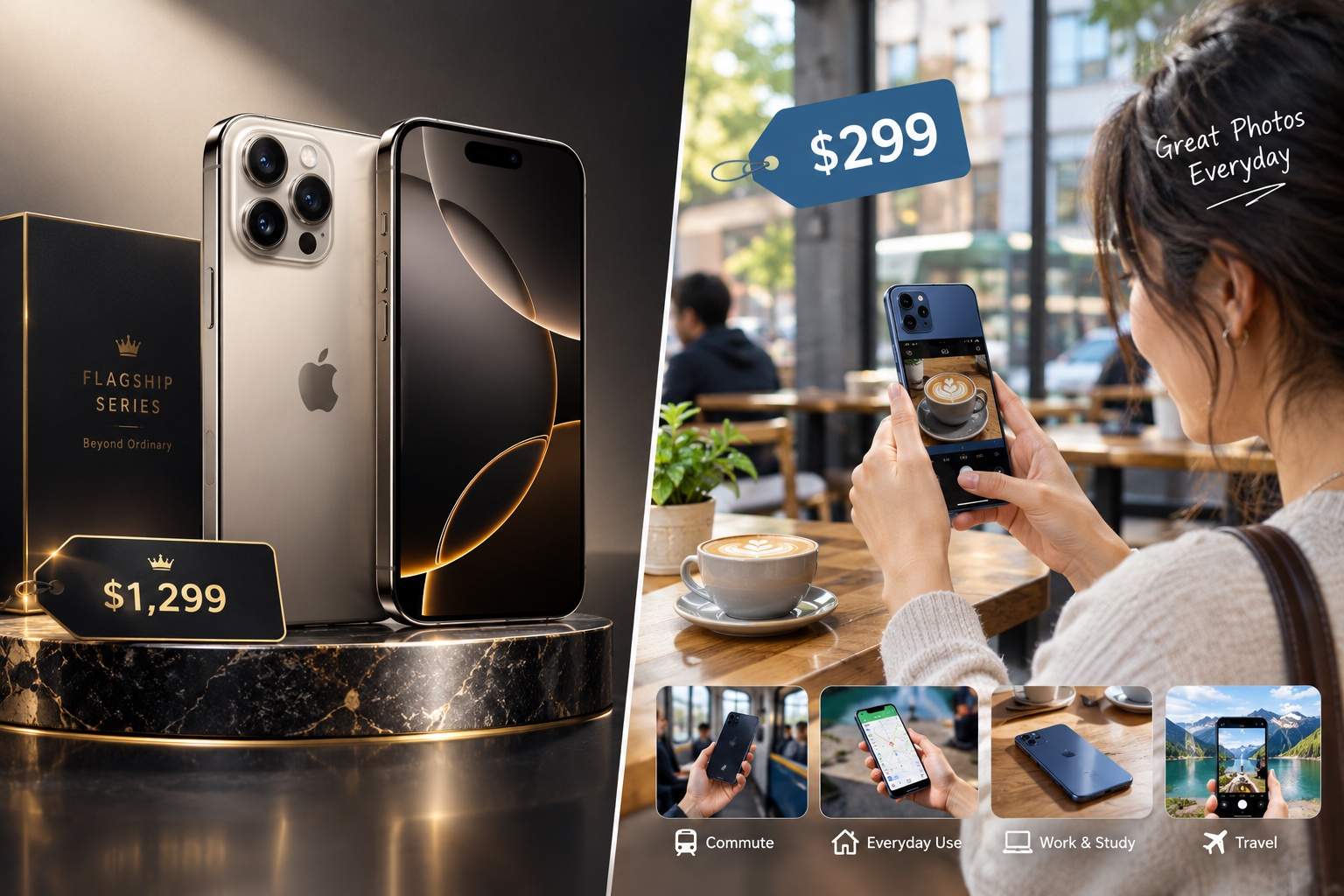
But for the rest of us, it’s worth pausing. We are being asked to pay a premium for features that are, at best, incomplete experiments and, at worst, solutions in search of a problem. The core experience—a great screen, long battery life, and a capable camera—is now available for hundreds of dollars less. Perhaps the most intelligent feature a smartphone could offer right now isn’t another AI parlor trick, but a more honest price tag.
Disclaimer: Mention of any brand or trademark is for identification only and does not imply partnership or endorsement