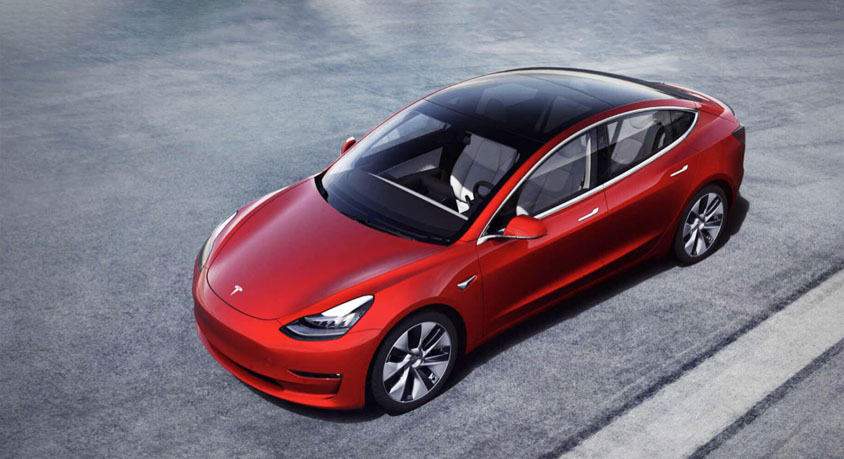
The used car market is currently doing something hilarious: it’s eating its own children, and the Tesla Model 3 is at the top of the menu. A few years ago, these things held their value like bars of gold, but thanks to Elon’s erratic price cuts and a rental car fire sale from Hertz, you can now pick up a 2021 Model 3 for the price of a used Toyota Camry. It sounds like the deal of the century, but before you rush out to swap your hard-earned cash for a sleek white sedan, you need to realize that buying a used EV is less like buying a car and more like buying a giant, four-wheeled iPhone with a cracked screen you can't see yet.
I’ve spent two decades telling people that if you want a reliable commuter, you buy a Lexus or a Honda because their mechanical failures are predictable—a water pump here, an alternator there. But a used Tesla is a digital mystery box. While the interior of a Model 3 looks "minimalist" to some, to me, it looks like Porsche’s interior designer went on strike and they let a Swedish dorm-room minimalist finish the job. There’s no physical vent to move, no volume knob that feels expensive, just a giant screen that controls everything from your windshield wipers to your glovebox. If that screen dies—and they do—you aren't just losing your radio; you're losing the ability to see how fast you’re going or defrost your windows while driving to work in a blizzard.
Let’s talk about the elephant in the room: the battery. When you buy a used Ford F-150 with 100,000 miles, you know the engine might need a tune-up. When you buy a Model 3 with 100,000 miles, you’re gambling on a chemical reaction that is slowly dying. If the previous owner was a "Supercharger addict" who blasted the battery with high-voltage DC juice every single day because they lived in an apartment, that battery is stressed out like a Wall Street trader during a market crash. Replacing a Tesla battery out of warranty can cost $15,000 to $20,000. That’s not a repair; that’s a total loss. In a Toyota Camry, a transmission swap is a bad weekend; in a Tesla, a battery failure is a financial funeral.
On the road, the Model 3 is admittedly a hoot. It’s got that instant electric torque that makes merging onto the 405 feel like you’ve been shot out of a slingshot. Compared to a BMW 3 Series, the Tesla feels more agile in the corners because the center of gravity is so low it’s practically underground. But the build quality? It’s hit or miss. I’ve seen 2022 models with panel gaps wide enough to swallow a Nickelback CD, and the interior rattles will drive you insane on a long road trip. A BMW or an Audi is built with a sense of "heft" and "permanence" that Tesla simply hasn't mastered yet. When you shut the door on a Mercedes, it sounds like a vault; when you shut the door on a Model 3, it sounds like a baking sheet hitting a tile floor.
Then there’s the "Full Self-Driving" (FSD) nonsense. Tesla will happily charge you thousands for software that promises to drive the car for you, but in reality, it’s just a very stressed-out teenager behind the wheel who occasionally tries to dive-bomb into an exit ramp at 80 mph. If you’re buying used, don't pay extra for a car just because it has FSD. The software stays with the car, but its actual utility is hovering somewhere between "cool party trick" and "mildly terrifying." I’d rather have a car with physical blind-spot monitors and a driver who actually pays attention to the road than a computer that thinks a shadow under a bridge is a brick wall.
If you have a garage and can plug in a Level 2 charger at home, a used Model 3 makes a fantastic second car for the "Home Depot run" or the daily crawl to the office. It costs pennies to "fuel" compared to a gas-guzzler. But if you're planning to make this your only vehicle for cross-country family vacations, you’re going to spend a lot of time sitting at Superchargers in the back of a Waffle House parking lot, praying the stalls aren't full. A hybrid like the Honda Accord Hybrid might not be as "disruptive," but it’ll get you 600 miles on a tank without making you plan your life around a charging map.
So, is the used Model 3 a bargain? It depends on your appetite for risk. If you find a low-mileage example with a documented history of slow home charging and the remaining factory warranty, it’s a steal that makes a new Nissan Leaf look like a joke. But if you’re buying a high-mileage ex-Uber car just because the monthly payment looks small, you’re not a savvy consumer—you’re a beta tester for someone else's expensive mistakes. The Tesla Model 3 changed the world, but as a used car purchase, it’s the ultimate "buyer beware" in an industry that’s still figuring out how to recycle its own batteries.
Disclaimer: Mention of any brand or trademark is for identification only and does not imply partnership or endorsement