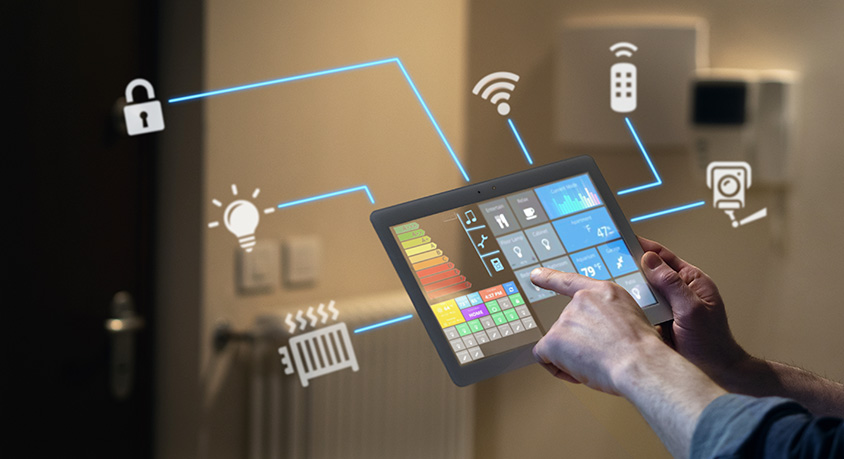
The premium smart home ecosystem sells a vision of seamless, futuristic control, often centered around a dedicated touchscreen panel mounted elegantly on the wall. These panels, from brands like Control4, Savant, or even high-end offerings from Google and Amazon, can cost anywhere from $500 to well over $2,000, plus professional installation. Their value proposition is integration and aesthetics. However, when you dissect their core function—displaying a dashboard and relaying commands to other devices—you uncover a stark economic reality. For a fraction of the cost, an old tablet you have in a drawer can perform the same central logic function, often with greater flexibility and intelligence. I tested this by deploying a 2022 Amazon Fire HD 10 tablet, worth about $75 on the refurbished market, as a permanent wall-mounted hub. The experiment revealed that the true cost of the dedicated panel is not for superior technology, but for curated convenience and a specific aesthetic form factor.
The hardware comparison is almost laughable. A dedicated smart home panel like a high-end model might feature a 10-inch touchscreen, a quad-core ARM processor, 2GB of RAM, 16GB of storage, and built-in Zigbee/Thread radios. It is designed for one purpose. The Fire HD 10 tablet boasts a 10.1-inch 1080p display, an octa-core processor, 3GB of RAM, and 32GB of storage. Its processor is more powerful, its screen is sharper, and its internal specs are objectively superior for running complex interfaces. It lacks the built-in low-power mesh radios, but this is irrelevant if your smart home devices connect via Wi-Fi or through a separate, inexpensive hub like a $50 Zigbee stick plugged into a Raspberry Pi running Home Assistant. The tablet's cost? Effectively zero if repurposed, or under $100. The wall mount and power supply? Another $30.
The software is where the old tablet truly becomes "smarter." Dedicated panels run locked, proprietary software. They offer a polished, but fixed, set of integrations and a rigid UI. An Android tablet, however, can run any number of powerful, open-source dashboard applications. I used Home Assistant Companion, which turns the tablet into a full-featured control center for my mixed-ecosystem home (devices from Google, Philips Hue, Aqara, and more). The dashboard is completely customizable. I can create floor plans, design custom control panels with graphs of energy usage, embed live camera feeds, and control devices that would never be allowed on a vendor-locked panel. The tablet can also still function as a digital photo frame, a kitchen recipe viewer, or a video intercom for a doorbell camera—functions a single-purpose panel cannot replicate. The "intelligence" here is the flexibility of a general-purpose computer versus the limitation of a dedicated appliance.
The trade-offs are primarily in polish and "set-and-forget" reliability. A dedicated panel is designed to be always-on, with power management and a hardened OS that rarely crashes. Mounting and powering a tablet cleanly requires some DIY effort: you need a recessed outlet or a clever cable channel, and a mount that allows for easy removal if needed. You must also manage the tablet's software to prevent it from going to sleep or updating inconveniently. Using a tool like Fully Kiosk Browser can lock it into a single, kiosk-mode dashboard and manage the wake/sleep cycle. This requires an hour of setup and occasional maintenance—a cost measured in time, not dollars.
Therefore, the decision matrix is clear. The $1,000+ dedicated smart home panel is for individuals or businesses where budget is no object, where a flawless, minimalist aesthetic with zero visible wiring is paramount, and where the owner desires a completely hands-off, professionally installed and maintained system. It is a luxury good and a design statement.
The repurposed tablet hub is for the tech-enthusiast, the tinkerer, the value-driven homeowner, or anyone who already has a dormant tablet. It is for those who prioritize ultimate flexibility, deep customization, and want to avoid vendor lock-in. It turns the "hub" into a true home computing interface. The "smart" in smart home should refer to the logic and automation, not the price tag of the screen displaying it. The monumental premium for dedicated panels isn't for advanced technology; it's for the convenience of not having to think about the technology. In that sense, the dusty old tablet isn't just smarter; it's a testament to smarter consumerism, proving that the most powerful tool for home automation is often the general-purpose computer you already own, liberated from its drawer and given a single, focused mission.
Disclaimer: Mention of any brand or trademark is for identification only and does not imply partnership or endorsement