The decision to step into a compact luxury SUV often feels less like a purely rational purchase and more like an act of personal branding, a statement of arrival. The dealership experience is curated, the key fob has a certain heft, and the illuminated emblem on the grinkle promises a distillation of a century’s worth of automotive aspiration. Yet, parked beside a fully-loaded mainstream counterpart like a Honda CR-V Touring or a Volkswagen Tiguan SEL R-Line, a practical interrogation begins. The price differential, often exceeding $15,000, demands a forensic examination: what tangible and intangible assets are you actually acquiring beyond the right to display a prestigious badge?
Open the doors, and the initial audit is surprisingly competitive. The BMW X1 offers a generous 42.2 inches of rear legroom, a figure that handily surpasses the Audi Q3’s 39.6 inches and virtually matches the CR-V’s 41.0 inches. Cargo space behind the second row tells a similar story, with the X1 providing 25.7 cubic feet, the Tiguan offering 27.5, and the CR-V leading with 39.3. The mainstream leaders often employ more clever, flexible storage solutions—a tiered cargo floor, under-seat compartments—while the luxury entrants focus on a cleaner, more minimalist aesthetic. On pure spatial utility, the premium is not buying more room; it is, at best, a lateral move.
The technological and material story reveals a more nuanced battlefield. A top-tier CR-V or Tiguan comes standard with a panoramic sunroof, heated and ventilated front seats, a premium audio system, and a full suite of driver-assist features—a list that often requires costly option packages on the base luxury models. The luxury cabins use more soft-touch materials on the upper dashboard and door tops, and their switchgear clicks with a damped, precise authority. The mainstream interiors, however, have closed the gap dramatically, using textured, low-gloss plastics and soft armrests in key areas. The difference is no longer between "premium" and "cheap," but between "understated elegance" and "thoughtful, robust practicality." One feels like a tailored suit, the other like exceptionally well-designed technical apparel.
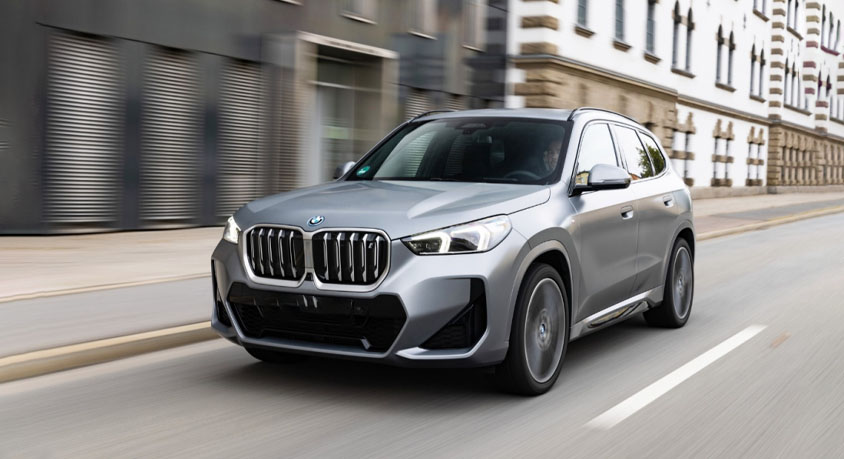
On the road, the philosophical divergence becomes concrete. The BMW X1, with its turbocharged 2.0-liter engine and seven-speed dual-clutch transmission, prioritizes sporty responsiveness. Throttle tip-in is sharp, steering is quick if slightly artificial, and the body control is taut. The Honda CR-V, with its 1.5-liter turbo or hybrid powertrain, prioritizes seamless, frictionless progress. Its steering is lighter, its ride is more compliant over broken pavement, and its operation is quieter at cruising speeds. The luxury model often provides a more engaging, connected feel for the driver, while the mainstream champion excels in isolating occupants from the hassles of the journey. One is tuned for the driver's pleasure, the other for passenger calm.
This leads to the core economic and psychological question. The $15,000 premium buys you a more driver-centric dynamic profile, marginally richer interior materials, and the social currency of the badge. It also buys you access to a dealer network with (typically) higher service costs and, statistically, a steeper depreciation curve. The mainstream alternative buys you equivalent or greater feature content, potentially lower long-term costs, and a vehicle whose design is optimized for hassle-free ownership. The value of the badge, therefore, is not an absolute but a personal variable. It hinges on how much you personally value that specific driving feel, how much weight you give to brand-associated identity, and how you calculate the total cost of ownership over time.
Ultimately, the comparison reframes the purchase from a search for objective superiority to a question of aligned priorities. The compact luxury SUV is not "better" in a universal sense; it is different, catering to a specific set of desires where emotional resonance and dynamic flair are valued above all else. The premium mainstream SUV is a masterpiece of optimized compromise, offering 85% of the luxury experience for 75% of the price. The badge is never just a badge—it represents a specific engineering and philosophical legacy—but its monetary worth is defined solely by the buyer's willingness to trade tangible resources for intangible benefits. The most intelligent purchase isn't the cheapest or the most prestigious; it's the one whose cost, both financial and experiential, most precisely matches the life you intend to live with it.
Disclaimer: Mention of any brand or trademark is for identification only and does not imply partnership or endorsement