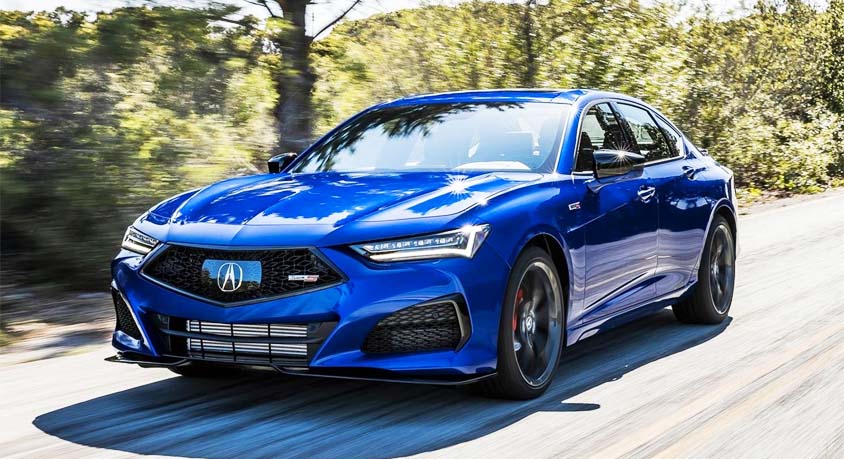
There is a particular quiet in a nearly-empty parking garage at night, a silence broken only by the fading echo of a well-tuned V6 as it winds down to a stop. For thirty years, that sound was the backdrop to a specific American achievement: the reliable, sophisticated, and just-sporty-enough sport sedan, parked as a testament to a hard-won middle-class stability. The 2026 model year marks the final echo for icons like the Acura TLX and the Audi A4 in the American market, not because they failed, but because they succeeded too well at being precisely what they were: efficient, engaging, and ultimately, not profitable enough. Their discontinuation isn't an evolution of taste; it is the calculated outcome of a perfect financial and regulatory storm that has declared the traditional sedan an economically obsolete form factor, regardless of what drivers may actually want.
The raw sales data presents a seemingly consumer-driven verdict. Sedans, which commanded nearly 50% of the U.S. market in 2014, now cling to less than 20%. The TLX and A4, while critically acclaimed for their sharp handling and refined powertrains, saw their volumes dwarfed by their SUV siblings—the MDX and the Q5. The narrative automakers promote is one of democratic choice: the people have spoken, and they want command seating, all-wheel drive, and cargo space. This narrative, however, conveniently omits the immense gravitational pull of corporate investment and marketing dollars, which for a decade have been almost exclusively directed toward promoting the SUV and truck lifestyle, creating a self-fulfilling prophecy of demand.
The economic engine behind this shift is brutally simple: margin per square foot of factory space. Building a luxury sedan like a TLX Type S or an Audi S4 requires expensive, performance-oriented engineering—multi-link rear suspensions, lower centers of gravity, rigid body structures—that does not command a significant price premium over a more straightforward, taller-riding SUV built on a shared platform. A customer is willing to pay $8,000 to $15,000 more for an SUV than for a sedan from the same brand, despite the SUV often costing only marginally more to produce. The sedan became a loss leader for brand credibility, but in an era of soaring development costs for electrification and autonomy, that credibility is no longer deemed worth the forgone profit.
Federal regulations, specifically the Corporate Average Fuel Economy (CAFE) standards, unwittingly authored a perverse incentive script. The rules create a "footprint" model where larger vehicles have easier fuel economy targets. By shifting their mix toward larger, heavier SUVs and trucks, automakers can raise their average fleet fuel economy target, making compliance cheaper than engineering ultra-efficient sedans. The sedan, the most naturally efficient passenger vehicle form, was sacrificed on the altar of regulatory arbitrage. It’s a fiscal and legal chess move, where killing your most efficient pawns helps you win the game.
For the driving enthusiast, this represents a palpable loss of dynamic artistry. The sport sedan was a unique covenant—a promise of daily practicality fused with backroad communion. The low-slung stance, the direct steering feel, the way a car like the TLX SH-AWD could rotate through a canyon corner, offered a tactile satisfaction an SUV's higher center of gravity and boosted steering can only mimic. The SUV offers capability and comfort, but it fundamentally negotiates with physics; a great sedan converses with it. This erosion of choice isn't about losing a body style; it's about the forced retirement of a particular philosophy of motion, where engagement was prioritized over mere elevation.
The practical repercussions for the average American family are nuanced. The SUV promises utility, but often delivers it with penalties: higher purchase prices, increased fuel or energy consumption (even for electric models due to weight and aerodynamics), and greater difficulty parking in urban settings. The sedan offered a rational, often more affordable, portal into luxury and performance. Its disappearance forces consumers up-market and up-size, whether their actual needs justify it or not. The driveway becomes a site of automotive inflation, where the "right" choice has been systematically eliminated, funneling buyers toward the more profitable option.
Looking forward, the electric vehicle transition offers a faint glimmer of hope for the sedan's spirit, if not its exact silhouette. EV platforms, with their flat battery floors, could enable lower, sleeker designs without sacrificing interior space. However, the initial wave of EVs has followed the same high-margin SUV and truck playbook, from the Rivian R1S to the Cadillac Lyriq and BMW iX. The market has been so thoroughly conditioned to equate "new" with "tall" that an electric sports sedan risks being seen as a niche retro piece, not the mainstream future.
The funeral for the Acura TLX and Audi A4, therefore, is not for a failed product, but for a balanced ideal. It marks the victory of portfolio management over passion, of regulatory gaming over rational design, and of perceived need over proven pleasure. We are not burying a car; we are interring the idea that the automotive landscape should cater to a diversity of desires, including the desire for something lower, leaner, and more intimately connected to the road. The garage of the future will be taller, more expensive, and more homogeneous—not because it must be, but because the balance sheets of Detroit, Wolfsburg, and Tokyo have decreed it so.
Disclaimer: Mention of any brand or trademark is for identification only and does not imply partnership or endorsement