The moment of truth arrives not on a showroom floor, but in a cramped dealership office three years later, when the used car manager slides a trade-in appraisal across the desk with a figure so low it feels like a misprint. For the owner of a 2023 luxury electric SUV purchased at the market's feverish peak, that number often represents a loss exceeding $35,000—the price of a well-equipped new BMW 3 Series, vanished into thin air. This silent financial hemorrhage defines the 2026 used car market, where the first-generation, long-range EVs are not just depreciating; they are falling off a cliff, creating minefields for unwary buyers and offering a stark masterclass in how technological revolutions create both winners and astonishingly expensive losers. The question is no longer which used car is a good deal, but which one is a financial trap disguised as a technological bargain.
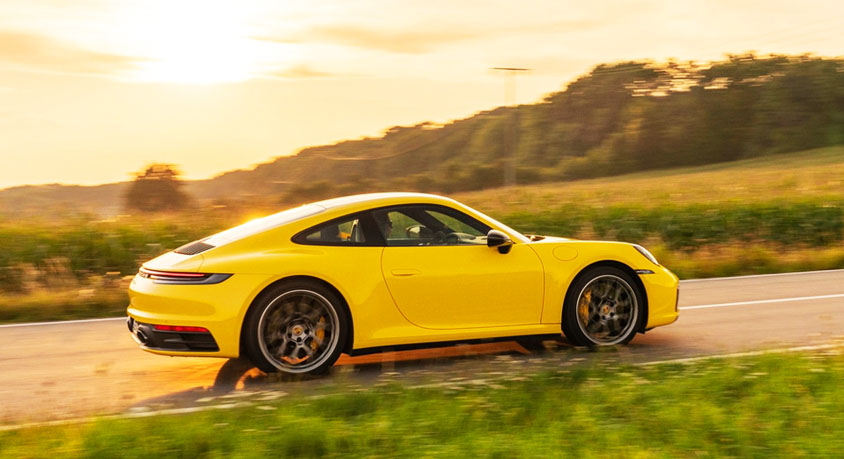
The data from industry analysts like Black Book and iSeeCars is unequivocal and brutal. Certain 2022-2023 model year electric vehicles are retaining a mere 30-40% of their original Manufacturer's Suggested Retail Price (MSRP) after three years, a depreciation curve twice as steep as that of their traditional internal combustion counterparts. A $80,000 German EV sedan can now be found languishing on used lots for $32,000, while a $90,000 Porsche 911 Carrera from the same year commands over $75,000 in the same marketplace. This disparity isn't about quality or performance; it's about the market perceiving one as a timeless mechanical artifact and the other as a rapidly obsolescing consumer electronics device. The EV’s value is being assessed not by its odometer, but by its software version and battery health report—metrics far more opaque and frightening to a second-hand buyer than a service history.
This catastrophic depreciation stems from a perfect storm of factors that converged in the mid-2020s. The first is technological obsolescence. The EVs produced in 2022-2023 were pioneers, featuring the first generation of 400-volt architectures, slower charging curves, and less energy-dense batteries than the 800-volt, ultra-fast-charging models saturating the new car market by 2026. Buying a three-year-old EV in 2026 feels akin to buying a three-year-old flagship smartphone; it works, but it lacks the latest, most crucial features, and its battery is a known, aging component. The second factor is manufacturer pricing strategy. Aggressive price cuts by Tesla and others in 2024-2025 to stimulate demand instantly devalued every similar EV already on the road, resetting the market's perception of what the technology "should" cost and leaving original owners holding the bag.
The third and most psychologically potent factor is battery anxiety. While most modern EV batteries are warrantied for 8 years/100,000 miles, the specter of a $15,000 to $25,000 replacement cost hangs over every older model. A used ICE car with 60,000 miles might need a $3,000 transmission service; a used EV with the same mileage faces a potential battery failure with a five-figure remedy. This perceived risk is priced into every used EV transaction, depressing values far more than any mechanical repair ever could. The vehicle's most expensive component is also its most mysterious and frightening to the secondary buyer.
Now, to the list. Based on projected residual values, market data, and looming technological supersession, here are categories and specific models to approach with extreme caution in the 2026 used market. Topping the list are early-adopter luxury EVs from non-traditional luxury brands. These vehicles, often boasting incredible performance but from makers without decades of brand equity in luxury, have seen their novelty wear off and their steep initial prices completely unravel. A prime example is any 2022-2023 model from brands that rushed to market with their first-generation EVs; they suffer from the double whammy of rapid tech obsolescence and weak brand resale resilience.
Close behind are first-generation electric vehicles from legacy American automakers that have since been substantially updated or had their platforms phased out. These cars were crucial learning experiences for the manufacturers but are now stranded on the wrong side of a steep learning curve, often lacking the software polish, charging speed, and range efficiency of their successors. Their interior technology, in particular, can feel a generation behind within just 36 months.
The advice for the savvy 2026 used car buyer is counter-intuitive: in a market flooded with cheap, fast, technologically advanced EVs, consider the boring, reliable, and slow-depreciating hybrids. A 2023 Toyota RAV4 Hybrid or Honda CR-V Hybrid will have lost a predictable, manageable amount of value and offers proven, low-cost operation without the battery-anxiety overhang. For those seeking a genuine "investment" that delivers driving pleasure, the timeless calculus of the air-cooled 911 or even a well-kept modern sports car remains true; they are mechanical art, not disposable tech.
If you must buy a used EV, treat it with the financial caution of a gadget, not an asset. Budget for its eventual near-total depreciation, verify its battery health with a professional report, and ensure its software has been updated. Understand that you are not buying a car for a decade; you are leasing a slice of transitional technology for a few years at a steep discount from its original, inflated price. The greatest minefield in the 2026 used market isn't a specific model—it's the assumption that a car's value is tied to its metal and paint. For the modern EV, its value is tied to its code and chemistry, two things that age not like fine wine, but like a carton of milk in the sun. The smart money knows the difference.
Disclaimer: Mention of any brand or trademark is for identification only and does not imply partnership or endorsement