



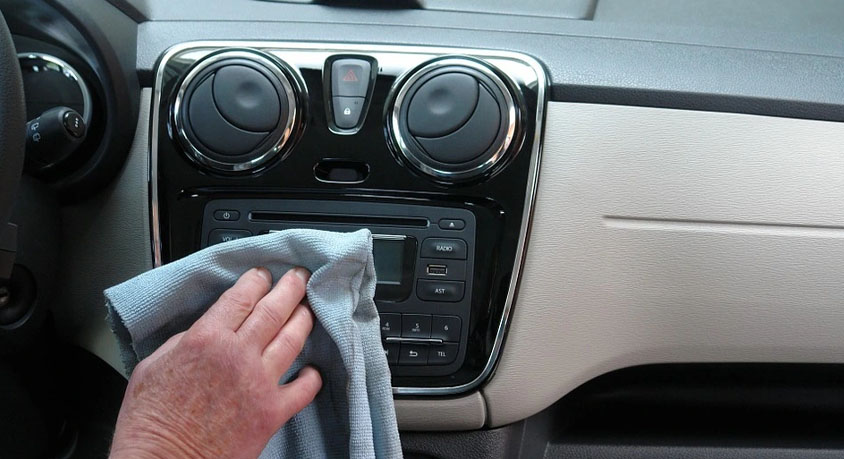
I was sitting in a buddy’s three-year-old high-performance sedan last weekend, and as I went to adjust the vent, my fingers came away feeling like I’d just touched a half-melted gummy bear. The top of his dashboard was shimmering with a greasy, artificial gloss that smelled like a chemical spill in a candy factory. He proudly showed me the "industrial strength" citrus degreaser he’s been using to keep things "sterile." I didn’t have the heart to tell him right then, but he’s not cleaning his car; he’s performing a slow-motion chemical lobotomy on his interior. He’s essentially paying twenty bucks a bottle to strip away the only thing keeping his dashboard from turning into a pile of toxic sludge and a shrapnel-launching safety hazard.
Modern car interiors are a delicate ecosystem of polymers, flame retardants, and UV inhibitors. When you see a "soft-touch" dashboard in a new Mazda or a Volkswagen, you aren't just looking at plastic; you're looking at a complex multilayered cake designed to survive ten years of Arizona sun without bursting into flames. The problem is that most of the heavy-duty cleaners sitting on the shelves of your local big-box store are loaded with harsh solvents and alkaline degreasers that are about as subtle as a sledgehammer. These chemicals don't just "lift dirt"; they penetrate the top clear coat and begin to break down the plasticizers that keep the material flexible.
I have a particular, burning hatred for the "ultra-shiny" dressings that some people slap on their interiors. They make the dash reflect onto the windshield so badly you can’t see the road, which is a brilliant design choice if you enjoy driving into trees. But more importantly, these greasy silicones often trap heat and accelerate the degradation of the underlying material. It’s the same kind of corporate-endorsed stupidity that gives us those flush-mounted, motorized door handles that feel like flimsy plastic toys and fail the moment they see a grain of road salt. We’ve traded tactile, rugged durability for a "showroom shine" that is literally eating the car alive from the inside out.
The real danger, however, isn't just a sticky finger. The most critical piece of plastic in your entire car is the passenger-side airbag cover. That panel is precision-engineered with "score lines"—invisible weak points designed to tear open at a specific force in milliseconds when the bag deploys. When you douse that cover in harsh chemicals, you are altering the structural integrity of that plastic. Over time, the solvents can make the plastic either too brittle or too soft. In a collision, instead of a clean break, that cover could shatter into jagged plastic teeth or delay the deployment of the bag entirely. It’s the difference between a life-saving cushion and a face full of high-speed polymer shrapnel.
Imagine you’re taking the family on a summer road trip to the Grand Canyon. The sun is beating down through the windshield, and the cabin temperature is climbing toward 120 degrees while you’re parked at a trailhead. If you’ve been stripping the UV-protective coatings off your dash with "all-purpose" household cleaners, the heat will finish the job. The plasticizers will "outgas," creating that oily film on the inside of your glass and leaving the dashboard dry, cracked, and ready to split. Comparing a neglected, chemically-scorched interior to one that’s been maintained with nothing but a damp cloth is like comparing a piece of weathered driftwood to a fresh baseball bat; one has structural soul, and the other is just waiting to crumble.
If you look at a high-end Toyota or Honda, their interior plastics are remarkably resilient, but even they succumb to the "cleaner-obsessed" owner. A Tesla might have a minimalist interior that looks like a high-end IKEA showroom, but those synthetic "vegan" leathers and plastics react even more violently to harsh solvents than old-school cowhide. The steering wheel grip—which should feel firm and communicative, like a mechanical extension of your arms—starts to feel mushy and "greasy" as the top layer of the material begins to liquefy under the assault of cheap chemicals.
If you want your car to last 200,000 miles and still look decent when you hand the keys to your kid, you need to stop the chemical warfare. Most of the time, a clean, high-quality microfiber towel dampened with plain old water is all you need to remove dust. If you’ve got real grime—maybe some spilled coffee from a hectic morning commute or a stray smear of soccer-practice dirt—use a pH-neutral cleaner specifically designed for automotive interiors. These are formulated to leave the flame retardants and UV blockers intact.
Stop being a victim of marketing that tells you your car needs to smell like a "lemon-fresh" laboratory to be clean. A real enthusiast knows that the best interior smell is "nothing"—just the faint, honest scent of the materials themselves. Your dashboard isn't a kitchen counter; don't treat it like one. Give those polymers a break, keep the solvents in the garage for the engine parts, and preserve the structural integrity of the one thing standing between you and a face full of airbag shrapnel. Your car—and your skin—will thank you in a decade when the dash still looks like it just rolled off the assembly line.
Disclaimer: Mention of any brand or trademark is for identification only and does not imply partnership or endorsement