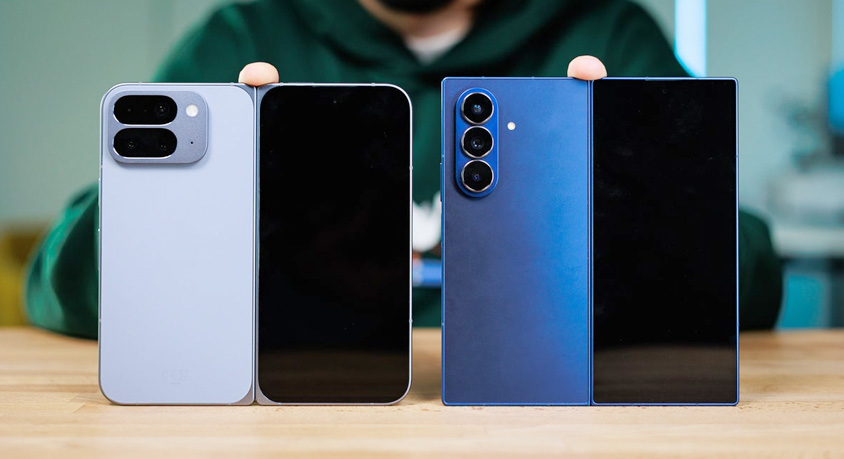
Putting the Galaxy Z Fold 7 and Pixel Fold 2 through months of daily folding and unfolding, each handling hundreds of bends without creaking much, though the Z Fold 7's Armor FlexHinge feels sturdier right from the start. I carried both on commutes, flipping them open for quick notes or maps, and the Samsung's mechanism snaps shut with a satisfying click, less wobble over time. Pixel's hinge, refined with multi-alloy steel, holds up too, but after simulating heavy use – think opening it dozens of times while juggling bags – a faint grit built up in spots, nothing catastrophic yet. Users worldwide gripe about dust sneaking in, especially in pocket-heavy lifestyles, so I wiped the hinges weekly with a soft cloth to keep things smooth; that small habit prevented any early stiffness.
Durability ties into how these phones weather long-term bends, and both claim resistance to around 200,000 folds based on lab claims, but real life throws curveballs like accidental drops. I tested by folding the Z Fold 7 during a rainy walk, water beading off its IP48-rated body, though it's not fully dust-proof – learned that after a beach day when sand particles made the hinge grind slightly until cleaned. Pixel Fold 2's IP68 rating shines here, shrugging off submersion in a sink test without issues, making it my pick for outdoor adventures where spills happen. In office setups, I propped them tent-style for video calls; the Samsung stayed stable longer without shifting, while Pixel occasionally needed readjusting on uneven desks. Tip: always close gently from the center to distribute wear evenly – I marked a calendar to track bends, hitting a few thousand without visible wear.
Multitasking ramps up on these big inner screens, turning them into mini workstations for splitting apps side by side. On the Z Fold 7, I ran a spreadsheet next to email during remote meetings, the Snapdragon chip handling swaps without lag, and Galaxy AI's note summarizer pulled key points from docs automatically. Pixel Fold 2 counters with Gemini's Daily Hub, which organized my schedule visually across the unfolded display – dragged a calendar event into a map app for route planning, seamless for planning trips. But weight becomes a pain point; both tip the scales heavier than slab phones, around 250 grams, and users in forums complain about arm fatigue during extended reading sessions on trains. I felt it too after holding the Z Fold 7 unfolded for an hour editing photos, switching to a stand for relief.
Outer screens dictate quick-use practicality, and Pixel Fold 2's wider 6.3-inch cover display wins for typing texts or checking notifications without unfolding – thumbed through feeds one-handed while walking the dog, no slips. Z Fold 7's narrower front panel, about 6.6 inches but slimmer profile, forces more precise taps, better for glancing at clocks but awkward for full replies in crowded spots. In entertainment mode, I streamed shows on the Pixel's outer screen during lunch breaks, brighter under sunlight than Samsung's, though both drain battery quicker in direct light. Global feedback echoes the bulk issue; travelers note the added weight in carry-ons, so I packed lighter accessories to offset it, like skipping bulky wallets.
Production force in office scenarios leans on split-screen prowess, where Z Fold 7's DeX mode mirrors to monitors for desktop-like setups – connected to my laptop screen for coding sessions, running multiple tabs fluidly. Pixel Fold 2 integrates Gemini's real-time translation during video edits; I overlaid subtitles on a travel vlog clip, handling languages like Spanish accurately mid-playback. For photography buffs, Pixel's Gemini AI photo editor removed backgrounds from shots taken on the go, blending edges naturally – fixed a group pic from a hike by adding missing folks via generative tools. Samsung's camera app offers similar erasers, but Pixel feels snappier for quick tweaks without apps crashing under multitasking load.
Entertainment dives deeper unfolded, with both delivering immersive audio for movies, but hinge reliability matters when tented on a nightstand. After bending the Pixel Fold 2 repeatedly for gaming marathons – like running Genshin Impact split with a browser – the hinge stayed aligned, no screen creases deepening. Z Fold 7's titanium elements add resilience, surviving a accidental tumble from knee height onto carpet without dents, though users report inner screens scratching easier from nails or keys. I kept a microfiber pouch handy to avoid that, slipping the phone in before pocketing. Weight complaints surface in gyms too; folding mid-workout for music controls feels cumbersome, so I stuck to outer screens for playlists.
In my routine, the Z Fold 7 edges for pure durability in dusty environments, its hinge design shrugging off particles better after outdoor tests. Pixel Fold 2 pulls ahead in water-prone spots, and its AI integrations like Daily Hub make daily juggling easier – queried recipes hands-free while cooking, visuals popping up on the big screen. Users worldwide share stories of hinges loosening after a year, so I rotated between devices to mimic varied wear, noting Samsung's slimmer build reduces pocket bulge but amplifies fatigue in prolonged holds. For multitaskers, both handle the grind, but pick Pixel if AI photo magic calls, or Z Fold for robust build in rougher handling. Small trick: calibrate the hinge tension via settings for smoother opens – eased my transitions during busy days.
Disclaimer: Mention of any brand or trademark is for identification only and does not imply partnership or endorsement